Posted on

Oil: The Invisible Foundation of the Modern World

When most people think about oil, they imagine gasoline in cars or fuel used to generate electricity. While energy production is certainly one of oil’s most visible uses, it represents only a portion of what crude oil actually powers in modern life. Oil is not just an energy source. It is also one of the most important raw materials in the global economy. Entire industries rely on it not for fuel, but for the physical materials that shape everyday products.

One of the most significant uses of oil is in the production of plastics. Modern plastics originate from petrochemicals derived from crude oil and natural gas. These materials are transformed into everything from food packaging and medical devices to smartphones and car interiors. Plastic allows manufacturers to create products that are lightweight, durable, and inexpensive to produce at scale. Without oil, many of the materials that make modern manufacturing efficient and affordable would simply not exist.

Oil also plays a central role in the clothing industry. Synthetic fibers such as polyester, nylon, and acrylic are produced from petroleum-based chemicals. These fabrics are now common in everything from athletic clothing to carpets and upholstery. Even clothing that appears natural often contains petroleum-derived fibers blended with cotton or wool to improve durability and reduce cost.

Another important application of oil lies in transportation infrastructure. Asphalt, the material used to pave most roads around the world, is a product derived from crude oil refining. This thick, sticky substance provides the durability and flexibility required for highways, airport runways, and parking lots. Without petroleum-based asphalt, the development of large-scale road networks would be significantly more difficult and expensive.

Oil also contributes heavily to agriculture. Petrochemicals are used to manufacture many fertilizers, pesticides, and herbicides that help modern farming achieve high crop yields. In addition to these chemical inputs, oil-based materials appear in irrigation systems, greenhouse plastics, and food packaging. Even if tractors and farm equipment ran entirely on alternative energy, petroleum would still remain embedded in the systems that support large-scale food production.

The pharmaceutical industry depends on oil as well. Many medicines are synthesized using petrochemical compounds as building blocks. The chemical versatility of petroleum allows scientists to create complex molecules that form the basis of drugs used to treat infections, chronic illnesses, and other medical conditions. In hospitals, petroleum-derived materials are also found in items such as syringes, IV bags, tubing, and sterile packaging.

Cosmetics and personal care products provide another example of oil’s reach. Ingredients derived from petroleum appear in moisturizers, shampoos, lipsticks, and lotions. These substances help stabilize formulas, improve texture, and extend shelf life. Even products marketed as simple or everyday often contain compounds that originated from crude oil refining.

Oil also supports the manufacturing of countless industrial materials. Lubricants derived from petroleum reduce friction in machines and engines, allowing factories, vehicles, and industrial equipment to operate efficiently. Synthetic rubber, another petroleum product, is essential for tires, seals, and gaskets used across transportation and manufacturing. Solvents made from petrochemicals are used in paints, coatings, adhesives, and cleaning products.

When people discuss oil, the conversation usually focuses on energy. Yet a deeper look reveals that oil is more than fuel. It is a foundational industrial input that enables the production of materials used throughout modern society. From clothing and medicine to roads and electronics, petroleum quietly supports systems that most people rarely notice.

Understanding this broader role changes how we think about oil. It is not simply burned to power machines. It is transformed into the physical materials that shape daily life. Even in a future where electricity increasingly comes from renewable sources, the industrial uses of oil will remain deeply intertwined with how modern economies function.


Posted on

In Business, Always Be Aware of the Incumbents

One of the most important realities of business is that you are rarely operating in an empty field. Almost every industry already has companies that dominate large portions of the market. These organizations are known as incumbents, and understanding the threat they pose is essential for anyone trying to build something new.Incumbents are powerful because they have already solved many of the problems that new businesses struggle with. They often have established brands, loyal customers, strong supplier relationships, experienced teams, and significant financial resources. Over time they have built systems that allow them to operate efficiently and defend their position in the market. Even if they appear slow or outdated, their advantages should never be underestimated.

A new entrepreneur may look at a large company and assume that its size makes it vulnerable. In some cases this is true, but more often size gives incumbents the ability to react quickly once they notice a serious threat. If a new competitor begins gaining traction, an established company can lower prices, release a competing product, increase marketing spend, or leverage its customer base to defend its position. The resources available to incumbents often allow them to absorb shocks that would destroy smaller businesses.

This is why successful entrepreneurs pay close attention to who already controls the market they are entering. They study how incumbents operate, what customers expect from them, and where their strengths lie. Understanding this landscape helps new businesses avoid competing directly in areas where the established players are strongest.In many cases, the smartest strategy is not to challenge incumbents head-on but to operate where they are weakest. Large companies often struggle to serve small niches, move quickly, or adapt to emerging trends. Their size can make them slow, bureaucratic, and resistant to change. These weaknesses create opportunities for smaller and more flexible businesses that can move faster and serve specific groups of customers more effectively.

At the same time, entrepreneurs must remember that incumbents can eventually notice and respond to new threats. A small company may initially grow because the dominant players ignore it. But once the newcomer becomes large enough to attract attention, the competitive landscape changes. At that point the incumbent may decide to copy the product, acquire the smaller company, or use its scale to compete aggressively.

This dynamic means that building a business often involves more than simply creating a good product or service. It requires thinking carefully about how your company fits into the broader competitive environment. Entrepreneurs who ignore incumbents risk being crushed once their business becomes visible.

Awareness of incumbents also encourages strategic thinking about differentiation. A company that clearly understands how it is different from the dominant players is far more likely to survive. This difference might come from serving a specific audience, offering a unique experience, using a different pricing structure, or building a brand that resonates with customers in a way larger companies cannot easily replicate.

In the end, incumbents are neither invincible nor irrelevant. They represent both the biggest threat and the clearest indicator that a market is valuable. Their existence proves that customers are willing to pay for a solution. But their power also means that anyone entering the space must be thoughtful, strategic, and aware of the competitive realities.

Entrepreneurship is often described as innovation and creativity, but it is also a game of positioning. The businesses that survive are not just the ones with good ideas. They are the ones that understand where the giants are standing and learn how to build something valuable without being crushed beneath them.

Posted on

AI Makes the One-Person Business Possible, But Only If You Think Smarter

Artificial intelligence has changed the economics of building a business. Tasks that once required teams of employees can now be completed by a single person with the right tools. Writing, design, coding, customer support, data analysis, and marketing can all be partially automated. The result is that one person can now operate what would have required an entire small company only a decade ago.

This shift has made the idea of the one-person business far more realistic. A solo founder can create content, build websites, analyze data, generate marketing campaigns, and automate large portions of their workflow. The barriers that once forced entrepreneurs to hire staff or outsource large parts of their operations are steadily disappearing. In many cases, AI tools can perform in seconds work that once took hours.

Because of this, the modern entrepreneur can reach a level of leverage that was previously reserved for well-funded startups. A single individual can launch products, run marketing campaigns, manage customer communication, and build digital assets that scale globally. In theory, this should mean that more people succeed in business.Yet the opposite often happens. As tools become easier to use, the advantage shifts away from effort and toward thinking. AI does not remove the need for intelligence. In many ways, it increases it.

When technology lowers the cost of producing content, building software, or launching products, competition increases dramatically. Thousands of people can now produce the same types of outputs. The market quickly becomes saturated with average work. When this happens, the winners are not the people who simply use the tools. The winners are the people who understand what to build, who to serve, and how to position what they create.

AI can help someone write faster, but it cannot automatically determine what ideas are worth writing about. It can help generate marketing messages, but it cannot fully replace strategic judgment about audiences, timing, and positioning. It can assist with coding, but it does not decide what product is actually worth building.

In other words, artificial intelligence amplifies execution, but it does not replace thinking.This is why the rise of AI tends to reward entrepreneurs who develop better judgment. When everyone has access to powerful tools, the real differentiator becomes the ability to ask better questions and make better decisions. Choosing the right niche, identifying real problems, understanding human psychology, and recognizing where opportunities exist are still deeply human skills.

A person who lacks these abilities may produce a large amount of work with AI but struggle to create anything valuable. On the other hand, someone who understands markets, incentives, and strategy can use the same tools to multiply their effectiveness.The result is a new type of entrepreneurship. Instead of managing employees, the modern founder often manages systems. They combine AI tools, software platforms, automation workflows, and digital distribution channels into a machine that produces results with minimal manual effort. The person becomes the strategist and architect rather than the workforce.

This shift creates enormous opportunity for individuals who are willing to think carefully about how they use technology. AI can reduce costs, accelerate production, and expand what one person can accomplish. But those benefits only materialize when the entrepreneur applies clear thinking to the process.The real opportunity in the age of AI is not simply becoming more productive. It is becoming more deliberate. The entrepreneurs who succeed will be the ones who use these tools strategically rather than blindly. They will focus on leverage, positioning, and value creation instead of just output.Artificial intelligence makes the one-person business more achievable than ever before. But turning that possibility into a profitable reality requires something technology cannot automate: better thinking.

Posted on

What Does It Cost to Build a Data Center? Understanding the Different Price Tiers

Data centers are the physical backbone of the digital economy. Every email, video stream, cloud application, and AI model ultimately relies on a building somewhere filled with servers, networking equipment, cooling systems, and enormous amounts of electrical infrastructure. Because of the complexity involved, the cost of building a data center can vary dramatically depending on its size, power capacity, and reliability requirements.

At the smallest end of the spectrum are micro or edge data centers. These are compact facilities designed to serve a limited geographic area or a specific application such as retail networks, telecommunications equipment, or local content delivery. A small data center might contain only a handful of racks and a modest cooling and power setup. Projects in this category can cost anywhere from roughly $500,000 to $10 million depending on the level of redundancy and security required. Many companies deploy these smaller installations closer to users to reduce latency or support distributed computing.

The next tier consists of small to mid-sized enterprise data centers. These facilities are typically built by corporations that need to run their own internal infrastructure or private cloud environments. They often include dozens or hundreds of racks, sophisticated cooling systems, backup power generators, and redundant networking connections. At this scale, the electrical infrastructure becomes far more expensive because the facility must handle several megawatts of power and remain operational even during outages. Construction costs for these data centers frequently fall between $10 million and $100 million depending on size and design standards.Beyond this level are large commercial data centers operated by colocation providers and cloud companies. These facilities are designed to host equipment for multiple clients or run massive cloud computing workloads. They require advanced cooling technologies, highly redundant power distribution, security systems, and fiber connectivity capable of handling enormous amounts of data traffic. A single large data center building can easily cost $100 million to $500 million to construct. The price reflects not only the physical building but also the specialized infrastructure required to maintain reliability and uptime.

At the very top of the market are hyperscale data centers. These are the enormous facilities built by companies such as Amazon, Google, Microsoft, and Meta. Hyperscale sites can contain hundreds of thousands of servers and consume as much electricity as a small city. The scale of these projects pushes costs into the billions. A single hyperscale campus often requires extensive land purchases, custom electrical substations, high-capacity fiber networks, and complex cooling systems designed to run continuously for decades. When multiple buildings are constructed together as part of a larger campus, the total investment can easily exceed $1 billion.

Several factors explain why data center costs escalate so quickly as size increases. Power infrastructure is one of the most significant expenses. High-capacity transformers, generators, battery backup systems, and redundant power distribution networks must all be installed to ensure the facility never goes offline. Cooling systems are another major cost driver because servers produce large amounts of heat that must be removed constantly to prevent hardware failure. Land, building materials, networking equipment, and security infrastructure also contribute heavily to the final cost.

Location can also play a major role in determining total expenses. Data centers built in areas with cheap electricity and favorable tax policies are often significantly less expensive to operate over time. This is why many hyperscale companies cluster facilities in regions with abundant energy supplies, cooler climates, and strong fiber connectivity.

Although building a data center requires enormous capital investment, these facilities have become some of the most valuable pieces of infrastructure in the modern economy. The global shift toward cloud computing, artificial intelligence, and digital services has made data centers essential to nearly every industry. As a result, companies and investors continue to pour billions of dollars into building new facilities around the world.What once existed primarily as corporate server rooms has evolved into a massive global industry. From small edge deployments costing under a million dollars to hyperscale campuses worth billions, data centers represent one of the most capital-intensive and strategically important sectors of the technology economy.

Posted on

Entrepreneurship Leaves No Room for Self-Deception

Entrepreneurship forces a person to confront reality. In many traditional jobs, it is possible to hide behind structure or hierarchy. An employee can follow instructions, complete assigned tasks, and still earn a stable paycheck even if the larger outcome of the work is unclear. Entrepreneurship is different. When you run a business, the market responds directly to what you do. If your work creates value, money comes in. If it does not, it doesn’t.

Because of this, entrepreneurship leaves no room for lying to yourself.

Self-deception is surprisingly common in many areas of life. People tell themselves that they are working hard when they’re actually procrastinating. They convince themselves that their product is excellent even though customers are uninterested. They blame outside circumstances when the real issue is poor execution. In many environments, these distortions of reality can persist for years without obvious consequences.

The marketplace does not tolerate them for long.

A business is ultimately a simple exchange. You provide something that people want or need, and they pay you. If that exchange does not happen, the business cannot survive. Revenue becomes the clearest signal of whether the entrepreneur is seeing reality accurately or not.

This is why honest self-assessment becomes one of the most valuable skills an entrepreneur can develop. A founder must be able to look at their product and ask whether there is demand. They must evaluate their marketing and ask whether it communicates value. They must examine their own work habits and determine whether they are focusing on the activities that actually move the business forward.

The temptation to avoid these questions is always present. It is far easier to tell yourself that success simply takes time than to admit that something fundamental is not working. It is more comfortable to blame algorithms, competition, or economic conditions than to reconsider your strategy. Yet the longer these stories continue, the further the business drifts from the reality of what customers actually want.

Entrepreneurship rewards those who are willing to face uncomfortable truths early.

If a product is not selling, the honest response is to ask why. If marketing efforts are producing no results, the honest response is to analyze what message is being sent and whether it resonates with the intended audience. If productivity is low, the honest response is to admit that discipline or focus may need improvement.

These reflections are not pleasant, but they are productive. The entrepreneur who accepts reality can adjust quickly. They can change their offer, refine their messaging, improve their service, or redirect their effort toward more promising opportunities. By contrast, the entrepreneur who continues to believe comforting stories often remains stuck in the same place.

In this way, business becomes a constant feedback loop between the entrepreneur and the market. The question is not whether feedback exists. The challenge is whether the entrepreneur is willing to interpret it honestly.

This is also why humility tends to be such an important trait among successful founders. Humility allows someone to admit when an idea was flawed or when a strategy failed. It creates space for learning and adjustment. Without humility, the temptation to protect one’s ego can override the need to respond to reality.

Over time, entrepreneurs who consistently tell themselves the truth develop a clearer understanding of how value is created. They begin to recognize which activities generate revenue and which merely feel productive. They learn how customers think, what problems people are willing to pay to solve, and how to position their work in a way that resonates.

This clarity compounds. Each honest evaluation improves the next decision, and each better decision increases the chances of building a sustainable business.

In contrast, self-deception compounds in the opposite direction. Small misunderstandings about the market lead to ineffective strategies. Ineffective strategies lead to disappointing results. Rather than adjusting, the entrepreneur may double down on the original belief that things are working or soon will be. By the time reality becomes undeniable, significant time and energy may have already been lost.

The harsh but valuable truth about entrepreneurship is that it functions as a mirror. It reflects back the quality of your decisions, the usefulness of your work, and the accuracy of your understanding of the market. If you are honest with yourself, that mirror becomes an incredibly powerful tool for improvement.

If you are not, the market will eventually force the lesson anyway.

For this reason, building a successful business requires more than creativity or ambition. It requires a willingness to confront reality without distortion. Entrepreneurs who cultivate that honesty gain the ability to adapt quickly, learn from failure, and refine their work until it truly serves the people they hope to reach.

In the end, entrepreneurship rewards clarity. The more accurately you see the world, the better you can respond to it. And when you respond to reality with honesty and effort, the chances of earning a good living become far greater.

Posted on

Making More Money Is Often About Removing Mental Limits

Many people assume that making more money requires some rare talent, an advanced degree, or access to opportunities that only a few people receive. While skills, education, and circumstances certainly play a role, one of the biggest barriers to higher income is far less visible. It is the collection of mental limits that people place on themselves.

Mental limits are beliefs about what is possible, what is realistic, and what someone is capable of achieving. These beliefs shape how people think about work, business, and opportunity. Over time, they quietly define the boundaries of a person’s financial life.A person who believes that making a high income is unrealistic will rarely pursue opportunities that could lead to one. They will avoid risks, ignore possibilities, and settle for outcomes that feel familiar and safe. The result is not necessarily a lack of effort, but a lack of ambition directed toward the right opportunities.

The opposite mindset produces a very different outcome. When someone removes the assumption that higher income is out of reach, their behavior changes. They begin to explore new ways of creating value. They start to ask different questions about how businesses operate and where money is actually made.Instead of assuming that wealth belongs to a small group of exceptional people, they start to notice how ordinary individuals build profitable ventures. They see freelancers charging thousands for services that once seemed ordinary. They see entrepreneurs packaging knowledge into products. They see professionals turning expertise into consulting practices.

Once these examples become visible, the idea that higher income is unattainable begins to weaken. The mental ceiling that once limited ambition slowly disappears.This shift in thinking often leads to experimentation. Someone who previously assumed they could only earn a salary might begin exploring freelance work. Someone who once believed business ownership was impossible might attempt a small online venture. The internet has made this experimentation easier than ever before because it lowers the cost of testing ideas and reaching customers.

The important point is that opportunity often exists long before people are willing to pursue it. In many cases, the obstacle is not a lack of options but a lack of belief that those options apply to them.Mental limits also affect how people price their work and evaluate their own value. Someone who believes their skills are modest may charge far less than the market would actually support. Another person with the same ability may confidently charge a premium simply because they assume their work deserves it.

Over time, this difference in mindset compounds. Confidence in one’s value leads to better positioning, stronger negotiations, and higher earning opportunities. Self-doubt quietly pushes people toward lower expectations and smaller outcomes.Removing mental limits does not mean ignoring reality or pretending that success is effortless. It means recognizing that many of the assumptions people carry about money were never carefully examined. They were inherited from culture, family, or early experiences.

When those assumptions are questioned, new possibilities appear. A person may realize that certain industries generate far more income than others. They may discover that selling solutions can be more profitable than selling time. They may learn that small improvements in skill or positioning can dramatically increase earning potential.

At that point, the problem of making more money begins to look different. It becomes less about waiting for a lucky break and more about deliberately choosing environments where value is rewarded.

The world contains countless examples of people who dramatically changed their financial trajectory once they stopped assuming that their current situation defined their future. They did not necessarily become geniuses overnight. Instead, they allowed themselves to pursue opportunities that previously seemed unrealistic.

In that sense, making more money often begins with a psychological shift rather than a technical one. When mental limits are removed, ambition expands. When ambition expands, behavior changes. And when behavior changes, new financial outcomes become possible.The ceiling that once defined what seemed achievable turns out to have been imaginary all along. Once it disappears, the range of opportunity becomes much larger than most people ever expected.

Posted on

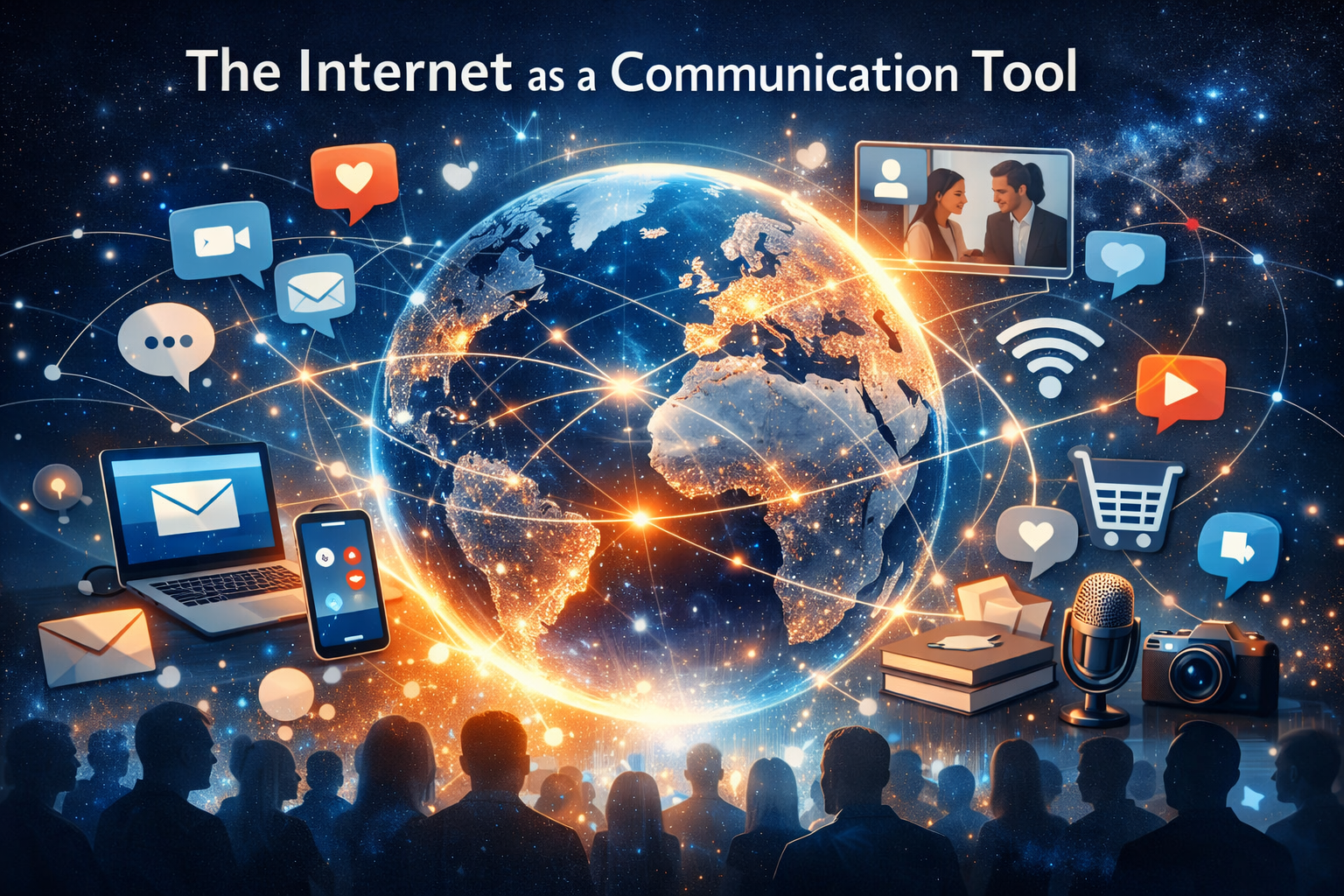
The Internet Is Fundamentally a Communication Tool

When people talk about the internet, they often describe it as a marketplace, a library, a media platform, or a technological revolution. All of these descriptions are partially true, but they miss something more fundamental. At its core, the internet is a communication tool. Everything that happens online, from social media to e-commerce to streaming services, ultimately exists because it allows people to communicate with one another more efficiently.

Before the internet, communication across distance was slow, expensive, or limited in reach. Letters took days or weeks to arrive. Phone calls were expensive, especially internationally. Publishing information required printing presses, distribution networks, and significant capital. Broadcasting to large audiences was reserved for television networks, radio stations, and newspapers.The internet changed this by collapsing the cost and speed of communication. A single person with a laptop can now send a message to millions of people instantly. Information can move across the world in seconds. Conversations that once required institutions and infrastructure can now happen between individuals.

This is why so many different industries were transformed once they moved online. Retail changed because buyers and sellers could communicate directly through digital storefronts. Entertainment changed because creators could distribute their work and reach audiences without relying entirely on traditional gatekeepers. Education changed because teachers and students could exchange knowledge instantly across continents.

Even something as simple as a website is ultimately a form of communication. A blog post communicates ideas from a writer to readers. A product page communicates the value of an item to a potential customer. A landing page communicates why someone should sign up, subscribe, or buy.This perspective also explains why traffic matters so much in online business. Traffic is simply attention, and attention is the prerequisite for communication. If no one sees your message, the communication never happens. The internet does not reward the existence of information. It rewards the successful transmission of information from one person to another.

Social media platforms are another clear example of the internet’s role as a communication system. Although they are often described as entertainment platforms, their primary function is still the exchange of messages between people. Posts, comments, likes, shares, and direct messages are all forms of digital conversation. These platforms thrive because they make communication faster, more visible, and more interactive than ever before.

Businesses that succeed online usually understand this principle intuitively. They do not see the internet merely as a place to display products. Instead, they treat it as a channel for conversation with potential customers. Marketing becomes communication about problems and solutions. Customer service becomes communication about satisfaction and trust. Branding becomes communication about identity and values.

The rise of content marketing also reflects this shift. Companies publish articles, videos, podcasts, and guides not simply to fill space on the internet but to communicate expertise and authority. When done well, content creates a relationship between creator and audience. Over time, this relationship builds trust, and trust eventually leads to transactions.

Affiliate marketing follows the same logic. An affiliate is simply someone who communicates a product recommendation to an audience that trusts them. The technology that tracks the referral may be sophisticated, but the underlying mechanism is straightforward. One person tells another person about something useful.

Even modern tools like artificial intelligence and automation still operate within this framework. AI can generate content, summarize information, or respond to messages, but the purpose remains the same. These tools help people communicate ideas, knowledge, and value more efficiently.Understanding the internet as a communication tool also simplifies how to think about building an online presence. Instead of chasing every new platform or trend, the real question becomes simple. What message are you trying to communicate, and who needs to hear it?

A blog communicates long-form ideas. Short videos communicate quick insights or entertainment. Email communicates directly with an audience that has already shown interest. Search engines connect people who have questions with people who have answers. Each platform is simply a different channel for the same fundamental activity.

When people struggle online, it is often because they forget this basic principle. They focus on technical tricks, algorithms, or growth hacks without thinking about the clarity and usefulness of the message itself. But technology cannot compensate for poor communication. If the message is weak, no amount of optimization will make it compelling.

On the other hand, a clear and valuable message can travel far even with minimal resources. Many successful creators started with nothing more than a simple blog, a social media account, or a newsletter. What made them successful was not complicated technology but the ability to communicate ideas that resonated with people.

The internet feels complex because it connects billions of devices and hosts unimaginable quantities of data. Yet beneath that complexity lies something very simple. It allows humans to talk to each other at scale.

Every email sent, every article published, every video uploaded, and every product sold online is part of this enormous web of communication. The tools may continue to evolve, but the underlying purpose remains unchanged.The internet is not just technology. It is conversation.

Posted on

Why Recruitment and Staffing Are Among the Most Lucrative Business Models

Recruitment and staffing have quietly become some of the most lucrative business models in the modern economy. While many people associate entrepreneurship with technology startups or complex financial ventures, the simple act of connecting employers with workers has proven to be extraordinarily profitable for those who understand how the industry works. At its core, recruitment is built around one of the most consistent needs in the economy: businesses always need talent, and individuals are always searching for opportunities.

The reason recruitment is so powerful as a business model begins with the role that labor plays in every organization. Companies can delay buying new equipment, postpone marketing campaigns, and renegotiate supply contracts, but they cannot operate without people. Workers are the engine that drives productivity, innovation, and growth. Because of this, the search for qualified employees becomes one of the most important and time-sensitive problems that companies face.

Hiring is also far more difficult than it appears from the outside. Employers must advertise roles, screen applications, conduct interviews, verify credentials, and negotiate compensation. Each of these steps consumes time and resources, and the cost of making a bad hire can be extremely high. A single poor hiring decision can lead to lost productivity, team disruption, and the expensive process of replacing the employee. Because of these risks, many organizations prefer to rely on specialists whose entire business revolves around identifying and vetting candidates.

Recruitment agencies position themselves as those specialists. Instead of each company building its own large internal hiring apparatus, the agency takes on the work of sourcing and evaluating talent. The employer pays for access to a pool of candidates and for the expertise required to find the right person. In this arrangement, the recruitment firm becomes an intermediary that creates value by reducing uncertainty and saving time.

One of the reasons staffing firms can generate substantial profits is that the industry benefits from recurring demand. Businesses constantly hire new employees as they expand, replace workers who leave, and fill temporary gaps created by seasonal or project-based work. This ongoing demand means recruitment agencies rarely rely on one-time transactions. Instead, they often build long-term relationships with companies that repeatedly return whenever a new role needs to be filled.

Another advantage lies in the economics of placement fees. When a recruiter successfully fills a position, the agency typically receives a percentage of the employee’s first-year salary or a markup on the worker’s wages if the employee is placed on a contract basis. Because salaries in many industries are substantial, even a single successful placement can generate thousands of dollars in revenue. Over time, as recruiters develop networks and expertise within specific sectors, their ability to fill positions quickly becomes even more valuable.

The staffing model also benefits from relatively low startup costs compared to many other businesses. A recruitment firm does not need to manufacture products, maintain large inventories, or invest heavily in physical infrastructure. The primary assets of the business are knowledge, relationships, and access to talent. With modern digital tools such as applicant tracking systems, professional networking platforms, and online job boards, recruiters can build candidate pipelines and manage placements with minimal overhead.

Technology has also expanded the reach of staffing companies. Remote work and digital communication tools allow recruiters to source candidates from around the world while serving clients in multiple regions. This global reach dramatically increases the potential talent pool and makes it easier for agencies to match specialized skills with employers who need them.

Another factor contributing to the profitability of recruitment is the value of specialization. Many of the most successful staffing firms focus on specific industries such as healthcare, technology, engineering, or finance. By concentrating on a narrow field, recruiters develop a deep understanding of the qualifications, certifications, and experience required for each role. This expertise allows them to identify strong candidates quickly and builds trust with employers who rely on their knowledge of the industry.

The recruitment industry also benefits from the simple fact that it aligns incentives between all parties involved. Employers want the best possible talent, candidates want opportunities that advance their careers, and recruiters earn income by successfully bringing the two together. When the match is successful, everyone benefits. This alignment creates a natural ecosystem in which the recruiter becomes an essential facilitator.Despite its simplicity, recruitment remains an industry where experience compounds over time. The longer a recruiter works in a particular field, the larger their network becomes. Each successful placement introduces new relationships with hiring managers, human resources professionals, and talented candidates. Over time these relationships create a powerful advantage that makes future placements easier and faster.

Ultimately, recruitment and staffing are lucrative because they solve a universal and recurring problem in the economy. Every organization depends on people, and finding the right people is one of the most challenging tasks a business faces. By positioning themselves as experts in identifying and connecting talent with opportunity, recruitment firms insert themselves into a critical moment in the life of every company. When done well, the result is a business model that generates consistent demand, strong margins, and long-term relationships that can last for years.

Posted on

Cold Email: What It Is and Why It Still Works

Cold email is one of the most misunderstood tools in modern business. Many people assume it is simply spam sent to strangers, but that description misses the real purpose and value of the practice. At its core, cold email is a direct outreach method where someone contacts a person or business they have not previously interacted with in order to start a conversation that could lead to a professional opportunity.

In simple terms, cold email is the digital equivalent of walking up to someone at a networking event and introducing yourself. The key difference is that the introduction happens through email instead of face to face. When done properly, cold email is not about blasting thousands of people with generic messages. It is about reaching out thoughtfully to individuals who may genuinely benefit from what you are offering.

The concept itself is older than the internet. Long before email existed, salespeople wrote letters or made phone calls to introduce themselves to potential clients. Email simply made the process faster and more scalable. Because sending an email costs almost nothing and can be done in seconds, it has become one of the most accessible ways to initiate professional relationships.The typical cold email begins with a brief introduction. The sender explains who they are and why they are reaching out. The message then highlights a potential opportunity or problem that might interest the recipient. Instead of pushing aggressively for a sale, the goal is usually to start a conversation. Many cold emails end with a simple question or invitation to continue the discussion.

One reason cold email remains so powerful is that it removes the need for gatekeepers. In traditional business environments, it can be difficult to reach decision makers because assistants, receptionists, and layers of management often stand between a salesperson and the person who can actually make a deal. Email allows someone to reach that person directly.

Another advantage is that cold email rewards preparation and research. A message that clearly shows the sender understands the recipient’s business stands out immediately. When someone receives a thoughtful email that references their work, their company, or a challenge they might be facing, it feels less like spam and more like a professional introduction.

Cold email also plays an important role in entrepreneurship. Many startups, freelancers, and independent consultants use cold email as their first method of finding clients. When someone has a useful skill but no existing network, cold outreach allows them to create opportunities rather than waiting for them to appear.

Of course, cold email has a reputation problem because many people misuse it. Mass emails that are clearly automated, irrelevant, or poorly written can quickly damage trust. When recipients feel like they are just another address on a long list, they are likely to ignore the message or mark it as spam. This is why effective cold emailing emphasizes personalization and relevance.

Good cold emails tend to be short, clear, and respectful of the reader’s time. They focus on value rather than hype. Instead of making exaggerated promises, they present a specific reason why the conversation might be worthwhile. In many cases the sender simply offers insight, assistance, or an introduction.It is also important to recognize that cold email is fundamentally a numbers game. Not everyone will respond, and that is expected. Even well-crafted outreach campaigns may receive only a small percentage of replies. However, because sending emails is inexpensive and scalable, a few positive responses can still lead to meaningful opportunities.

Cold email remains especially useful in industries where relationships and conversations lead to deals. Marketing agencies, consultants, software companies, recruiters, and freelancers frequently rely on it to introduce their services. In these cases, a single successful email can lead to a long-term client relationship.In the end, cold email is simply a tool for starting conversations with people who might not otherwise know you exist. When approached thoughtfully and respectfully, it can open doors that would otherwise remain closed. Instead of viewing it as spam, it is more accurate to see cold email as a modern form of professional introduction, one that allows individuals and businesses to connect in ways that were once far more difficult.

Posted on

Major Cities Create Economic Opportunity

Where a person chooses to live has a profound impact on their economic opportunities and professional growth. While modern technology allows people to work remotely and connect online, major cities continue to offer advantages that are difficult to replicate elsewhere. The concentration of people, businesses, and resources in large urban centers creates powerful networking and economic benefits that shape careers, businesses, and entire industries.

One of the most important advantages of living in a major city is proximity to opportunity. In smaller towns or rural areas, the number of employers, clients, and collaborators is naturally limited. Economic activity tends to revolve around a few industries, and professional networks remain relatively small. In contrast, major cities function as economic hubs where thousands of companies and professionals operate within a relatively small geographic area.

This concentration dramatically increases the number of potential connections a person can make. Every coffee shop meeting, professional event, conference, or casual introduction becomes an opportunity to meet someone working in an adjacent field or pursuing a similar goal. Over time, these interactions accumulate into a network that can open doors to partnerships, employment, and business opportunities.The speed at which networks form in cities is also remarkable. In dense urban environments, people interact constantly through shared workspaces, social gatherings, industry events, and informal meetups. Because so many professionals live and work nearby, relationships can develop quickly and organically. A conversation at an event might lead to a meeting the following week, which might lead to a collaboration shortly afterward.

This kind of rapid connection building is much harder to achieve in areas where people are spread out geographically.

Cities also benefit from what economists call network effects. When many talented people and organizations operate in the same place, their interactions create new opportunities that would not exist in isolation. A startup founder may meet an investor at an event. A designer may collaborate with a marketing agency. A writer may connect with a publisher. Each connection generates additional economic activity, which in turn attracts more talent and more businesses.

This cycle reinforces itself over time.Major cities also tend to attract ambitious individuals who are actively seeking growth. People move to cities because they want to build careers, launch businesses, or participate in dynamic industries. As a result, the population of a city often includes a high concentration of motivated and skilled individuals.Being surrounded by such people has subtle but powerful effects. Conversations tend to revolve around projects, ideas, and opportunities. Exposure to different industries and perspectives expands one’s understanding of what is possible. The presence of driven peers can also create a sense of momentum that encourages individuals to pursue their goals more seriously.

Economic advantages in cities extend beyond networking alone. Large urban centers often provide access to better infrastructure, specialized services, and financial resources. Investors, law firms, marketing agencies, media companies, and technical experts are more likely to be located in cities because the demand for their services is higher there.This means that entrepreneurs and professionals can access critical resources more easily.For example, a founder developing a new product in a major city may be able to meet potential partners, investors, and customers within a short distance. Feedback can be gathered quickly, partnerships can form naturally, and deals can move forward without long delays. The environment itself accelerates economic activity.

Cities also provide greater exposure to emerging trends and innovations. Because industries cluster geographically, new ideas tend to spread quickly within urban environments. People hear about new technologies, business models, and market opportunities through conversations, events, and professional networks.This exposure allows individuals to adapt faster and position themselves ahead of broader market changes.Another often overlooked advantage is the density of informal interactions. Some of the most valuable professional connections happen outside of formal meetings. Conversations in shared workspaces, introductions through mutual friends, or chance encounters at social events can lead to opportunities that were never planned.

In large cities, the probability of these interactions increases dramatically simply because there are more people and more activities taking place.Of course, living in a major city also comes with challenges. Costs of living are typically higher, competition can be intense, and the pace of life can feel demanding. However, for many individuals these challenges are balanced by the scale of opportunity available.

The environment pushes people to develop skills, build relationships, and pursue opportunities more actively.

For entrepreneurs and professionals focused on growth, the value of proximity to opportunity is difficult to ignore. Being physically present in a place where ideas, capital, and talent constantly intersect creates conditions where progress can happen more quickly.While technology has made remote collaboration easier than ever, the economic gravity of major cities remains powerful. The density of networks, the speed of interactions, and the concentration of resources continue to make cities engines of professional and economic advancement.

In the end, living in a major city places individuals closer to the conversations, partnerships, and opportunities that drive economic progress. That proximity alone can make a meaningful difference in the trajectory of a career or a business.