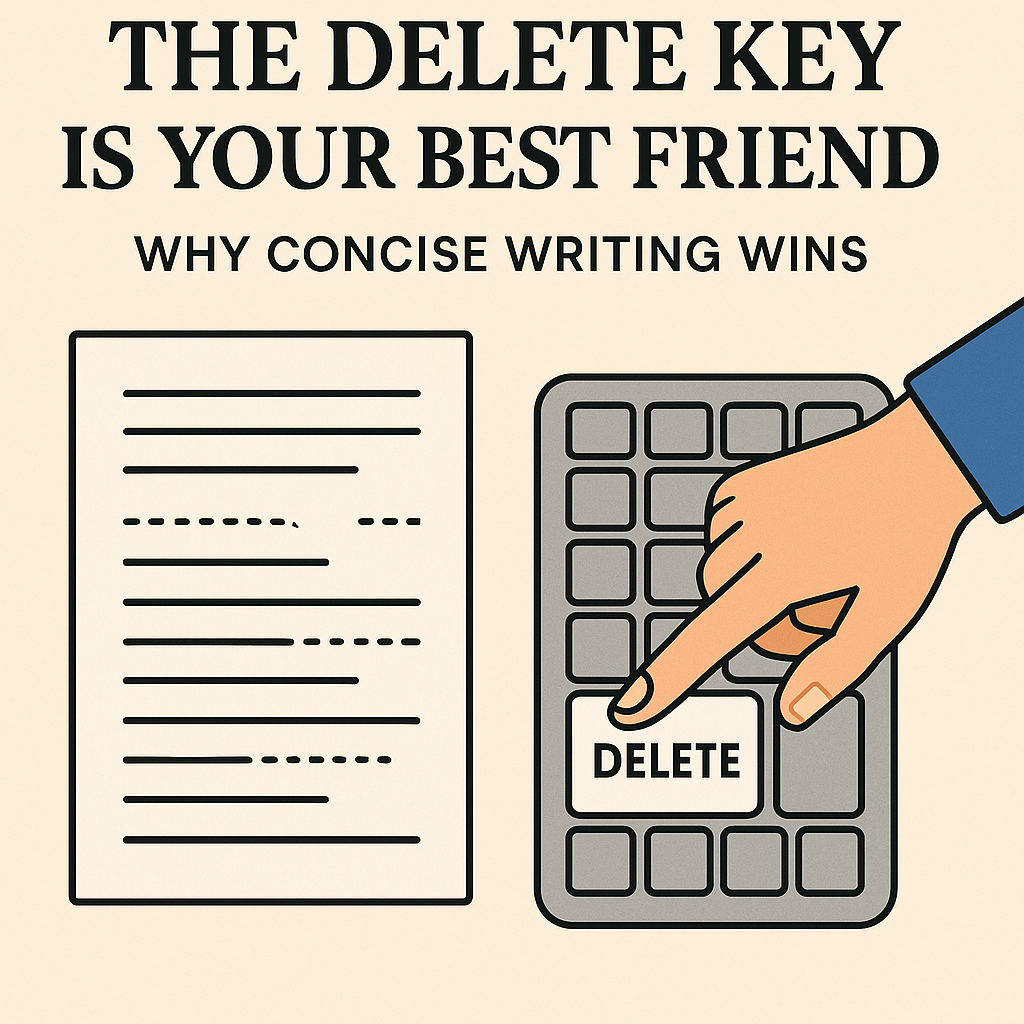
When I edit my blog posts, I have one goal: delete as much as possible.It sounds counterintuitive. You’ve just spent an hour writing 1,500 words. Shouldn’t you be adding more research, more examples, more insight? No. You should be cutting.Every unnecessary word is a small tax on your reader’s attention. And attention is the scarcest resource online. Your readers are drowning in content, juggling multiple tabs, and checking their phones. They didn’t come to your blog to wade through verbal padding. They came for answers, insights, or stories—and they want them now.
Concise writing isn’t about being short. It’s about being efficient.
It’s the difference between “Due to the fact that” and “Because.” Between “In order to” and “To.” Between a paragraph that meanders toward a point and a sentence that lands it immediately.
Consider what happens when you trim the fat. Your pace quickens. Your arguments sharpen. Your reader stays with you instead of clicking away. Studies consistently show that online readers scan rather than read, and they abandon content that feels bloated or slow. The average person leaves a webpage in 10-20 seconds if it doesn’t immediately deliver value.
When you edit, ask yourself: Does this sentence earn its place? Does this paragraph advance my argument or just restate what I’ve already said? Would my reader miss this if it vanished?
Usually, the answer is no. Those transition phrases you added for flow? Your reader’s brain supplies them automatically. That extra example that’s 90% similar to the one you already gave? It’s redundant. The throat-clearing introduction where you explain what you’re about to explain? Cut it and start with the explanation.Your delete key is a precision tool. Each tap removes friction between your reader and your ideas. Use it liberally. Your traffic will thank you.