The Atlantic is wider on maps than it is in the imagination. A young woman in Lisbon who can picture herself arriving in Newark on a Thursday and starting a software job on Monday is already halfway across the ocean before her suitcase is down from the attic. When she decides to board the plane, she takes with her more than a laptop and a Portuguese passport; she carries one more increment of pressure off the southern European labor market, one more vacant apartment in the Alfama that can now house a cousin still searching for work, one less voice at the rally where unemployment figures are shouted into a microphone. Multiply her by the hundreds of thousands who are now quietly calculating the same move—Greeks who have watched the tavernas empty, Italians who have counted how many graduates compete for every barista shift—and the demographic balance of the United States begins to tilt in a paler direction while the angry squares of Athens, Rome and Madrid lose the critical mass that turns frustration into fire. The United States has always been a vacuum cleaner for European restlessness, but in earlier centuries the suction required steamships, paper letters, and years of saving. Today the same restlessness is transmitted by fiber-optic cable and Instagram stories that show a Durham duplex renting for less than a Bologna studio. The decision cycle compresses from generational to seasonal: a Spanish nurse sees a TikTok of autumn leaves in Pennsylvania, fills out a three-minute credential check, and by Halloween she is clocking in at a Pittsburgh hospital whose staffing shortage had been chronicled on Reddit. Every migrant who leaves the Mediterranean basin narrows the pyramid that feeds extremist politics; every migrant who lands on the Eastern Seaboard widens the American tax base that keeps Social Security solvent and builds the rail ties of the Acela corridor. A whiter America is not an ideological program parading under a demographic alibi; it is the mechanical outcome of wage differentials and visa categories that happen to favor countries whose citizens are, on average, sun-starved and olive-skinned but still classified as white by census bureaucrats. The political vocabulary of the United States is so saturated with pigment that we forget whiteness is a passport, not a pledge of allegiance. The Portuguese engineer does not arrive dreaming of Confederate statues; he dreams of a garage where he can store a kayak and of schools where physics is taught in classrooms rather than in protest chants. If his presence makes Iowa or New Hampshire statistically lighter, that side-effect is less important than the primary effect: he earns enough to send remittances home, which in turn finance the small businesses that keep Lisbon’s side-streets calm when other capitals are tearing up cobblestones. Europe’s historic curse is density without mobility: too many clever twenty-somethings per square kilometer of café sidewalk, all of them aware that the seat they occupy is the only one available. Export some of that density across an ocean and the continent can breathe again. The departure lounges of Fiumicino and El Prat are safety valves; every aircraft that lifts off carrying a bilingual biology graduate is a centrifugal pump moving pressure away from the fault line. Meanwhile the United States, which has spent a century spreading itself across prairies and deserts, is only half full. The same nation that can fit the population of France into Texas can fit the population of Italy into Ohio, Pennsylvania and Michigan combined, and still leave room for deer. What we lack is not acreage but humans willing to live on it at a price that keeps downtowns alive after six o’clock. Europeans arrive already reconciled to apartment living, to trains that stop in smaller cities, to the idea that a café can survive without tourist mark-ups if locals actually live upstairs. Their presence thickens the tax rolls of places that have been hollowing since the first Walmart opened on the edge of town. Affordability in the United States is mostly a story of emptiness: empty lots where zoning forbids apartments, empty Victorians where plumbing rots for want of renters, empty municipal coffers because the ratio of pensioners to workers keeps climbing. Bring in half a million southern Europeans willing to pay 2015 rents and suddenly the math flips. A duplex in Rochester that once sat boarded becomes a renovation project financed by a Milanese couple who remember what it feels like when every doorway competes for tenants. The construction crew hired to restore the clapboard siding is paid with euros that were originally exchanged for dollars on the morning the European Central Bank cut rates again. The hardware store orders more lumber, the city collects more property tax, and the local school district hires a Spanish teacher who actually speaks Castilian. None of this requires a federal program; it requires only the continued willingness of states to recognize foreign professional licenses and of airlines to keep running direct flights from Lisbon to Boston. Critics will warn that the same migration could dilute the cultural alphabet that makes America heterogeneous. The fear is mathematically quaint: even if a million Europeans arrived every year they would still be swallowed by a nation of three hundred and thirty million whose fastest-growing cohorts are Asian and Latino. What they would do is add one more layer to a palimpsest that has already absorbed Irish policemen, German brewers, and Swedish farmers without erasing the Sikhs who drive the taxis or the Koreans who dry-clean their uniforms. A whiter influx does not whitewash the country; it simply postpones the day when rural counties must choose between immigration and extinction. The alternative is not a nostalgic monoculture but an acceleration of the aging spiral already visible in Japan, where villages return to forest because no one is left to prune the cedar. Peace in Europe is similarly pragmatic. A continent that exported its surplus sons to the trenches of two world wars now exports its surplus daughters to American birthing wards, and the absence of those daughters from the piazzas where unemployment statistics are brandished is what keeps the peace. Populism feeds on idle hands; remove the hands and the microphone loses its echo. The Greek teenager who might have thrown stones instead throws suitcases onto a belt at JFK, and the stones remain unmoved in an Athens alley that is quieter for his absence. History books will not record the riot that did not happen because the potential rioter is tending bar in Portland, but the calm is real even if invisible. The United States gains population without the political trauma of a border wall, Europe loses tension without the moral trauma of a lost generation, and the migrants themselves gain wages that buy what passports alone cannot: options. The arrangement is not utopian; it is transactional, the same way nineteenth-century Scandinavians traded fjords for Minnesota frostbite and in so doing kept both regions stable. A whiter America is neither promise nor threat; it is the demographic exhaust of a continent that has learned, finally, to vent its pressure westward. The ocean that once carried armies now carries nurses, carpenters, and coders, and the wake behind the ships is wide enough to cool the tempers left standing on European quays. When the next census reports a paler Midwest, the headline will be written as culture war, but the subtext will be geometry: more people on a spacious land, fewer people on a crowded one, and the straightest line between frustration and tranquility running through the sky thirty-seven thousand feet above the North Atlantic.
Related Posts
The Giants of the Smartphone World: A Look at the Largest Screens
The smartphone landscape has evolved dramatically over the past decade, and nowhere is this more apparent than in screen size.…
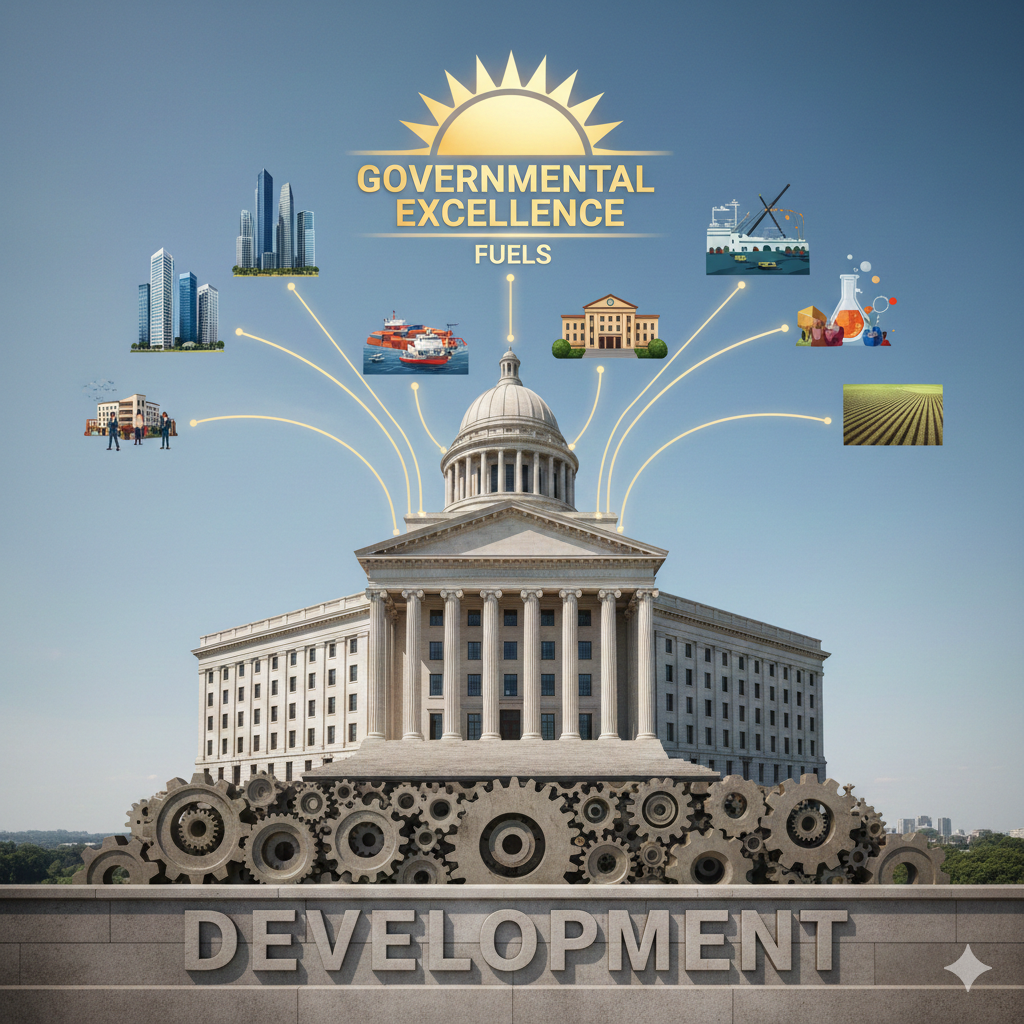
The Rising Bar: Why Development Demands Governmental Excellence
There’s a curious paradox unfolding across the developed world. As societies become wealthier, more connected, and ostensibly more comfortable, their…
How Bloggers in Developing Countries Can Get Paid by Check Through Amazon Associates and ClickBank
For many aspiring bloggers around the world, monetization can be tricky — not because of a lack of traffic or…