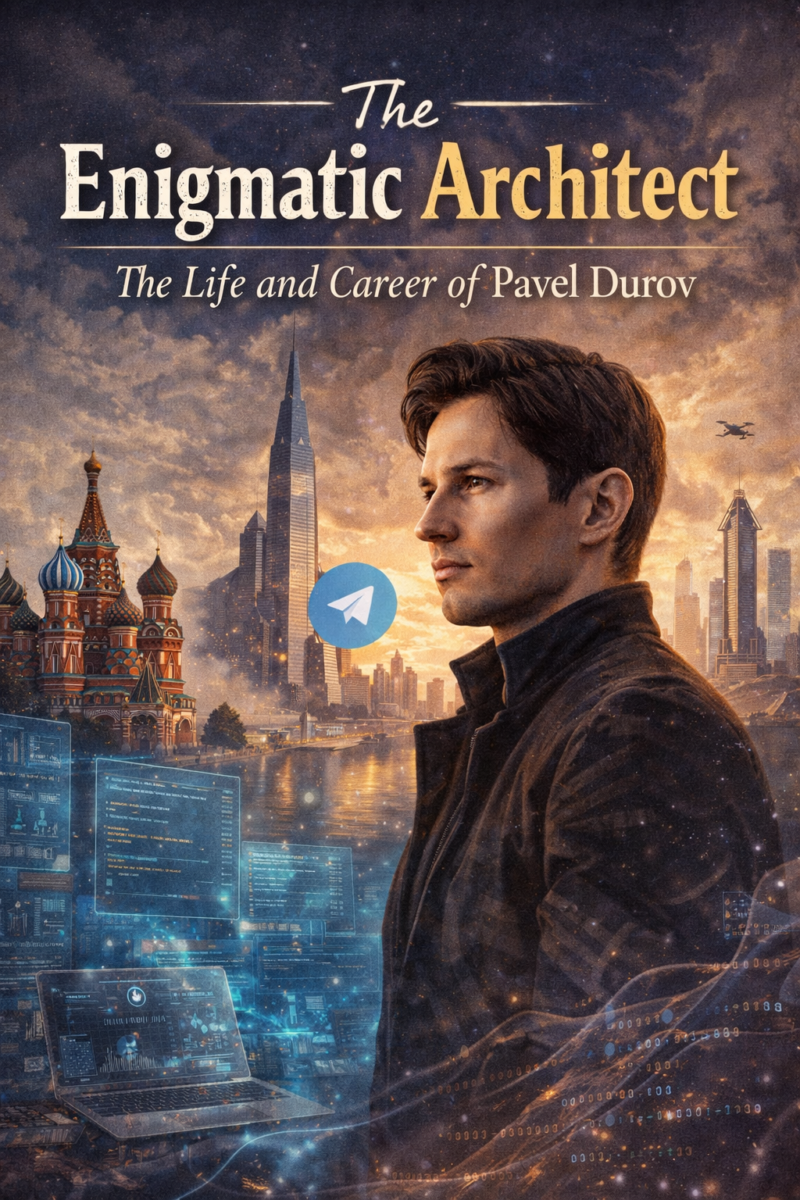
In the landscape of modern technology, few figures are as compelling and enigmatic as Pavel Durov. Often called the “Mark Zuckerberg of Russia,” the label sells short a story that is far more cinematic, involving defiance, exile, and a relentless pursuit of digital freedom. His career is not just a tale of building apps, but of building a philosophy.
Durov’s journey began in the academic halls of St. Petersburg State University, where his brilliance in philology and computer science hinted at a future less ordinary. His first major creation, however, was born from a desire for connection. In 2006, he and his brother Nikolai launched VKontakte (VK), a social network that swiftly became a cultural phenomenon across the Russian-speaking world. With an intuitive interface and features that prioritized user experience, VK grew at a staggering pace, dwarfing its competitors. For a time, Durov was the celebrated young prince of Russian tech, a billionaire living a life of eccentric luxury and public stunts.
But the turning point in Durov’s narrative came when the allure of a powerful platform collided with the demands of political power. As VK’s influence soared, so did pressure from the Russian government to censor content and hand over user data of opposition activists. Durov, a staunch libertarian inspired by novels like Atlas Shrugged, refused. His defiance took the form of public gestures, like posting pictures of dogs in response to security agency requests, and a firm technical refusal to compromise his users’ privacy. This standoff culminated in 2014 when he was forcibly ousted from the company he founded. Facing immense pressure, he sold his remaining shares and left Russia, seemingly for good.
Many would have retreated. Durov rebuilt. He took with him a small team of loyal engineers, including his brother, and a newfound conviction: the world needed a truly secure and independent communication tool. This led to the creation of Telegram. Conceived initially as a project to secure his own conversations, Telegram was built on a foundation of encryption and speed. Durov poured millions of his fortune into it, vowing it would never sell ads, collect user data, or bow to any government. Telegram became a sanctuary for those seeking private communication, from journalists and activists to ordinary citizens worldwide. Its commitment to a user-first ethos, with features like massive group chats and channels, fueled explosive growth.
Yet this principled stand placed him in a perpetual global spotlight. Governments criticized Telegram as a haven for extremist content, leading to temporary bans in some countries. Durov walked a tightrope, gradually implementing moderation to combat public harm while fiercely resisting backdoors into Telegram’s encryption. His life became one of digital nomadism, with no fixed headquarters, moving between friendly jurisdictions to protect his team and his mission from external coercion.
Today, Pavel Durov’s legacy is a complex tapestry. He is the visionary who built two empires—one he lost, and one he guards. He is a symbol of resistance against state overreach, yet his platform grapples with the dark realities of free speech at a planetary scale. He is a billionaire who owns no property, a leader who communicates with the world through a single public channel. More than a programmer or CEO, Durov has crafted himself into an idea: that in the digital age, privacy is sovereignty, and that it is possible to build a fortress for conversation that answers to its users, and to them alone. His story is still being written, from one secure message to the next.