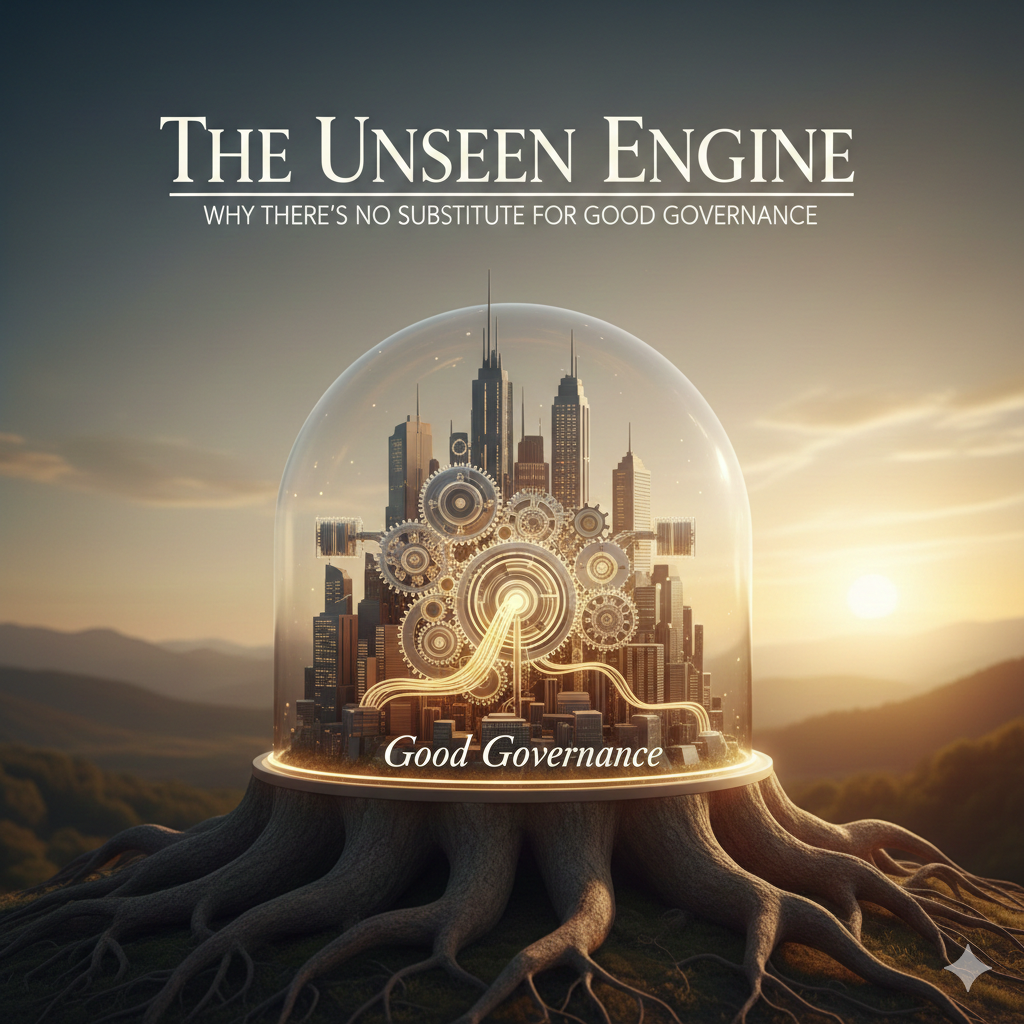
We often debate economic theories, natural resources, and cultural factors in the quest for development. But we tend to overlook the most fundamental catalyst of all: effective governance. It is the silent, often unseen engine that transforms potential into prosperity. Nothing—not vast resources, nor a willing workforce—can compensate for its absence. This isn’t about ideology. It’s about the practical, tangible foundations that allow everyday people to build secure lives and create wealth. To understand this, we can look at a stark contrast in realities.
The Platform for Prosperity: Infrastructure as an Income-Generating Asset
In modern China, the government’s decades-long focus on infrastructure has built more than roads and rails; it has built platforms for personal economic agency. For the average Chinese citizen, this network isn’t just about convenience—it’s a direct tool for generating income. Consider the vast national network of high-speed rail, highways, and airports. This logistics backbone means a farmer can get fresh produce to distant urban markets in hours, and an e-commerce seller in a smaller city can reliably ship goods nationwide at low cost. The road itself becomes a sales channel. Furthermore, ubiquitous digital infrastructure, from 4G/5G coverage to deeply integrated digital payment systems, has created a frictionless marketplace. A rural artisan can sell handicrafts live on a streaming platform, and a street vendor operates with zero cash, reducing theft and simplifying trade. Here, the internet is a storefront, not just an entertainment portal. Even reliable utilities like consistent electricity and stable water access are not mere conveniences; they are the non-negotiable inputs that allow a small workshop or a family restaurant to operate on a dependable schedule. This state-provided platform acts as a powerful force multiplier, dramatically lowering barriers to entry and expanding the market reach of the individual.
The Barrier of Absence: When the Foundation is Missing
Now, contrast this with the reality in many underdeveloped regions, particularly across parts of Africa, where the crisis of infrastructure is a daily, grinding constraint. Here, the absence of good governance manifests as a physical barrier to survival, let alone prosperity. Imagine a fertile region with a bumper harvest. Without all-weather roads, the surplus rots before it reaches a city where there is demand. A farmer’s wealth is literally trapped in the field, proving that no road means no market access. Unreliable electricity forces a tailor to rely on a manual sewing machine instead of an electric one, and a miller spends precious capital on a diesel generator, making flour more expensive for everyone. Unstable power means permanently stunted productivity. Perhaps the most pervasive tax is the time tax: where roads are impassable or non-existent, a simple journey to a supplier or customer can consume a day instead of an hour. This tax is paid in the entrepreneur’s most valuable currency—time that could have been spent producing, innovating, or selling. In this scenario, talent and ambition are not enough. The most brilliant entrepreneur cannot build a logistics company without passable roads, and the most skilled artisan cannot access global markets without reliable electricity and internet.
The Core Argument: Governance is the First Infrastructure
This comparison highlights a universal principle, beyond any specific national context: Governance is the primary infrastructure. A functioning state that can plan, fund, and execute the building of physical and digital networks is providing the most critical public good of all: the opportunity for its citizens to participate in the economy. Good governance enforces contracts so people can trade with trust. It invests in the public goods—the roads, grids, and broadband—that individuals and private entities cannot feasibly build alone. It maintains the basic stability that allows citizens to plan for next year, not just tomorrow. There is no private app, no single foreign aid package, and no grassroots innovation that can fully substitute for this foundational role. A tech startup cannot lay a national fiber-optic network, just as a community co-op cannot build a continental highway system.
The ability to engage with and leverage world-class infrastructure to make money is, in significant part, an outcome of strategic, long-term state capacity. Conversely, the heartbreaking struggle of hardworking people in regions deprived of these basics is less a reflection on them and more a verdict on generations of failed or absent governance.
Ultimately, the debate about development must start here. Before discussing the nuances of economic models, we must acknowledge the prerequisite: a competent, committed state that builds the foundational platform upon which all human enterprise depends. Without it, potential remains forever locked away. With it, a nation and its people can truly begin to build.