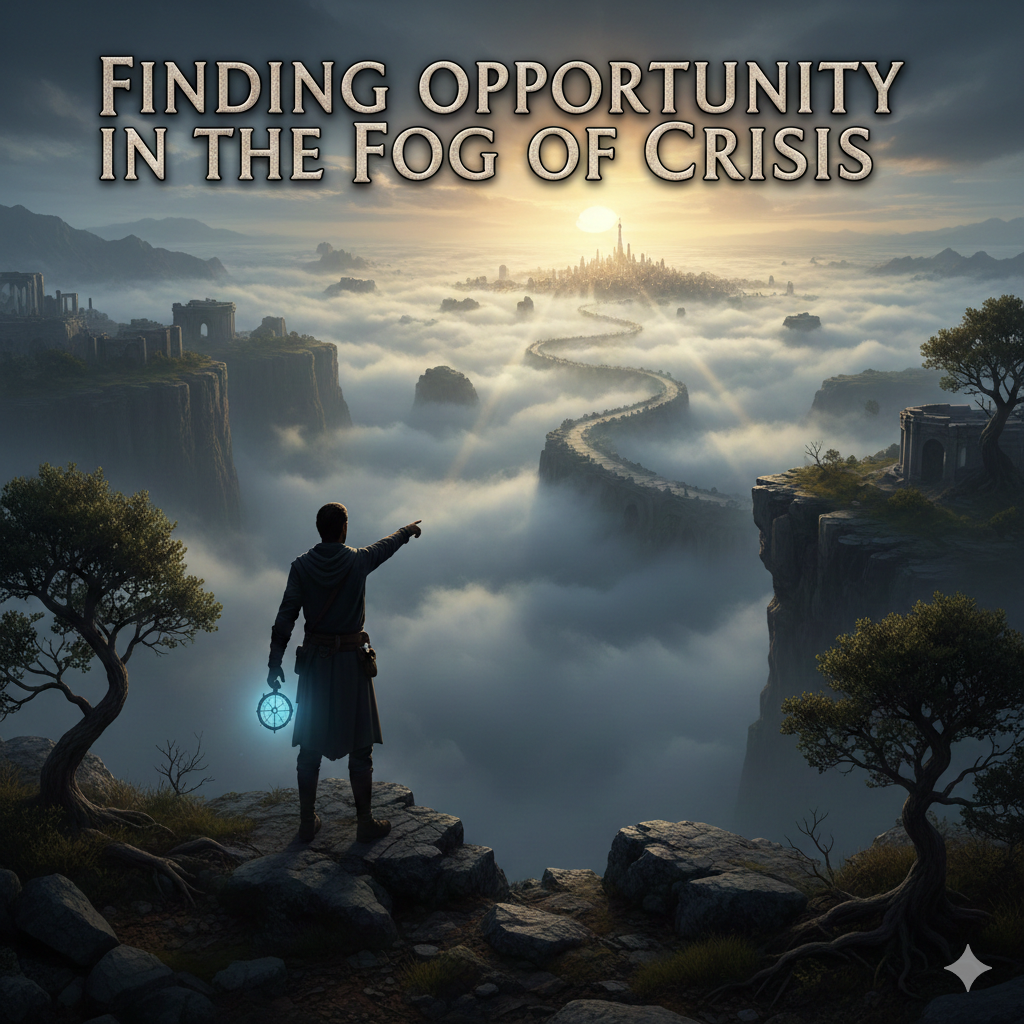
When tensions flare between nations, when supply chains fracture, or when diplomatic relationships fracture, the instinctive response is to brace for impact. Markets shudder, headlines scream, and most people retreat into a defensive crouch. But there’s another way to look at these moments of geopolitical upheaval, one that separates those who merely survive turbulence from those who emerge stronger because of it.
Every geopolitical crisis creates asymmetries. Resources that flowed freely suddenly face bottlenecks. Trade routes that seemed permanent get rerouted overnight. Alliances shift, regulations change, and entire industries find themselves either stranded or unexpectedly advantaged. These aren’t just disruptions to manage; they’re market signals revealing where value has suddenly concentrated or where it’s about to move next.
Consider what happens when a major energy producer faces sanctions. The obvious story is about rising fuel costs and inflation fears. The less obvious story is about which alternative energy sources suddenly became economically viable, which shipping routes gained strategic importance, and which countries positioned themselves as new intermediaries. Someone who saw beyond the immediate crisis recognized that Europe’s energy vulnerability wasn’t just a problem but a catalyst that would accelerate a decade’s worth of renewable energy investment into a few short years.
The same pattern repeats across different types of crises. When tech supply chains concentrated in one region face disruption, the winners aren’t just those who diversify their suppliers. They’re the ones who anticipated that governments would suddenly care deeply about semiconductor sovereignty and positioned themselves to serve that newly urgent need. They understood that crisis creates political will, and political will creates budgets, and budgets create opportunities that didn’t exist six months earlier.
Paying attention means more than just watching the news. It means understanding second and third order effects. When a currency crisis hits an emerging market, the immediate impact is capital flight and economic contraction. But look deeper and you might see a workforce that just became dramatically more competitive on cost, a government suddenly motivated to remove regulatory barriers to attract investment, or local entrepreneurs who can now afford to acquire distressed assets from foreign companies fleeing uncertainty.
The key is recognizing that crisis doesn’t just destroy value; it redistributes it. Somewhere, someone who depended on the old arrangement is struggling. Somewhere else, someone who was locked out of that arrangement finally has an opening. The question is whether you’re paying enough attention to identify which side of that redistribution you want to be on.
This isn’t about being callous to human suffering or cheering for instability. Real crises cause real pain, and that shouldn’t be minimized. But refusing to see the opportunities that crises create doesn’t help anyone. In fact, the people and organizations who respond most effectively to geopolitical shocks often do the most to mitigate their worst effects, precisely because they have the resources and motivation to build new solutions.The investors who bought Greek bonds when everyone else fled not only profited enormously but also provided capital when the country desperately needed it. The companies that maintained operations in regions others abandoned often became essential employers and economic anchors. Opportunity and stabilization can be two sides of the same coin when approached thoughtfully.
What separates opportunistic thinking from mere speculation is homework. When crisis hits, most people are scrambling to understand what just happened. But if you’ve already been studying the geopolitical fault lines, understanding which countries rely on what resources, tracking which industries are vulnerable to which types of shocks, you’re not starting from zero when disruption arrives. You have context. You can distinguish signal from noise.This means cultivating sources of information beyond mainstream headlines. It means understanding enough economics to recognize when a currency devaluation will boost exports or when capital controls will create parallel markets. It means knowing enough about logistics to spot when a closed port will overwhelm an alternative route. It means following the incentives, because governments and corporations will always act to protect their interests, and those actions create predictable ripples.
The most sophisticated observers watch what powerful actors are doing more carefully than what they’re saying. When a country quietly stockpiles commodities or when a corporation suddenly increases its inventory despite claiming everything is fine, those actions reveal expectations about the future. By the time the crisis becomes obvious to everyone, the opportunity may have already passed.
Timing matters enormously. The best opportunities often appear when fear peaks and everyone else is paralyzed by uncertainty. That’s when assets get mispriced, when talent becomes available, when partnerships can be formed on favorable terms. But capitalizing on that moment requires both resources held in reserve and the nerve to deploy them when the consensus is still pessimistic.
This is why optionality is so valuable before crisis strikes. Having cash when everyone else is leveraged, having operational flexibility when others are locked into rigid supply chains, having relationships across multiple geographies when others are dependent on a single market; these all convert from insurance policies into competitive advantages the moment crisis arrives.
The pattern holds whether we’re talking about trade wars, military conflicts, sovereign debt crises, or pandemic disruptions. Each reshapes the landscape in ways that hurt some and help others. Each reveals which systems were fragile and which were antifragile. Each punishes those who assumed stability and rewards those who prepared for change.
Looking forward, the geopolitical environment seems unlikely to stabilize anytime soon. Great power competition is intensifying, not easing. Climate change will create resource pressures and migration flows that governments will struggle to manage smoothly. Technological change will continue disrupting existing power structures faster than new stable arrangements can form.
That might sound like a bleak forecast, but it’s also a statement about where opportunities will concentrate. In a world of persistent geopolitical friction, the ability to navigate complexity, bridge divides, and adapt quickly becomes extraordinarily valuable. The question isn’t whether crises will come, it’s whether you’ll be ready to see them clearly when they do.