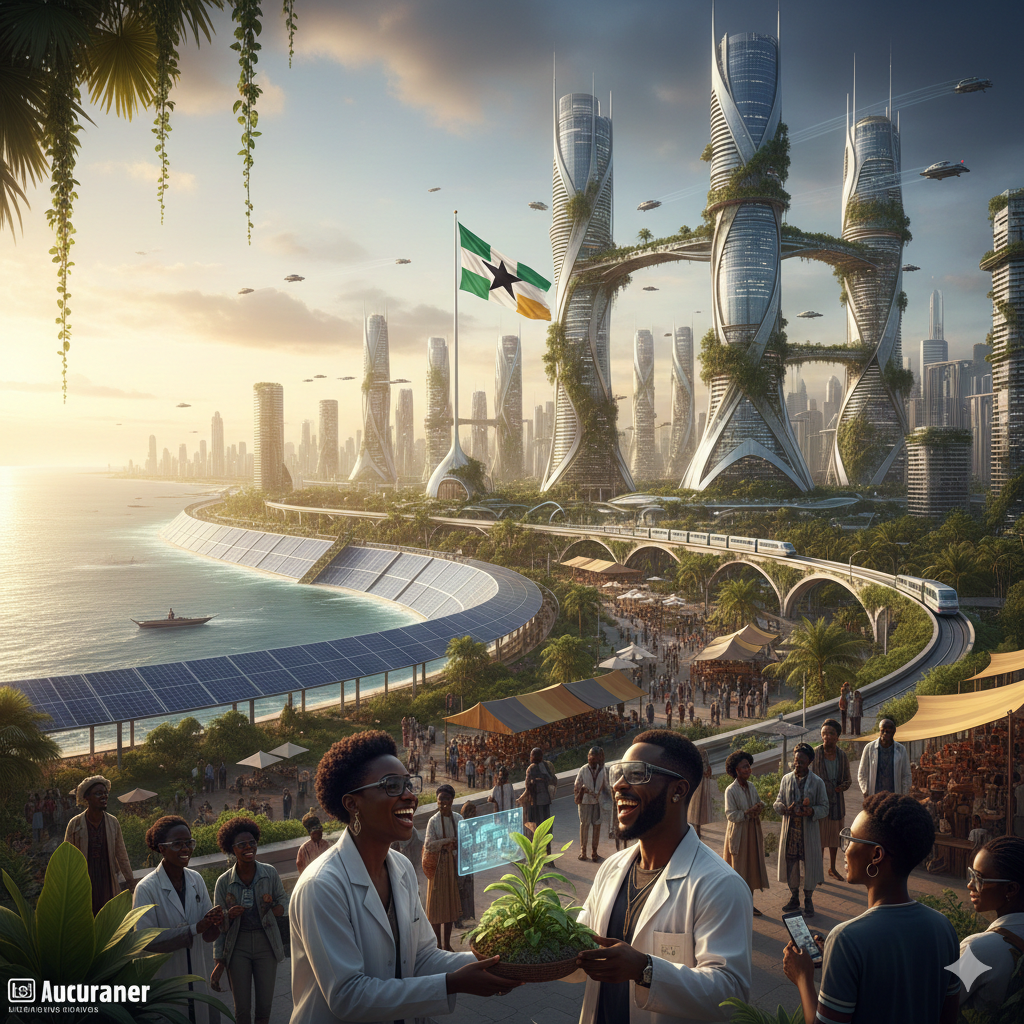
When most people think of “first world countries,” they envision places like Switzerland, Japan, or Canada. Rarely do black-majority nations come to mind. This disconnect reveals more about our cultural biases than it does about economic reality. The truth is that several black-majority countries have achieved first world status by any reasonable metric, yet they remain conspicuously absent from our mental maps of global prosperity.
The most prominent example is the Bahamas, a Caribbean nation that boasts one of the highest per capita incomes in the Americas. With a GDP per capita exceeding many European nations, the Bahamas has built a sophisticated economy centered on financial services and tourism. The country offers universal healthcare, high literacy rates approaching one hundred percent, and infrastructure that rivals any developed nation. Walking through Nassau, you’ll find modern hospitals, well-maintained roads, reliable utilities, and all the trappings of a prosperous society. The Bahamas is categorized as a high-income country by the World Bank and consistently ranks high on the Human Development Index.
Barbados presents another compelling case. This small island nation has transformed itself from a sugar-based colonial economy into a diversified, service-oriented powerhouse. Barbados has achieved near-universal literacy, offers free education through the university level, and maintains a healthcare system that produces health outcomes comparable to Western Europe. The country’s infrastructure is excellent, its institutions are stable, and corruption levels are among the lowest in the developing world. In 2021, Barbados was officially designated a developed country by the United Nations, a recognition that formalized what many observers had noted for years.
Seychelles, an archipelago nation in the Indian Ocean, rounds out this picture. Despite its small size, Seychelles has the highest nominal per capita GDP in Africa and ranks as a high-income economy. The country has invested heavily in education and healthcare, resulting in life expectancy rates that exceed those of the United States. Seychelles has also pioneered environmental conservation efforts that put many wealthier nations to shame, protecting over forty percent of its territory while maintaining economic growth.
The question naturally arises: if these countries clearly meet the criteria for first world status, why don’t we think of them that way? Part of the answer lies in how we’ve historically defined these terms. The “first world” originally referred to Cold War allegiances rather than economic development, but the term has evolved to denote wealthy, industrialized nations with high living standards. Yet our mental image of what qualifies remains stubbornly narrow, often limited to North America, Western Europe, and a few East Asian nations.
Geography plays a role in this perception gap. These black-majority first world countries tend to be small island nations, easy to overlook on a world map and often dismissed as tourist destinations rather than economic peers. Their populations are measured in hundreds of thousands rather than millions, making them less visible on the global stage despite their per capita achievements.
There’s also an uncomfortable truth about racial bias in how we assess development. Studies have shown that people consistently underestimate the economic development and living standards of predominantly black nations, even when presented with objective data. This bias shapes not only casual perceptions but also how these countries are covered in media, represented in international institutions, and perceived as investment destinations.The existence of these countries matters beyond mere semantics. It challenges the narrative that economic development and black-majority governance are somehow incompatible, a narrative that has been used to justify everything from colonialism to contemporary interventionist policies. These nations prove that with the right institutions, policies, and circumstances, any society can achieve prosperity.
Moreover, recognizing these countries as first world matters for their citizens. Being constantly categorized as “developing” despite achieving developed status affects everything from credit ratings to international partnerships to the self-perception of citizens themselves. It’s a form of erasure that has real economic and psychological consequences.
The success of the Bahamas, Barbados, and Seychelles also offers lessons for development more broadly. These countries have generally prioritized education, built strong institutions, maintained political stability, and leveraged their geographic advantages strategically. They’ve shown that small size isn’t necessarily a handicap and that sustainable development requires long-term thinking and investment in human capital.
As we move forward in an increasingly interconnected world, it’s time to update our mental categories to match reality. Black-majority first world countries exist, they’re thriving, and they deserve recognition not as exceptions or anomalies, but as examples of what’s possible when opportunity meets governance. The first step toward a more accurate understanding of global development is acknowledging what’s already there, even when it challenges our preconceptions.