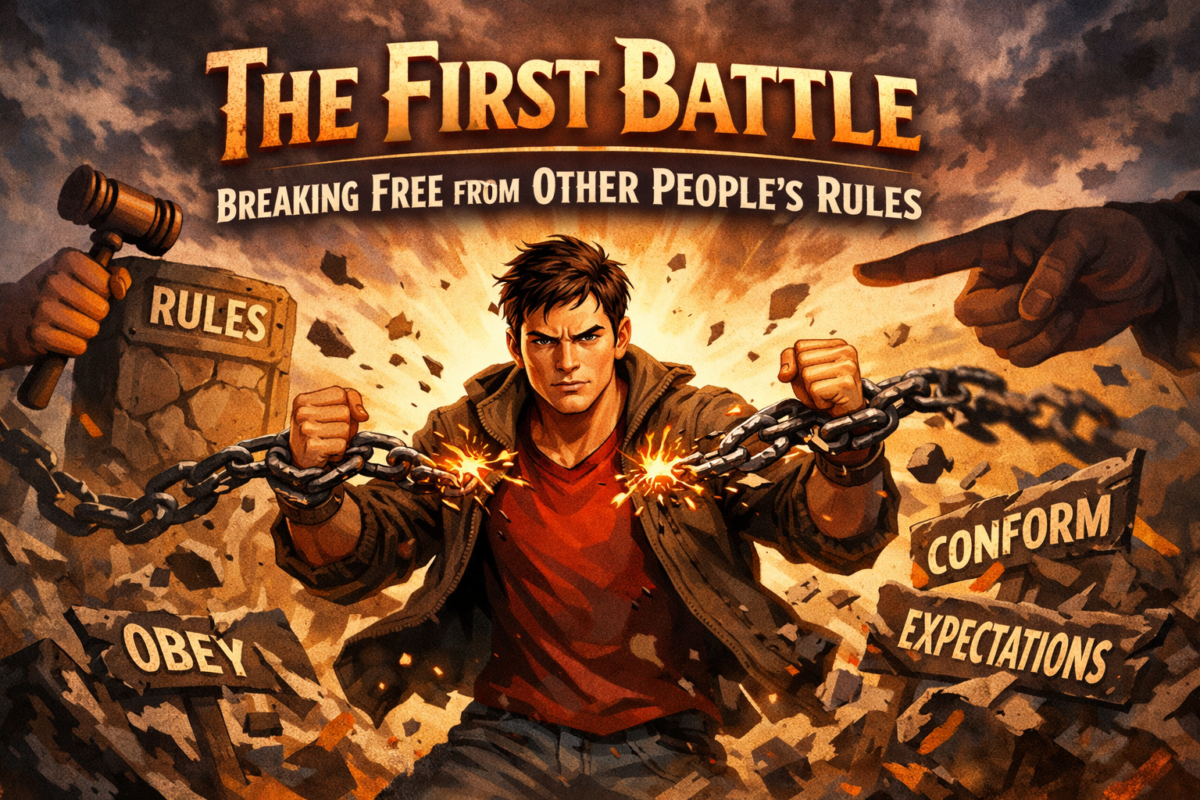
The story we’re often told about juvenile delinquents is one of inevitable decline—a trajectory from childhood trouble to adult failure. But reality tells a different, more hopeful story. Many young people who struggle with the law, authority, and behavioral problems during their teenage years go on to build remarkably successful lives as adults.
This phenomenon puzzles many people, but it makes more sense when we understand what’s actually happening during adolescence. The teenage brain is still developing, particularly the prefrontal cortex, which governs impulse control, planning, and consideration of consequences. What looks like reckless defiance or poor judgment is often a developing mind testing boundaries in an immature way. The same energy that drives a teenager to break rules can, when channeled differently, fuel entrepreneurial ambition, creative innovation, or determined advocacy.
Many traits that manifest as delinquent behavior in youth are actually qualities that serve people well in adulthood. Risk-taking, when tempered with experience and better judgment, becomes calculated courage in business or creative pursuits. Resistance to authority can evolve into independent thinking and leadership. The social skills required to navigate street culture or peer pressure often translate into charisma, networking ability, and emotional intelligence in professional settings.
There’s also the crucible effect of overcoming adversity. Young people who face legal troubles, family dysfunction, or poverty often develop resilience and problem-solving skills that their more sheltered peers lack. They learn to read people, adapt to difficult situations, and fight for what they want. When they decide to redirect their lives, they bring an intensity and determination that can be formidable.
The research backs this up. Longitudinal studies following troubled youth into adulthood consistently show that most people age out of criminal behavior. One landmark study found that about 85% of juvenile delinquents do not continue offending into adulthood. Many go on to lead conventional, productive lives. Some achieve extraordinary success in business, arts, politics, and other fields.
Consider that many successful entrepreneurs, including household names in tech and business, have acknowledged troubled pasts. Some were expelled from school, arrested, or labeled as problems by every authority figure in their lives. What changed wasn’t necessarily their core personality, but their circumstances, maturity, and the channeling of their energy into productive pursuits.
The turning points vary from person to person. Sometimes it’s a mentor who sees potential beneath the troublesome behavior. Sometimes it’s a consequence serious enough to prompt genuine reflection without being so severe that it eliminates future opportunities. Often it’s simply the natural maturation process, combined with finding something worth working toward, whether that’s a career, a relationship, or a personal goal.
This doesn’t mean we should romanticize juvenile delinquency or ignore its very real costs and dangers. Young people caught in cycles of crime face genuine risks of violence, incarceration, and truncated opportunities. The goal isn’t to celebrate troublesome behavior but to recognize that it doesn’t have to define a person’s entire life trajectory.
The implications for how we approach juvenile justice and education are significant. When we write off troubled young people as lost causes, we miss the potential that often lies beneath the surface chaos. Punitive approaches that permanently mark or exclude young offenders can become self-fulfilling prophecies, closing doors that might otherwise lead to redemption and success.
What these young people often need isn’t harsher punishment but better channeling of their energy, skills training, mental health support, and most critically, hope that change is possible. They need adults who can see past the troublesome behavior to the developing person underneath, who understand that the same intensity driving their problems might one day drive their success.
The path from juvenile delinquent to successful adult isn’t easy, and not everyone makes it. But it happens far more often than our cultural narratives suggest. Understanding this should give us all more patience with troubled youth, more investment in rehabilitation over punishment, and more hope that people can genuinely change. The teenager shoplifting today might be running a successful company in fifteen years. The student suspended for fighting might become an advocate for peace. The kid everyone gave up on might surprise us all.