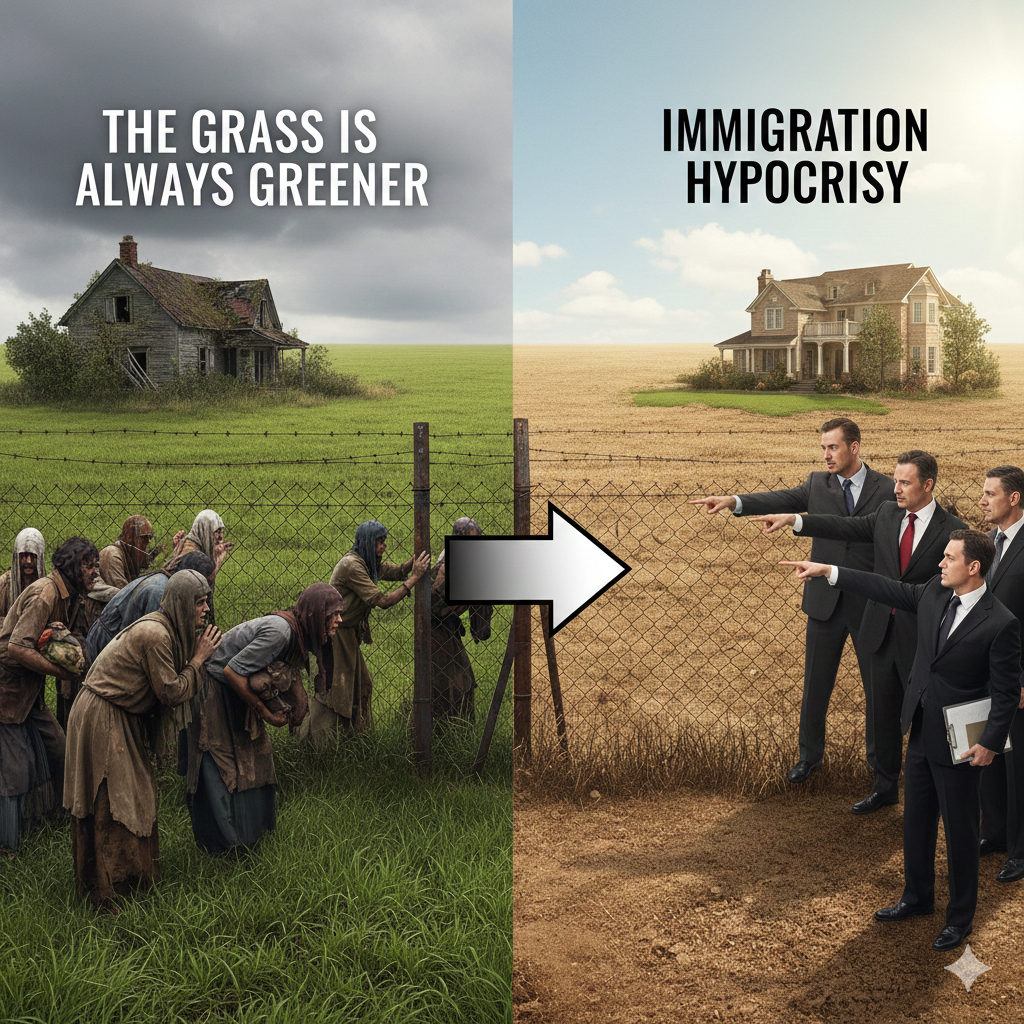
We’ve all seen the comments. Scroll through any social media thread or overhear certain conversations, and you’ll find a familiar chorus: “They’re taking our jobs,” “They don’t want to assimilate,” “Our country is full.” The rhetoric around immigration is often charged with fear, scarcity, and a palpable sense of grievance.But here’s the ironic twist I can’t stop thinking about: a significant number of the people who voice these complaints are, themselves, dreaming of being immigrants.
Let me explain.Talk to them about their own lives, their own aspirations, and a different picture emerges. The same person who complains about borders being “too open” here might spend their evenings researching property prices in Portugal, dreaming of a quieter life abroad. They might be actively investigating work visas in Australia for better opportunities, or planning a retirement in Costa Rica for a lower cost of living. Their LinkedIn profile might proudly announce, “Looking for opportunities in the UAE or Singapore.”
The dissonance is stunning. The narrative flips completely when they are the ones seeking a better life.
When they want to emigrate, it’s called:· Seeking opportunity.· Building a better future for their family.· Escaping high taxes or political dysfunction.· A brave adventure, a fresh start.
When others want to immigrate to their country, it’s framed as:
An invasion. A drain on resources.· A threat to culture. An act of desperation or law-breaking.
This isn’t about legitimate policy debates—border security, immigration quotas, and integration programs are complex issues worthy of serious discussion. This is about the fundamental human story that gets twisted based on who’s telling it and who it’s about.
At its core, the desire to move is a human one. It’s the desire for safety, for dignity, for a chance to work hard and provide. It’s the driver that populated continents and built nations. The person boarding a plane with a work visa and the person crossing a river with nothing but hope are often motivated by strikingly similar forces: love for their family and a drive for a safer, more prosperous life.So why the hypocrisy?
Often, it’s a failure of imagination and empathy. It’s easy to see your own desire to move as rational and justified—a logical choice for improvement. It’s harder to extend that same understanding to a faceless “them,” who are often reduced to a political talking point or a scary headline.It’s also about proximity. The “immigrant” in the abstract is a problem. The immigrant you actually know—your coworker, your doctor, your child’s friend—is just a person.
Perhaps the most powerful exercise for anyone holding contradictory views on immigration is this: Write down your reasons for wanting to live in another country. Now, read that list back, and imagine it was written by someone hoping to come to your homeland.
The words might be different, but the music is almost always the same: hope, determination, and a very human longing for greener grass.
Recognizing this shared desire doesn’t mean throwing borders open. But it does mean grounding our debates in a shared humanity, not in a hierarchy of whose dreams are deemed legitimate. Maybe then we can have a conversation that’s less about “us vs. them,” and more about how we navigate movement, community, and opportunity in a world where, it turns out, almost everyone is just looking for a better place to call home.