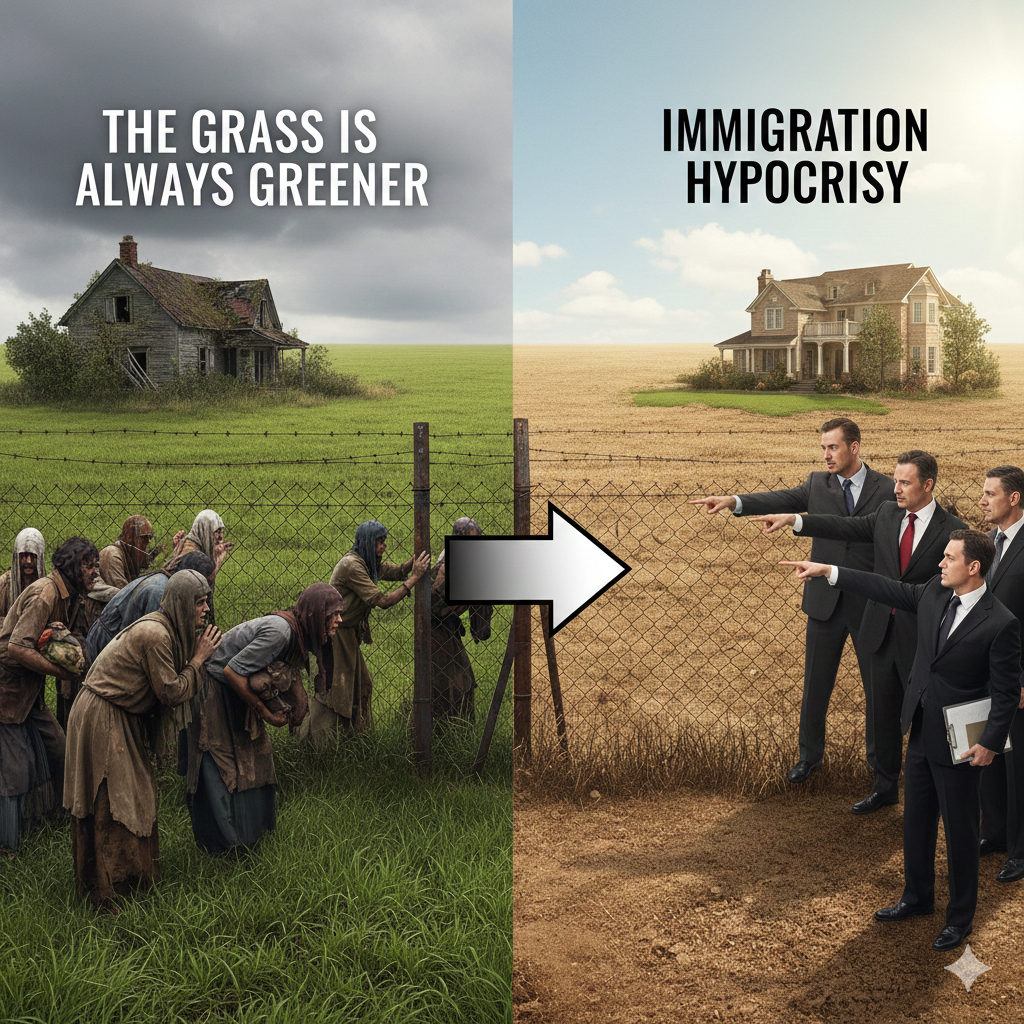
There’s a particular kind of stress that comes with economic precarity that’s hard to explain to someone who’s never experienced it. When you live and work in a poor country, every decision carries weight because the cushion between you and catastrophe is paper-thin. What might be a minor setback in a wealthy nation becomes an existential crisis when your margin for error shrinks to almost nothing.
Consider something as simple as getting sick. In a prosperous country, you might take a few days off work, visit a doctor, pick up some medication, and recover at home. You have sick leave, health insurance, and savings to fall back on. The illness is an inconvenience, perhaps an annoyance, but rarely a threat to your livelihood. In a poor country, that same illness triggers a cascade of impossible choices. Do you spend money you don’t have on medical care, or do you push through and risk getting worse? Do you miss work and lose wages you desperately need, or do you show up sick and potentially lose the job entirely? There’s no paid leave to cushion the blow, no insurance to cover the costs, no savings account with enough to see you through.
This dynamic plays out across every aspect of daily life. Transportation becomes a calculated risk rather than a simple logistics problem. If your bicycle breaks down or the bus fare increases, you might not be able to get to work at all. You can’t just call an Uber or take a personal day while you sort things out. The infrastructure itself conspires against you because roads flood when it rains, power cuts interrupt your ability to work from home, and unreliable water supply means you might need to spend hours fetching water instead of earning money.
The economic mathematics of poverty create a cruel paradox. The less money you have, the more expensive everything becomes. You can’t buy in bulk to save money because you don’t have the upfront capital or storage space. You can’t invest in quality items that last longer because you can only afford whatever you can pay for today. Your shoes wear out faster, your phone breaks more often, and repairing things costs a larger percentage of your income than it would for someone wealthier. You end up paying more over time precisely because you can’t afford to pay less.
Education and skill development operate under the same ruthless logic. In wealthier countries, people talk casually about investing in yourself, taking time to learn new skills, or even going back to school for a career change. These options require the luxury of time and money you can afford to spend without immediate return. When you’re living paycheck to paycheck in a poor country, every hour spent learning is an hour not spent earning. You’re trapped in whatever job you can get because you literally cannot afford the bridge period required to transition to something better. The very investments that might improve your long-term prospects are foreclosed by the immediate demands of survival.
Family obligations add another layer of pressure. In many poor countries, cultural expectations and weak social safety nets mean that if you manage to secure even modest stability, you become a lifeline for extended family members who have less. This isn’t selfishness or poor planning on anyone’s part; it’s the rational response to living in a society without unemployment insurance, disability benefits, or adequate public services. But it means that your already thin margin gets stretched even thinner as you support not just yourself but potentially siblings, parents, cousins, or neighbors in crisis. One person’s small success becomes a collective resource, shared until there’s barely enough for anyone.
The psychological toll of this precariousness is exhausting in ways that are hard to measure but impossible to ignore. Decision fatigue sets in when every choice matters so much. You can’t just buy the milk without calculating whether that money might be needed more urgently tomorrow. You can’t take a day to rest without worrying about the lost wages. You can’t make a small mistake at work without wondering if this is the one that will tip you over the edge. The mental energy required to constantly optimize, calculate, and worry is itself a tax on your ability to think clearly, plan ahead, or take the kinds of measured risks that might actually improve your situation.
This is why poverty is so hard to escape. It’s not simply about having less money, though that’s certainly part of it. It’s about operating in an environment where the normal friction of daily life, the minor setbacks that everyone encounters, have the potential to derail everything. A broken phone, a delayed payment from a client, a sick child, an unexpected funeral, a stolen wallet—any of these events that would be manageable problems in a context with more resources becomes a potential disaster when your margin for error is nearly nonexistent.What makes this especially difficult is that the strategies required to survive in poverty are often exactly the opposite of the strategies that might help you escape it. You focus on the immediate because you have to, even though long-term thinking would serve you better. You take low-risk, low-reward opportunities because you can’t afford the potential downside of something more ambitious. You maintain expensive obligations and relationships because they’re your only safety net, even though they drain resources you could otherwise save. You make perfectly rational decisions given your constraints, but those decisions keep you trapped in the same place.
Understanding this dynamic matters because it reframes how we think about poverty and economic development. The issue isn’t primarily about people in poor countries lacking ambition, intelligence, or work ethic. It’s about operating in a system where the penalty for any misstep is so severe that rational behavior looks conservative and risk-averse. When your margin for error is thin, you can’t afford to be bold. When you can’t afford to be bold, you stay where you are. And the cycle continues, grinding away at people who are doing everything right within an impossible set of circumstances.