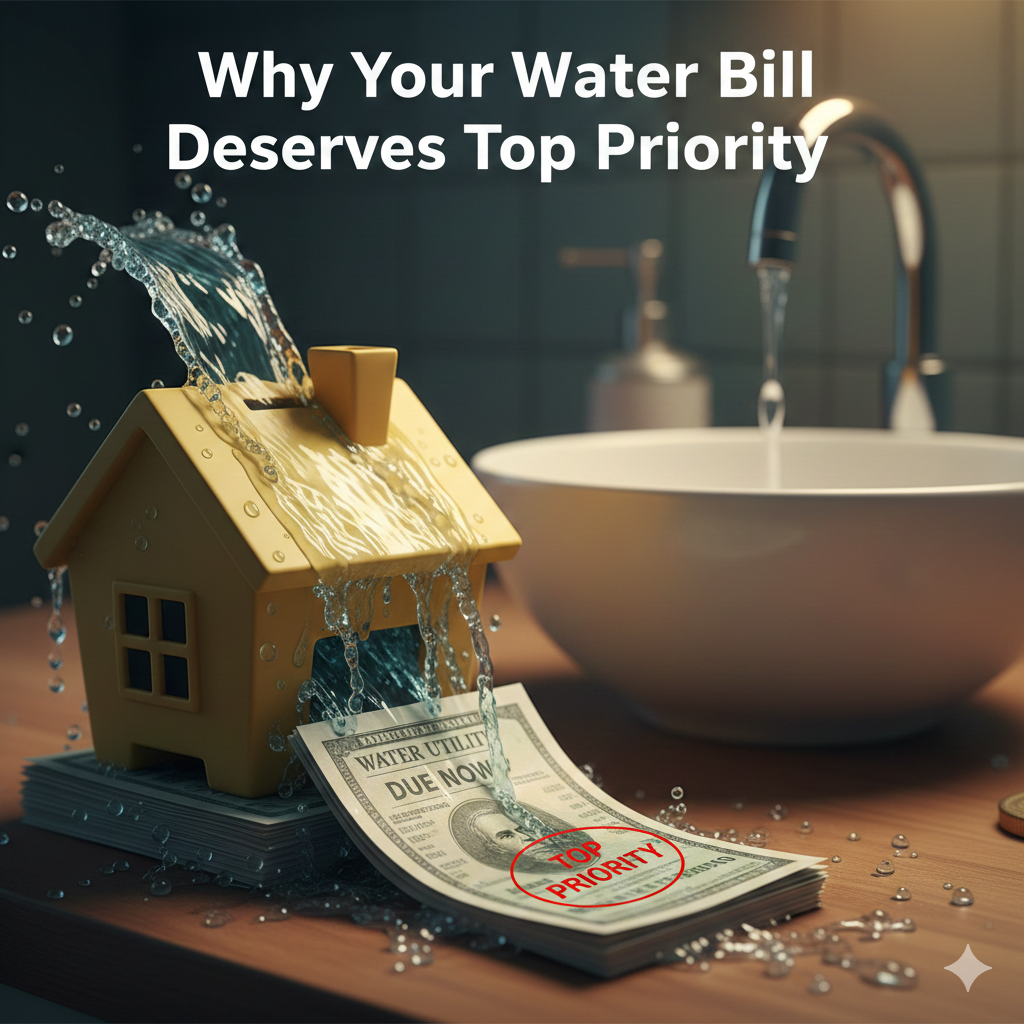
When financial pressures mount and bills pile up, it’s tempting to play a dangerous game of payment roulette. You might think skipping the water bill to cover rent or groceries makes sense in the moment. But treating your water bill as negotiable rather than essential is a mistake that can spiral into consequences far more costly than the bill itself.
Water service occupies a unique position among household utilities. Unlike your internet connection or streaming subscriptions, access to clean running water isn’t a convenience—it’s fundamental to human health and dignity. Every morning routine, every meal prepared, every toilet flushed depends on that uninterrupted flow. The moment the tap runs dry, your home transforms from a functional living space into something barely habitable.
The financial reality makes prioritizing water even more critical. Water utilities typically don’t operate like other creditors. Many municipalities move swiftly from missed payment to service disconnection, often within thirty to sixty days. There’s rarely the cushion you might get with a credit card or medical bill. Once disconnected, you’ll face not just the overdue amount but also substantial reconnection fees that can run several hundred dollars. That single missed payment of perhaps fifty or seventy dollars suddenly becomes a multi-hundred-dollar emergency.
Reconnection isn’t instantaneous either. Even after paying everything owed, you might wait days for service restoration while dealing with the indignity and impracticality of living without running water. Try explaining to your employer why you couldn’t shower before work, or managing a family’s needs with bottled water and public restrooms. The social and professional costs compound quickly.The health implications extend beyond inconvenience. Without running water, basic hygiene becomes challenging. Handwashing, essential for preventing illness, requires planning and rationing. Cooking safely becomes difficult. Sanitation deteriorates. If you have children, elderly family members, or anyone with medical needs in your household, the stakes rise exponentially. Dialysis patients, people managing diabetes, infants needing formula—all require reliable water access for their health and survival.
Housing stability connects directly to water service too. Landlords can use water shut-offs as grounds for eviction in many jurisdictions. Even if you’re paying rent faithfully, allowing utilities to lapse can violate lease terms and put your housing at risk. For homeowners, unpaid water bills can result in liens against your property, complicating future sales or refinancing and potentially leading to foreclosure in extreme cases.
Some people rationalize that bankruptcy or other debts carry more severe consequences, and technically that’s true in purely financial terms. But bankruptcy doesn’t prevent you from brushing your teeth tonight or washing your hands after using the bathroom. The immediacy and intimacy of water’s role in daily life means its absence creates crises that more abstract financial problems don’t.When money is tight, the strategy should involve communication rather than avoidance. Most water utilities offer assistance programs, payment plans, or hardship considerations that can prevent disconnection if you reach out before missing payments. Many municipalities have funds specifically designated to help residents maintain water service during temporary financial difficulties. These resources exist precisely because society recognizes water as non-negotiable.
Prioritizing your water bill doesn’t mean ignoring other obligations. It means recognizing a hierarchy of needs. Shelter, water, food, and essential utilities form the foundation. Everything else, from credit card payments to subscription services, sits atop that base. When forced to choose, protecting that foundation preserves your ability to address other problems from a position of relative stability rather than from crisis mode.
The psychological burden matters too. Living without water carries a shame and stress that exacerbates already difficult circumstances. Financial hardship is challenging enough without adding the daily reminder of disconnected service and the elaborate workarounds required to meet basic needs. Maintaining water service preserves a sense of normalcy and dignity that helps you navigate other challenges more effectively.
Your water bill represents far more than the dollars printed on the statement. It’s the infrastructure enabling you to maintain health, hygiene, and housing stability. It’s the difference between weathering a financial storm in your home and facing a cascade of compounding crises. When evaluating which bills demand immediate attention, remember that some things simply cannot wait. Water is one of them.