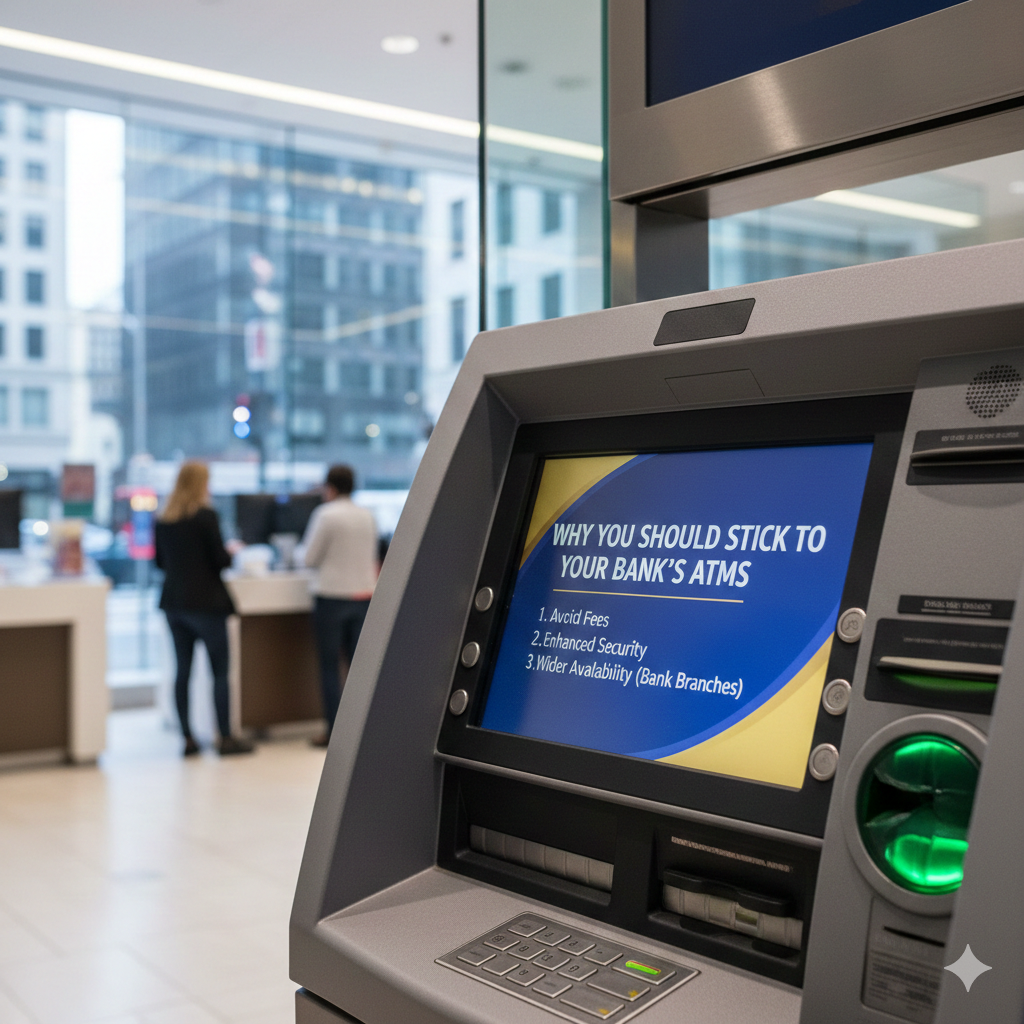
We’ve all been there. You need cash, spot an ATM, and figure any machine will do. But that convenient corner store ATM or the one at the gas station might be costing you more than you realize. If you have the option, making the extra effort to use your own bank’s ATMs can save you significant money and headaches over time.The most obvious reason is fees. When you use an out-of-network ATM, you’re typically hit with charges from two directions. The ATM owner charges you a surcharge, often between three and five dollars, just for using their machine. Then your own bank adds an out-of-network fee on top of that, which can be another two to five dollars. Suddenly, withdrawing twenty dollars actually costs you twenty-seven or even thirty dollars. Those charges add up fast if you’re making multiple withdrawals throughout the month.
Beyond the financial cost, there are security considerations that many people overlook. Your bank’s ATMs are maintained and monitored by the institution that holds your money. They have a direct incentive to keep those machines secure, updated, and free from tampering. Independent ATMs in convenience stores or other locations might not receive the same level of scrutiny. Skimming devices that criminals attach to card readers to steal your information are more commonly found on these standalone machines in less secure locations.
Your bank’s ATMs also tend to offer better functionality. They’re typically integrated with your account in ways that third-party machines aren’t, which means you might be able to make deposits, transfer money between accounts, or see your current balance with better detail. Some banks even allow you to make cardless withdrawals at their ATMs using your phone, adding an extra layer of security since you’re not inserting a physical card that could be compromised.
There’s also the deposit advantage. When you need to deposit cash or checks, your bank’s ATM is often your only option outside of branch hours. Many banks now offer instant deposit credit for checks deposited at their ATMs, whereas you’d have to visit a branch or wait longer for mobile deposits to clear. Having the habit of using your bank’s ATMs means you know where they are when you need this functionality.
The convenience argument for using any available ATM seems compelling in the moment, but it’s worth questioning. Most banks have ATM locators on their mobile apps that show you exactly where their nearest machines are located. Often, your bank’s ATM is only a few blocks farther than the independent one you spotted first. Is saving three minutes of driving really worth seven or eight dollars? When you frame it that way, the answer becomes pretty clear.Some people don’t realize that their bank might actually reimburse ATM fees. Many online banks and credit unions offer this benefit, refunding a certain number of out-of-network fees each month precisely because they have smaller ATM networks. If your bank offers this perk, it changes the equation entirely. But even then, there’s usually a cap on how many fees they’ll reimburse, so using their ATMs when possible still makes sense.The habit of planning ahead for cash needs also serves you well financially in general. When you make a point of stopping at your bank’s ATM, you’re being more intentional about your cash usage. This naturally leads to withdrawing larger amounts less frequently, which means fewer opportunities for impulse spending and better awareness of your cash flow. The person who grabs forty dollars from whatever ATM is nearest tends to do it more often and pay less attention to where their money goes.
For travelers, this advice shifts slightly since you obviously can’t always use your home bank’s ATMs. But the principle remains: do your research beforehand. Many banks participate in ATM networks that allow surcharge-free withdrawals at partner banks. Knowing which ATMs you can use without fees in your destination can save you considerable money on a longer trip. This is especially true for international travel, where ATM fees can be even steeper.
The bottom line is that small financial decisions compound over time. If you’re paying eight dollars in combined fees twice a week, that’s over eight hundred dollars a year literally thrown away for nothing more than convenience. That’s a nice weekend trip, several months of a streaming service, or a meaningful contribution to your savings. Your bank’s ATM gives you the same cash without the cost, with better security, and with additional functionality you might need.
Making this change requires nothing more than a small shift in your routine. Check your bank’s app when you know you’ll need cash, plan your route accordingly, and get in the habit of thinking ahead about your cash needs. Your wallet will thank you, and you’ll have the peace of mind that comes with using secure, well-maintained machines that don’t see you as a profit center. It’s one of those rare situations where the financially smart choice is also the safer one.