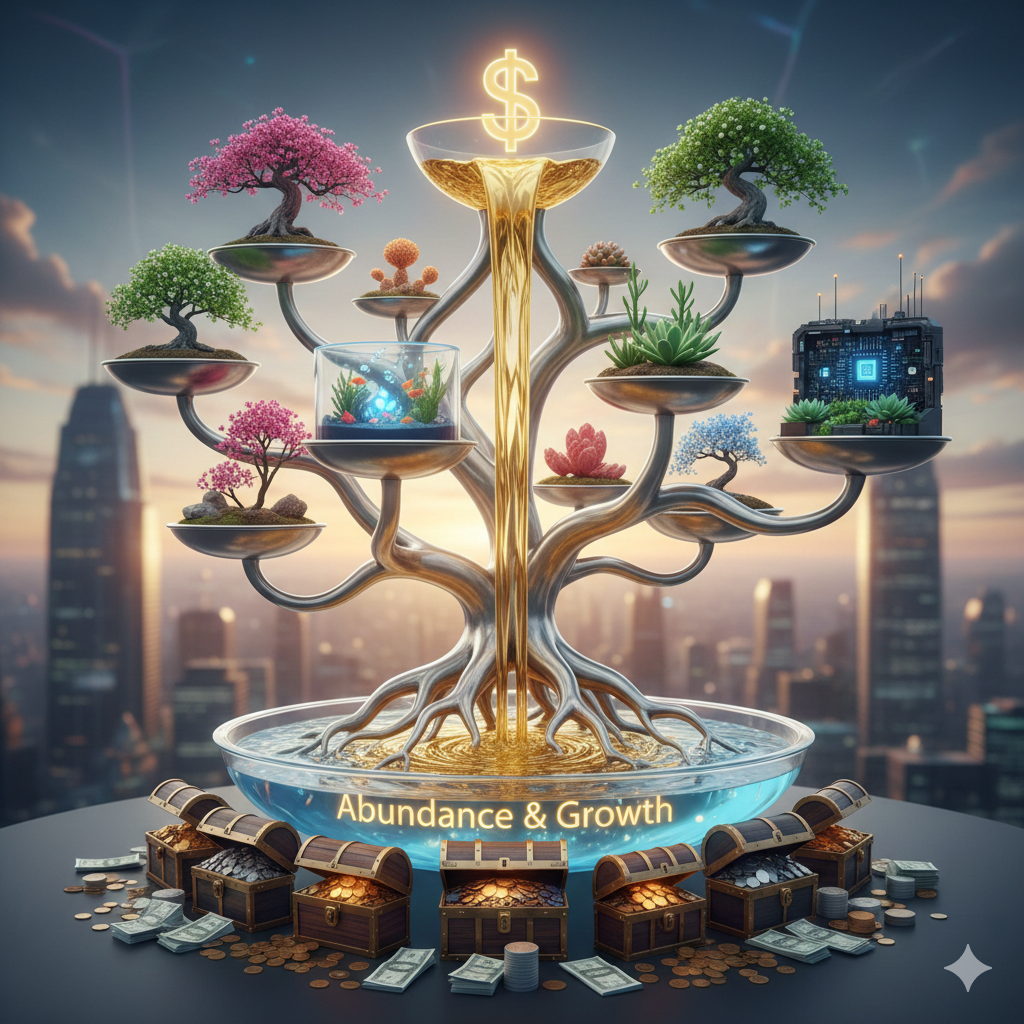
We’ve all heard the advice: diversify your portfolio. It’s repeated so often in financial circles that it’s become background noise, like being told to eat your vegetables or get eight hours of sleep. But here’s what most people miss about diversification—it’s not actually designed to make you rich.
The uncomfortable truth is that diversification, by its very nature, limits your upside. When you spread your money across different investments, you’re mathematically guaranteeing that you won’t capture the full gains of your best-performing asset. If you’d put everything into that tech stock that tripled, you’d have triple the returns. If you’d gone all-in on that real estate market that boomed, you’d be sitting on massive gains. Diversification means you’ll always own plenty of things that underperform.
So why do it? Because diversification isn’t about maximizing wealth—it’s about buying something far more valuable: the ability to sleep at night.
Consider what happens when you concentrate your bets. Maybe you’re right, and that concentrated position makes you wealthy beyond your dreams. But more likely, you’ll spend years on an emotional roller coaster. Every news headline becomes a threat. Every market dip triggers panic. You’ll refresh your portfolio balance compulsively, feeling your stomach drop with each percentage point decline. You might be right in the long run, but can you psychologically survive the journey? Most people can’t.
This is where diversification reveals its true purpose. When you own a mix of stocks, bonds, real estate, and perhaps other asset classes, you’re not trying to hit a home run—you’re building a portfolio that can withstand almost anything the market throws at you. One sector crashes? Your other investments cushion the blow. Interest rates spike? Some of your holdings actually benefit. A geopolitical crisis erupts? Your portfolio doesn’t hinge entirely on one outcome.
The peace of mind this creates is profound. You stop checking your account every hour. You stop losing sleep over whether you’ve made a catastrophic mistake. You can actually live your life instead of being enslaved to market anxiety. This psychological freedom has real value, even if it doesn’t show up on a balance sheet.
Think about the investors who went all-in on their company stock, convinced they had inside knowledge that made it a sure thing. Some got rich. Many more watched helplessly as scandals, market shifts, or simple bad luck decimated their life savings. The ones who diversified earned less at the peak, sure—but they also didn’t lose everything at the bottom.
The wealthy understand this intuitively. Once you have enough money, the marginal utility of more wealth diminishes rapidly. What matters isn’t squeezing out every last percentage point of return—it’s protecting what you have so you can enjoy it. Diversification becomes not a reluctant compromise but an intentional choice to prioritize stability over speculation.
This doesn’t mean diversification is always the right choice for everyone. If you’re young with decades until retirement and can stomach the volatility, maybe taking bigger concentrated bets makes sense. If you have specialized knowledge in a particular area and high risk tolerance, perhaps you should overweight that conviction. But be honest with yourself: are you making that choice from a position of genuine confidence and emotional resilience, or from greed and the fear of missing out?
The financial industry often sells diversification as a way to “optimize returns” or “maximize risk-adjusted performance,” dressing it up in technical language and efficient frontier charts. But strip away the jargon, and diversification is really about something simpler and more human: the recognition that uncertainty is inevitable, that we can’t predict the future, and that protecting our emotional wellbeing matters as much as growing our net worth.
You’re not diversifying to get rich. You’re diversifying to stay sane, to keep perspective when markets gyrate, and to ensure that no single mistake or unpredictable event can destroy everything you’ve built. That’s not a consolation prize. That’s wisdom.