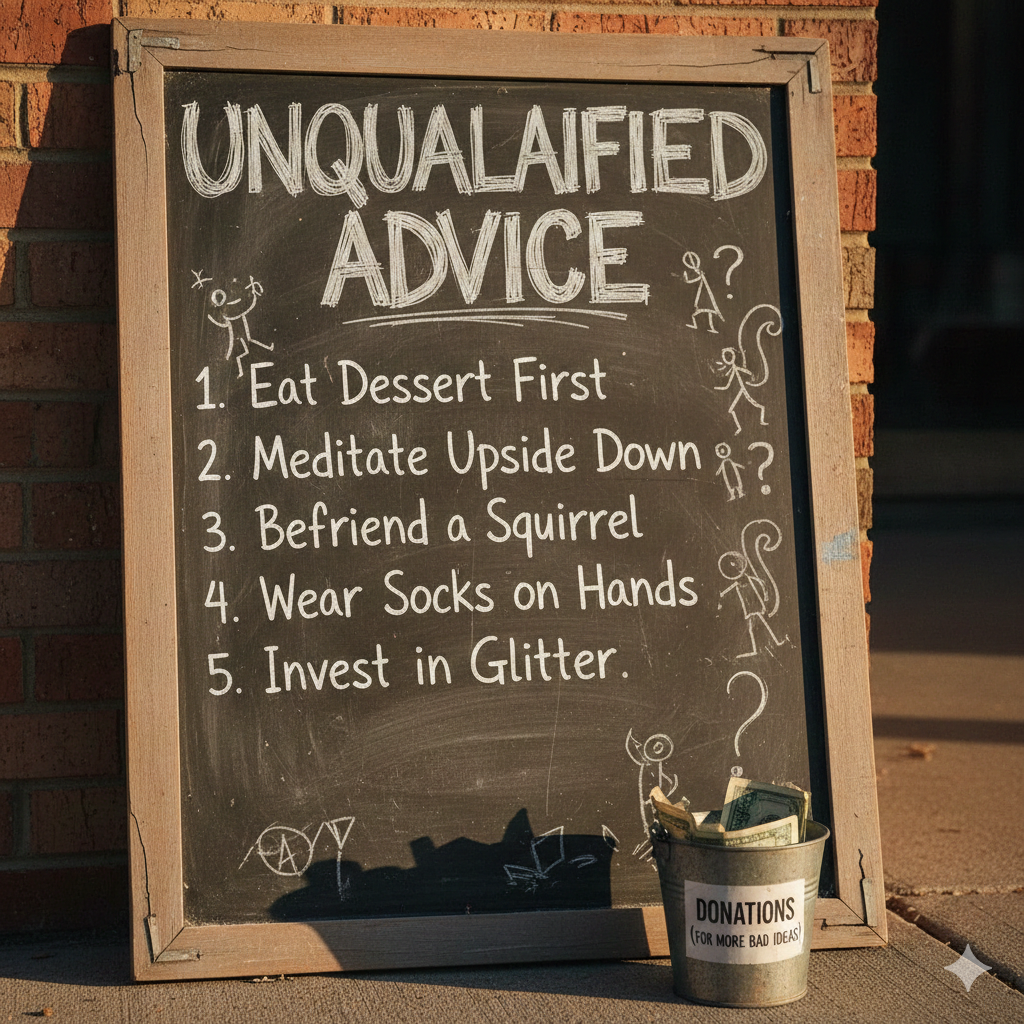
We live in an age where everyone has opinions, and more problematically, where everyone feels entitled to share them as expertise. The barista who took one psychology course becomes your therapist. Your accountant cousin suddenly has strong views about your marriage. The gym rat at work transforms into your unsolicited nutritionist and life coach. We’re drowning in advice from people who have no business giving it.The problem isn’t that people want to help. The impulse to assist others is fundamentally human and often admirable. The problem is that somewhere along the way, we’ve collectively forgotten that wanting to help and being qualified to help are two entirely different things. Good intentions don’t magically translate into expertise, yet we act as if they do.
Consider how absurd this behavior becomes when we examine it clearly. You wouldn’t let someone who once watched a medical drama perform surgery on you. You wouldn’t hire someone who read a book about architecture to design your house. Yet somehow, when it comes to major life decisions, relationships, career moves, financial planning, mental health, or parenting strategies, we tolerate and even seek out advice from people whose only qualification is proximity and confidence.
The Dunning-Kruger effect explains part of this phenomenon. People with limited knowledge in a domain often overestimate their competence because they lack the expertise to recognize what they don’t know. Your friend who invested in three stocks and made money thinks he’s Warren Buffett. Your coworker who lost twenty pounds believes she’s discovered the secret to metabolism that doctors somehow missed. They’re not lying or trying to deceive you. They genuinely believe they’ve cracked a code that professionals have been working on for decades.
Social media has accelerated this trend into hyperdrive. Platforms reward confidence and engagement, not accuracy or credentials. Someone with a compelling story and charismatic delivery can amass a following of millions, dispensing advice on topics they’ve never formally studied. The algorithm doesn’t care if they’re qualified. It only cares if people watch.What makes this particularly insidious is that bad advice often feels more appealing than good advice. Qualified professionals tend to offer nuanced, conditional guidance that acknowledges complexity and individual variation. They say things like “it depends” and “we’d need more information” and “there are multiple factors to consider.” Meanwhile, the unqualified adviser offers simple, definitive answers that feel satisfying in their clarity. They promise certainty in an uncertain world, and that’s seductive.
The consequences range from merely annoying to genuinely dangerous. Taking financial advice from someone who doesn’t understand your tax situation, risk tolerance, or long-term goals can cost you thousands or derail your retirement. Following medical advice from someone who “did their own research” can lead to serious health complications. Parenting advice from someone whose children are struggling can replicate their mistakes in your own family. Relationship advice from someone who’s been divorced three times might not be the wisdom you need.
There’s also an ethical dimension here that often goes unexamined. When you give advice outside your area of expertise, you’re potentially causing harm while feeling virtuous about helping. You’re centering your own need to feel useful over the other person’s need for actually useful information. It’s a form of intellectual colonialism where you’re imposing your limited understanding onto someone else’s complex situation.
So what’s the solution? It starts with cultivating intellectual humility in ourselves and demanding it from others. Before accepting advice, ask yourself what qualifies this person to guide you on this particular issue. Have they dealt with similar situations successfully? Do they have formal training or extensive experience? Do they understand the full context of your situation? If the answers are no, smile, thank them for their concern, and disregard what they’ve said.
When you’re tempted to give advice, pause and ask yourself the same questions. Are you actually qualified to guide this person, or do you just have opinions and anecdotes? There’s no shame in saying “I don’t know enough about this to advise you, but I hope you find someone who can help.” In fact, that’s often the most helpful thing you can say.
We need to revive the lost art of recognizing boundaries. Your lived experience gives you authority over your own life, not over universal truths. Your success in one domain doesn’t automatically transfer expertise to another. We should share our stories and experiences when relevant, but we should stop pretending that our individual journeys have revealed secrets that professionals and researchers have somehow missed.
The next time someone starts dispensing advice with absolute confidence on a topic they know little about, recognize it for what it is: someone confusing familiarity with expertise, opinions with facts, and their desire to help with their ability to do so. Be polite, be kind, but don’t be fooled. Your decisions are too important to outsource to the unqualified, no matter how well-meaning they might be.