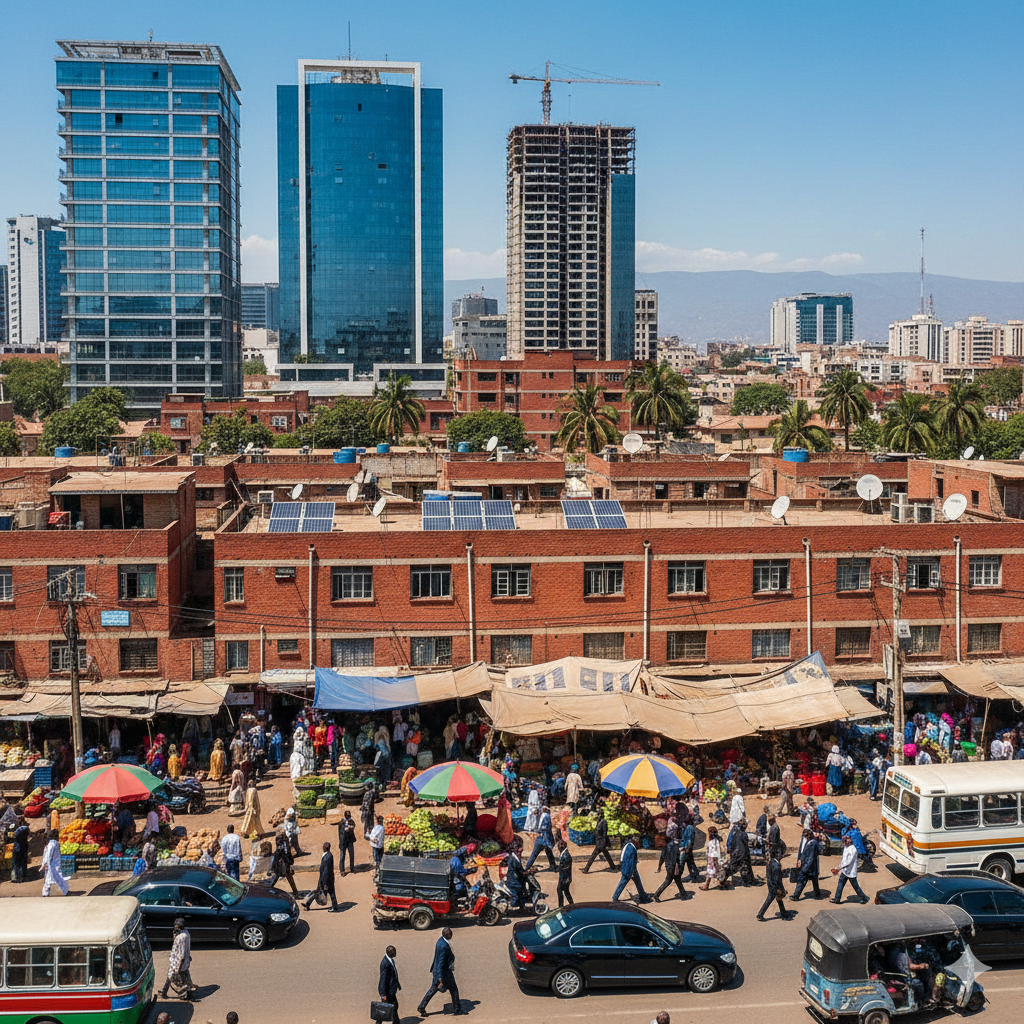
The alarm goes off at dawn, but the power went out sometime during the night. Your phone’s battery is at fifteen percent, and you’re not sure if the backup generator at the office kicked in or if today will be one of those days where you end up working from a café with decent Wi-Fi. Welcome to professional life in a developing country, where adaptability isn’t just a resume buzzword but a daily survival skill.
For professionals in developed nations, infrastructure is largely invisible. You turn on a tap, water flows. You flip a switch, lights come on. You open your laptop, the internet connects. These aren’t luxuries worth mentioning because they simply exist as background conditions of modern work life. But in many developing countries, these same fundamentals become variables you plan around. You learn to save your work obsessively because power fluctuations are common. You download important documents before meetings because you can’t count on cloud access. You keep a mental map of which cafés, co-working spaces, or friends’ homes have reliable electricity and internet as backup options.
This constant negotiation with basic infrastructure shapes how you work in ways both frustrating and surprisingly innovative. A software developer in Nairobi might write code during the hours when electricity is most reliable, then use potential downtime for meetings or planning. An architect in Jakarta learns to keep both digital and physical copies of blueprints because you never know when technology will fail at a crucial moment. The uncertainty breeds a particular kind of resourcefulness that becomes second nature.
The commute itself tells a different story than the orderly train schedules or highway systems of developed economies. Traffic in cities like Manila, Lagos, or Dhaka doesn’t follow predictable patterns. What should be a thirty-minute journey might take three hours if there’s flooding, an accident, or simply the wrong combination of trucks and motorcycles and cars all vying for space on inadequate roads. Professionals adjust by leaving absurdly early for important meetings, building buffer time into every appointment, or increasingly, advocating for remote work arrangements that their counterparts in other countries only widely adopted during the pandemic.
This unpredictability extends to the financial landscape. Getting paid might mean navigating banking systems that are still heavily cash-based or dealing with mobile money platforms that have leapfrogged traditional banking entirely. A marketing manager in Kampala might receive salary through mobile money, pay rent via bank transfer, and handle daily expenses in cash because not all vendors accept digital payments. Currency fluctuations can meaningfully impact purchasing power from month to month. That professional development course priced in dollars suddenly costs significantly more when the local currency dips, making career investments a calculated risk rather than a straightforward decision.
The professional networks you build operate differently too. In environments where formal institutions may be weak or inconsistent, personal relationships carry enormous weight. Who you know doesn’t just open doors; it often determines whether doors exist at all. Need a business license processed? Having a contact in the right office can mean days instead of months. Looking for quality suppliers? Personal recommendations matter more than online reviews because the digital infrastructure for rating and feedback systems may be sparse. This isn’t corruption necessarily, though that exists too, but rather a social adaptation to systems that don’t always function transparently or efficiently.
These relationship networks create a professional culture that tends to be more communal than individualistic. The Western ideal of the self-made professional who succeeds purely on merit feels somewhat naive in contexts where systemic barriers are high and unpredictable. Instead, there’s an understanding that success is collective. You help others because you’ll need help yourself. You maintain broader family and community obligations because those same networks provide crucial support when formal systems fail. A promotion might mean you’re now expected to support not just your immediate family but cousins’ school fees or contribute to community projects, shifting the calculus of what professional advancement actually means for your personal finances.
The office environment itself often blends formal and informal in ways that would seem unusual in more developed contexts. Dress codes might be strictly professional, but it’s understood that during power outages everyone will be sweating in their suits. High-level business meetings might be interrupted by the need to step outside when the Wi-Fi drops. You’ll have colleagues with advanced degrees who also keep side businesses selling goods or services because single income streams feel too risky when economic conditions can shift rapidly.
Technology adoption follows its own path. While developed countries gradually upgraded from one generation of technology to the next, many developing countries leapfrog entirely. Landline phones were never widespread, so everyone went straight to mobiles. Traditional banking was limited, so mobile money systems flourished. This creates interesting contrasts where a young professional might work on a cutting-edge smartphone app during the day but go home to a neighborhood without reliable sewage systems.
Professional development and career growth operate within different constraints too. The latest industry conferences might be prohibitively expensive when registration fees are in foreign currency. Online courses help, but even these assume reliable internet access. Mentorship often happens informally because formal programs are less common. You might learn your craft from whoever happens to be around and willing to teach rather than through structured training programs. This can mean steeper learning curves but also more hands-on experience earlier in your career.
The relationship with time itself shifts. Punctuality means something different when transportation is unreliable and power outages can derail carefully planned schedules. Deadlines become more flexible not out of unprofessionalism but out of recognition that external factors beyond anyone’s control will intervene. This can be liberating in some ways, removing the constant time pressure that characterizes professional life elsewhere, but it also means projects stretch longer and planning becomes an exercise in managing uncertainty rather than executing against clear timelines.
There’s also the psychological dimension of working in an environment where you’re acutely aware of inequality. You might be solidly middle class by local standards but still unable to afford things that would be routine expenses for professionals doing similar work elsewhere. That training course, that software subscription, that professional membership—all require careful consideration. Meanwhile, you see expatriates or employees of international organizations doing comparable work for multiples of your salary, a reminder that the global professional marketplace values location as much as skill.
Yet within these constraints emerges a particular kind of professional resilience. You learn to solve problems creatively because resources are limited. You become genuinely adaptable because conditions demand it. You build deep relationships because they’re necessary for navigating complex systems. You develop a tolerance for uncertainty that serves you well in an increasingly unpredictable global economy. The challenges are real and often frustrating, but they also forge capabilities that are increasingly valuable in any context.
The day ends much as it began, with small negotiations around basic infrastructure. Will there be power tonight to charge devices? Is the internet stable enough to send that last email? Do you have enough cash for tomorrow’s commute? These mundane considerations frame professional life in developing countries, a constant reminder that the work itself is only part of the equation. The rest is adaptation, resilience, and the particular kind of creativity that comes from building a career in places where nothing is quite certain except that tomorrow will bring its own unique set of challenges to navigate.
