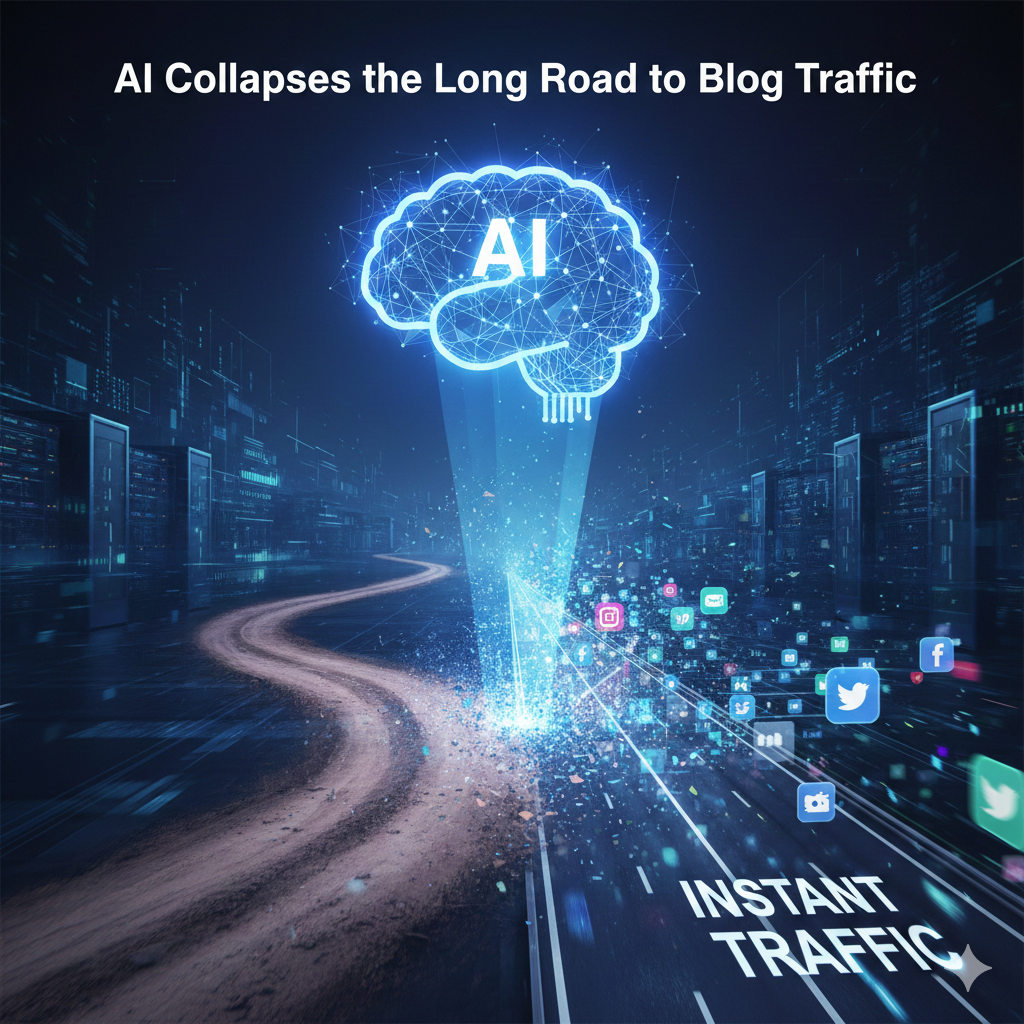
Remember the old playbook? You’d painstakingly craft your first blog post, hit publish, and then… wait. The silence was deafening. You’d spend months, sometimes years, in a relentless cycle of creating content, building backlinks, and slowly nurturing an audience from a handful of visitors. That agonizing gap between creation and connection felt like an immutable law of the internet. But a quiet revolution is reshaping this landscape, and its engine is artificial intelligence. Today, the journey from a blank page to meaningful traffic is undergoing a dramatic compression, and for creators, this changes everything.
The traditional delay wasn’t about a lack of good ideas. It was a bottleneck of execution and discovery. A single well-researched article could take days. Understanding what your audience truly searched for required complex guesswork and tools. SEO was a slow art of persuasion, convincing search engines one link at a time. You were essentially building a small fire in a vast, dark forest, hoping someone would eventually see the smoke.
AI is effectively turning on the lights in that forest and handing you a map. The most immediate shift is in the sheer velocity of creation. Where once you might brainstorm five post ideas in an hour, AI can help generate fifty, grounded in real-time search data. It can dismantle writer’s block, suggesting outlines and drafting sections, not to replace your unique voice, but to amplify it. This means you can move from concept to a polished, substantial piece of content in a fraction of the time, allowing you to cover topics with a speed and breadth that was previously impossible for a solo creator or small team.
But creation is only half the battle. The true acceleration happens in the bridge between your content and the people seeking it. AI-powered tools now offer an almost prescient understanding of search intent. They can analyze the semantic heart of a query, helping you craft content that answers not just the keyword, but the underlying question. This means your very first draft can be more aligned with what both readers and algorithms reward. Furthermore, AI assists in the technical scaffolding—generating meta descriptions, suggesting internal linking structures, and ensuring readability—that helps search engines understand and rank your work faster.
The result is a profound shortening of the feedback loop. Instead of publishing ten posts over six months to see what resonates, you can publish ten high-quality posts in one month. This rapid deployment allows you to test topics, analyze performance data, and double down on what works almost in real-time. You are no longer shouting into the void and waiting for an echo; you’re engaging in a dynamic conversation with the market. Your blog can gain topical authority quicker because you can comprehensively address a subject cluster before the trend fades.This is not a promise of instant, effortless virality. The core tenets of value, authenticity, and human connection remain irreplaceable. AI is a formidable ally, but it is not a substitute for your expertise and perspective. The “slow work” of building trust with your audience, of developing a recognizable style, and of genuine community engagement is still vital. However, the grueling, monotonous legwork that once kept that meaningful work at a distance for so long is being streamlined.
The old waiting game is over. The interval between hitting “publish” and seeing the first signs of life in your analytics is collapsing. For bloggers and content creators, this is a liberation of potential. It means you can spend less time on the mechanics of being found and more time on the art of making an impact. The age of silent launches is fading, replaced by an era where a great idea, powered by intelligent tools, can find its audience almost as soon as it finds its words. The journey hasn’t disappeared, but the long, empty road certainly has.