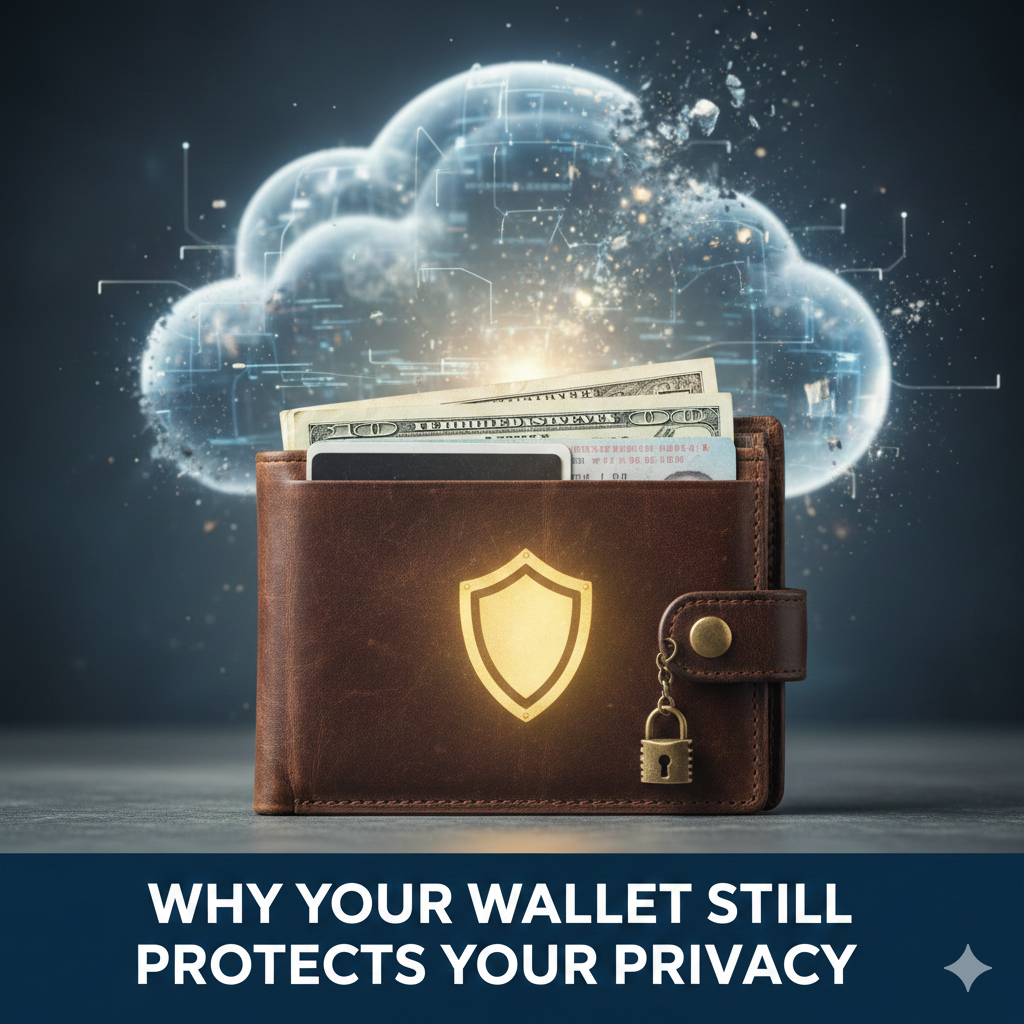
In an era where every swipe, tap, and click leaves a digital breadcrumb, there’s something almost revolutionary about pulling out a few bills to pay for your coffee, your groceries, or your gas. Cash, that ancient technology of paper and metal, offers something increasingly rare in modern commerce: genuine privacy.
When you hand over cash for a transaction, that exchange exists in a moment and then vanishes. There’s no record linking you to what you bought, when you bought it, or where you were when the purchase happened. The transaction is complete the instant the money changes hands, and that’s the end of the story. No database entry, no metadata, no digital trail that can be analyzed, aggregated, or sold to third parties.
Consider what happens when you use a credit card, debit card, or mobile payment app instead. Each transaction creates a permanent record that typically includes the merchant’s name, the exact time and date, the amount spent, and your location. Your bank knows. The payment processor knows. The merchant’s systems know. And depending on the complexity of the payment ecosystem, numerous other intermediaries might know too. This information doesn’t just sit idle in a database somewhere. It gets analyzed to build profiles of your behavior, your preferences, and your habits.
These payment patterns reveal remarkably intimate details about your life. They show where you shop, what you eat, whether you drink alcohol, what medications you take, which political causes you support, and what books or magazines you read. String enough transactions together, and you can map someone’s daily routine, their relationships, their health concerns, and their belief systems. Credit card companies and data brokers understand this well, which is why transaction data has become so valuable in the modern economy.
Cash transactions, by contrast, are beautifully anonymous. When you pay with currency, the seller learns nothing about you except what you choose to voluntarily reveal. They don’t automatically capture your name, address, email, or phone number. They can’t track whether you’re a repeat customer or analyze your purchasing patterns over time unless you explicitly provide loyalty card information. The transaction exists as a pure exchange of value for goods or services, unencumbered by the surveillance infrastructure that has grown up around digital payments.
This privacy matters in ways both large and small. Perhaps you’re buying a gift for your partner and don’t want the purchase showing up in your shared account history. Maybe you’re purchasing books or materials on sensitive topics that you’d rather keep to yourself. You might be donating to a cause or organization that you support privately but don’t want to discuss publicly. Or perhaps you simply value the principle that your purchasing decisions are your own business and nobody else’s.
There’s also the matter of data breaches and security. Every company that stores your payment information becomes a potential target for hackers. Major retailers, hotel chains, and payment processors have all suffered breaches that exposed millions of customers’ financial data. When you use cash, there’s no stored payment information to steal, no account numbers to compromise, and no digital profile to hack. The transaction is ephemeral by nature.
Cash also provides privacy from the payment platforms themselves. Companies that process electronic payments don’t just facilitate transactions; they observe, record, and often monetize the flow of money through their systems. Terms of service agreements frequently grant these companies broad rights to use transaction data for their own business purposes. By keeping your payments in cash, you opt out of this entire ecosystem of commercial surveillance.
Some worry that cash is disappearing, and it’s true that many societies are moving toward predominantly cashless systems. But this shift isn’t inevitable, and it’s not without costs. A fully cashless society is one where every economic transaction is monitored and recorded, where privacy in commerce becomes impossible, and where financial inclusion depends entirely on access to banking systems and technology.
Using cash when you can is a small act of resistance against this trajectory. It’s a way of asserting that privacy still matters, that not every aspect of our lives needs to be datafied and analyzed, and that there’s value in transactions that exist in the moment without leaving permanent traces. In a world of increasing surveillance, both governmental and commercial, cash remains one of the few tools ordinary people have to conduct their affairs privately.
The next time you reach for your wallet, consider pulling out bills instead of cards. That simple choice maintains a space for privacy in your daily life, keeps your purchasing decisions out of databases and algorithms, and preserves your right to spend money without creating a permanent record of every economic decision you make. In the digital age, that’s a form of freedom worth protecting.