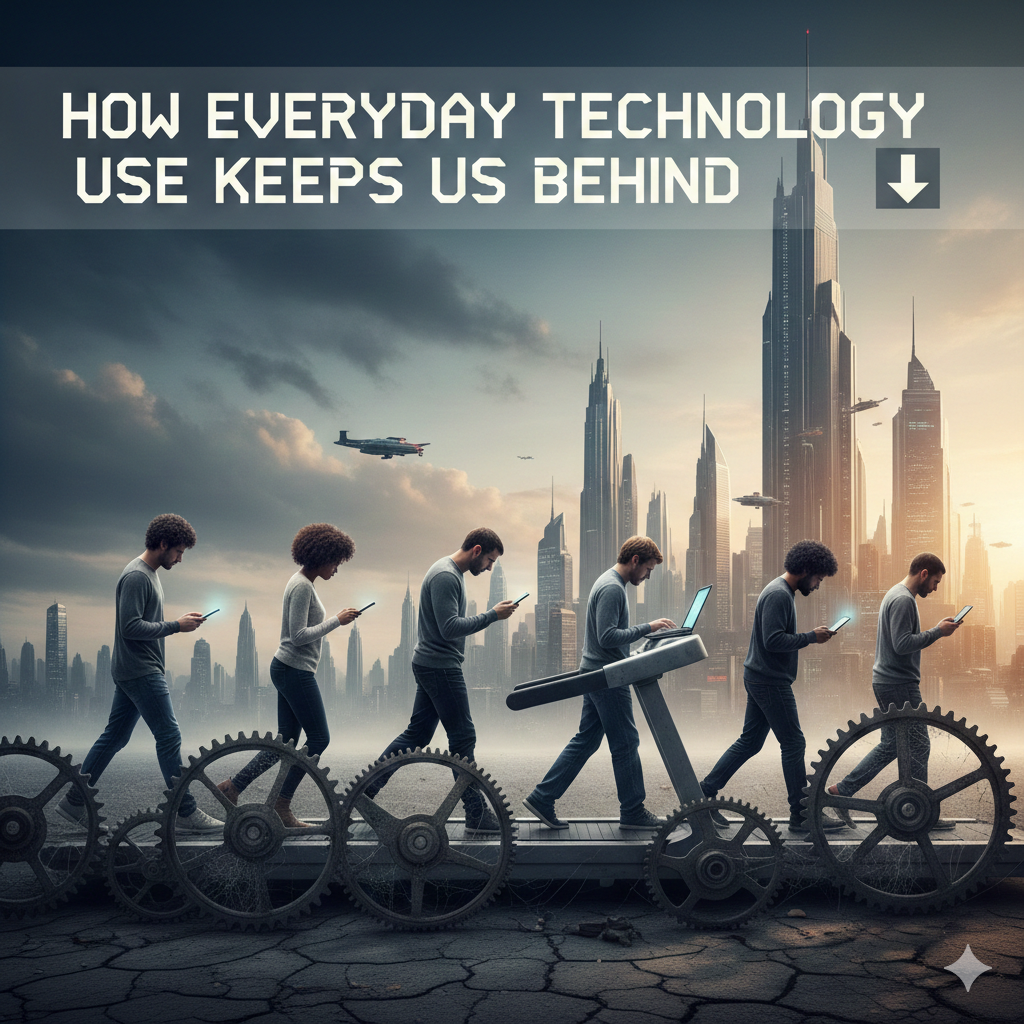
We live in an age of unprecedented technological access. The same tools that build billion-dollar companies sit in our pockets and on our desks, humming with potential. Yet, for most of us, this represents a curious paradox. We are constant users but perennial spectators. We scroll, we stream, we click, and we consume, all while a fundamental truth goes unacknowledged: the majority of people use new technologies to spend, not to earn. This passive relationship isn’t just a matter of preference; it is the architecture of a modern disadvantage.
Think about the platforms that define our daily digital rituals. Social media, for most, is a gallery of distraction, a slot machine for dopamine. We offer our attention—the most valuable currency of the 21st century—in exchange for ephemeral content. On the other side of the screen, a sophisticated economy extracts that attention and converts it into advertising revenue. We are the product being sold, not the merchant closing the deal. The same applies to the dazzling world of new apps, services, and gadgets. Our primary interaction is as a consumer. We use technology to spend money more efficiently, to entertain ourselves more readily, and to connect more broadly, but rarely to build, create, or capture value for ourselves.
This creates a silent but powerful economic rift. Technology, in its essence, is an amplifier. It can amplify leisure, yes, but it can also amplify effort, intellect, and capital. When a small segment approaches each new tool with the primary question, “How can this create revenue or reduce costs?” they engage the amplifier on a different setting. They use the same social network to build an audience and drive sales. They use data analytics not just to check their fitness, but to optimize a supply chain. They see a new platform not as a pastime, but as a potential territory. For the majority, however, technology amplifies consumption and time expenditure. We are digging with a steam shovel to plant a flower, while others use the same machine to mine for gold.
The disadvantage compounds over time because technological fluency is not neutral. There is a vast difference between the fluency of a user and the fluency of a builder or an opportunist. Our user fluency makes us better consumers—we compare prices faster, we navigate interfaces more smoothly. But builder fluency grants a understanding of leverage, scalability, and systems thinking. It changes one’s posture from reactive to proactive. Every wave of innovation, from the internet to blockchain to AI, therefore, doesn’t level the playing field; it initially tilts it more steeply. The early adopters who tinker, monetize, and build on these waves accelerate ahead, while the broader population eventually adopts the finished, consumer-grade product of that innovation, often paying for the privilege.
This isn’t a call for everyone to become a frantic tech entrepreneur. It is, however, an invitation to audit our relationship with the tools we take for granted. The disadvantage does not stem from a lack of access, but from a default mindset of consumption. It stems from seeing technology as an end in itself—a toy, a time-filler, a convenience—rather than as a means to an economic end. The power to change this dynamic lies in a simple, subversive shift: to occasionally pause before mindlessly using a new platform or gadget and ask the quieter, less intuitive question. Not “How do I use this?” but “How could this be used?” That subtle shift in perspective is the first step out of the spectator’s seat and into the arena where the real value of technology is captured. The tools are all around us. The disadvantage is not in our tools, but in how we choose to wield them.