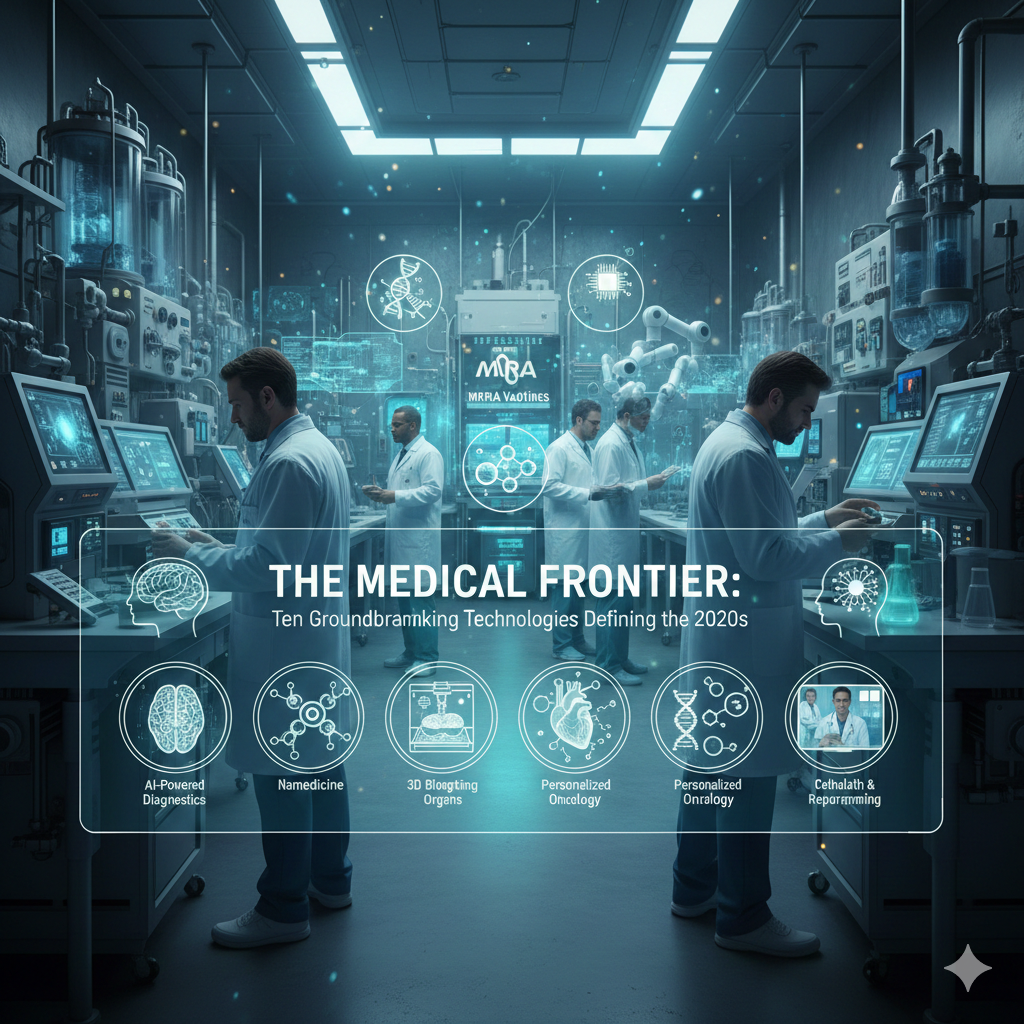
The 2020s are proving to be a revolutionary decade in medicine, marked not by incremental change but by foundational shifts in how we diagnose, treat, and understand disease. We are moving from a paradigm of generalized care to one of hyper-personalized intervention, powered by a convergence of artificial intelligence, genomics, and engineering. This new era is defined by technologies that feel borrowed from science fiction, yet are increasingly present in clinics and research labs today.
One of the most transformative forces is the ascendancy of Artificial Intelligence in Diagnostic Imaging. AI algorithms, trained on millions of radiology scans, now act as powerful second readers, detecting subtle patterns of disease—from early-stage tumors in mammograms to minute signs of stroke on CT scans—that even expert human eyes might miss, enabling earlier and more accurate interventions. Closely related is the rise of Digital Twins in Healthcare, where clinicians create a dynamic virtual model of a patient’s organ or entire physiology. This digital replica can be used to simulate the progression of a disease, test dozens of drug responses virtually, or plan a complex surgery with unprecedented precision, all before touching the actual patient.
In the realm of treatment, Next-Generation mRNA Technology has exploded beyond its pandemic-proofing debut. Researchers are now harnessing this platform to train the immune system to fight everything from personalized cancer vaccines, tailored to a patient’s unique tumor mutations, to potential vaccines for HIV and autoimmune diseases. Meanwhile, Advanced Robotic Surgery is becoming minimally invasive to an extreme, with systems offering enhanced 3D visualization, tremor filtration, and instruments with a greater range of motion than the human hand, facilitating delicate procedures in neurology, cardiology, and oncology with smaller incisions and faster recovery.
The field of CRISPR and Gene Editing 2.0 has matured from a powerful tool in the lab to a clinical reality. Newer techniques like base and prime editing offer greater accuracy and flexibility, moving beyond cutting DNA to precisely rewriting single genetic letters. This precision has culminated in the first approved CRISPR-based therapies for conditions like sickle cell disease, offering a potential cure by correcting the genetic error within a patient’s own cells. Similarly, CAR-T Cell Therapy Evolution is seeing its success in blood cancers expand into solid tumors. New generations of “armored” and “smart” CAR-T cells are being engineered to overcome the immunosuppressive environment of solid cancers, offering hope for a broader range of malignancies.
Diagnosis is also being redefined at the point of care. Wearable and Implantable Continuous Monitors have evolved from fitness trackers to sophisticated medical devices. These can now provide clinical-grade, real-time data on glucose levels, cardiac rhythms, blood pressure, and even specific biomarkers, streaming information directly to clinicians and creating a living picture of a patient’s health outside the hospital walls. In mental health, Digital Therapeutics and VR Exposure Therapy are gaining validation as prescribed treatments. These evidence-based software programs and immersive virtual environments are used to manage conditions like PTSD, anxiety, and chronic pain through controlled, therapeutic experiences and cognitive training.
On the microscopic frontier, Microbiome-Based Therapeutics are treating disease by manipulating our internal ecosystem of bacteria. Beyond probiotics, this includes precisely engineered bacterial consortia and fecal microbiota transplants that have shown remarkable efficacy in conditions ranging from recurrent C. difficile infections to certain inflammatory and metabolic disorders. Finally, Telehealth and Remote Patient Management has cemented itself as a fundamental infrastructure of modern care. Integrated with the aforementioned wearable data and AI analytics, it has evolved from simple video calls into comprehensive remote care platforms that manage chronic diseases, provide post-operative follow-up, and deliver specialist care to underserved areas, making healthcare continuous rather than episodic.
Together, these ten technologies represent more than just new tools; they signal a holistic reimagining of the healthcare journey. They promise a future where medicine is predictive, personalized, preemptive, and participatory, shifting the focus from treating advanced illness to maintaining wellness and intercepting disease at its earliest, most vulnerable stages. The 2020s are the decade where this future truly began to take shape.