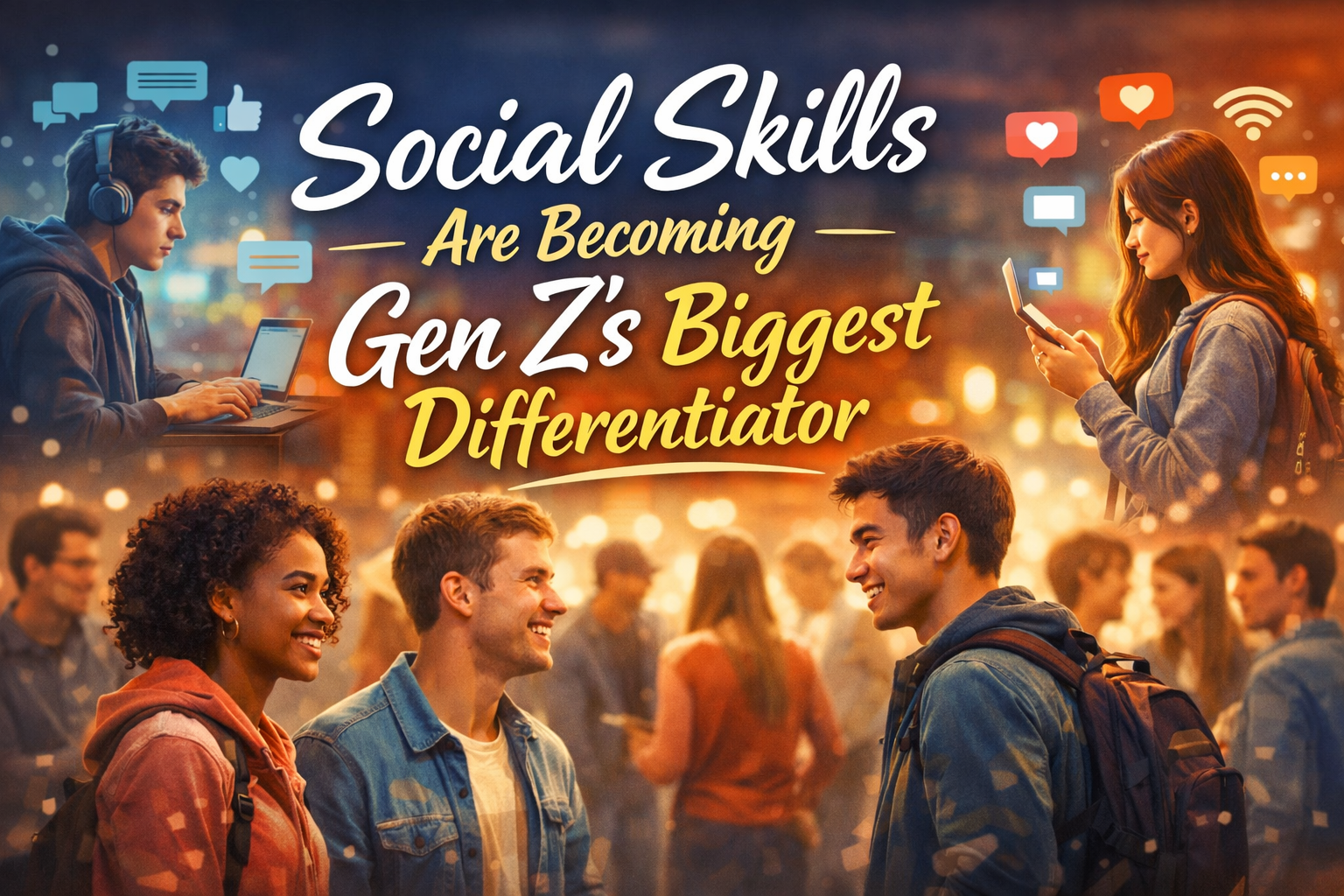
For many people in Generation Z, life has unfolded through screens. Messaging apps, social media platforms, and online communities have become the primary spaces where conversations happen. Entire friendships are maintained through text messages and group chats. Work is coordinated through digital tools. Entertainment is streamed rather than shared in a physical room.None of this is inherently negative. Technology has opened remarkable opportunities. A teenager in one country can collaborate with someone halfway around the world. A young entrepreneur can build an online business from a bedroom. Knowledge that once required libraries or universities is now available instantly.
But something else has quietly happened at the same time. As communication has shifted increasingly online, real-world social interaction has become less common for many young people. This shift has created a gap. Those who are comfortable speaking with others face to face, reading social cues, and building trust through conversation often stand out far more than they would have in previous generations.
In other words, social skills have become a powerful differentiator.In earlier eras, strong interpersonal abilities were expected. Students regularly interacted with teachers in person. Neighbors spoke to each other more frequently. Many jobs required direct customer contact from a young age. These environments naturally developed conversational ability and confidence.
Today, the path to adulthood often involves fewer of those experiences. Many Gen Z individuals spend a significant portion of their formative years communicating through keyboards rather than through voice or presence. The result is that real-world communication can feel unfamiliar or even uncomfortable.
This change has created a surprising opportunity. Someone who can walk into a room, introduce themselves clearly, maintain eye contact, and hold an engaging conversation immediately becomes memorable. In business settings this difference can be dramatic. A person who can articulate ideas confidently during a meeting often commands more attention than someone who struggles to speak up, even if both individuals possess similar technical knowledge.
Employers have noticed this as well. Many companies report that technical skills are easier to teach than communication skills. A graduate can learn a new software tool in a few weeks. Learning how to navigate difficult conversations, build rapport with clients, or present ideas persuasively takes far longer.For this reason, individuals who develop strong interpersonal abilities early often advance more quickly. They build networks more easily. They attract mentors. They are more likely to be trusted with responsibility.
Entrepreneurship provides another example of how powerful social ability can be. Starting a business requires persuading customers, partners, and sometimes investors that an idea has value. The ability to communicate enthusiasm and credibility can make the difference between an opportunity that moves forward and one that quietly fades away.
Even in industries built around technology, human connection still matters. A software developer who can clearly explain their work to nontechnical stakeholders becomes far more valuable than one who cannot. A marketer who understands the emotions and motivations of their audience creates stronger campaigns than one who relies purely on data.What makes social ability particularly valuable today is that it compounds. The more someone interacts with others, the more confident they become. Confidence encourages more interaction, which in turn leads to more opportunities. Over time, this positive cycle can dramatically expand a person’s network and influence.
For members of Generation Z, this dynamic means that investing in interpersonal development can pay enormous dividends. Simple actions such as speaking with strangers, practicing public speaking, attending events, or initiating conversations can gradually build comfort and fluency in social situations.
None of this requires abandoning technology. Digital tools remain powerful and essential. But they are most effective when combined with the human skills that technology cannot replace. The ability to listen carefully, interpret tone and body language, and respond thoughtfully remains deeply valuable.Ironically, the more digital the world becomes, the more noticeable genuine human presence becomes as well. In a sea of messages and notifications, a thoughtful conversation can stand out. In a workplace dominated by email and chat applications, a person who communicates clearly and confidently can quickly become indispensable.
For Generation Z, this reality offers a quiet but powerful advantage. While technical skills and online fluency are widely shared across the generation, social skills are less evenly distributed. Those who develop them intentionally often discover that doors open more easily than expected.
The future will undoubtedly remain shaped by technology. Artificial intelligence, automation, and remote work will continue transforming how people collaborate. Yet no matter how advanced these systems become, human beings will still value trust, clarity, and connection.And those qualities are expressed most clearly through strong social skills.
For Gen Z, mastering them may be one of the most valuable investments they can make.