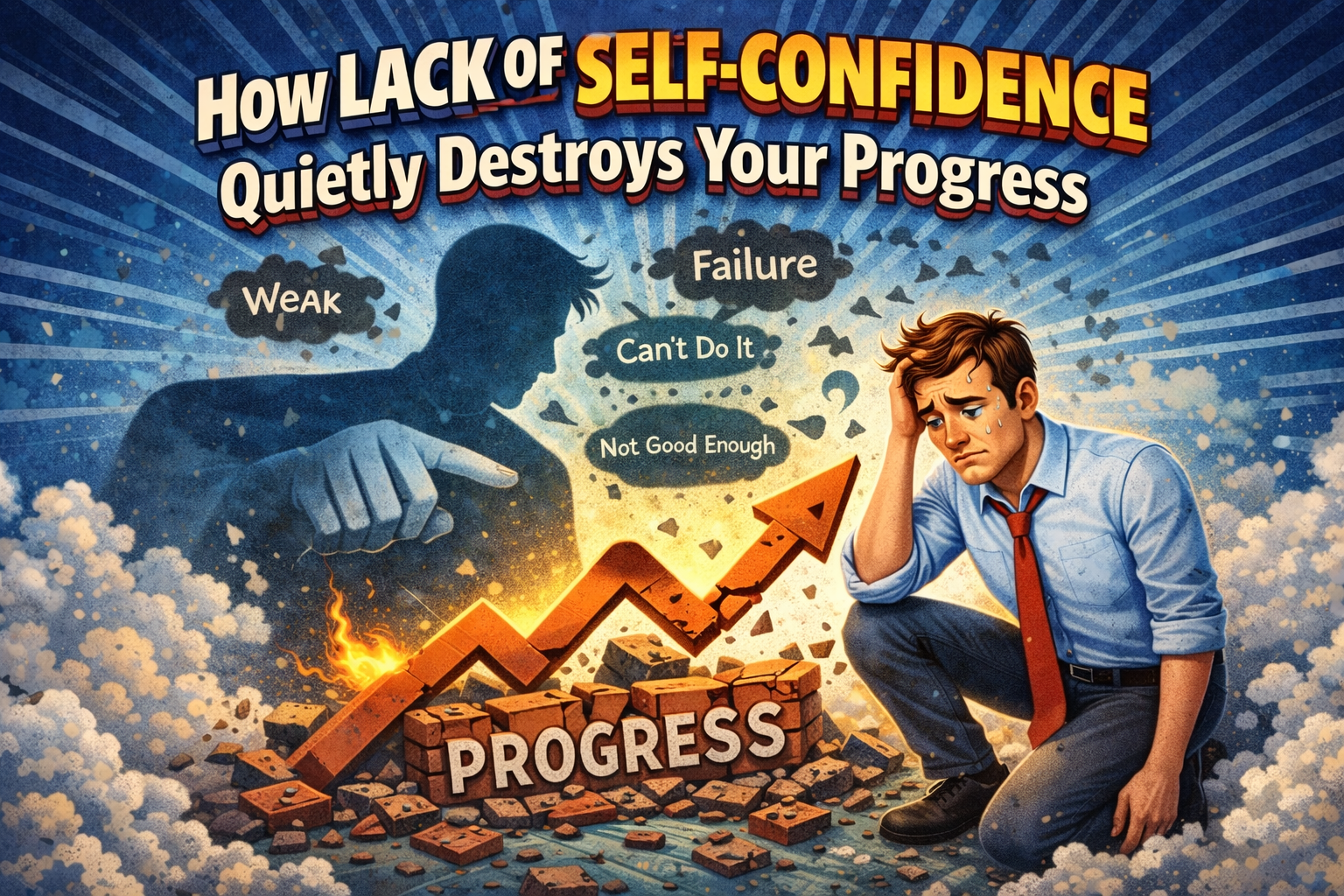
A lack of self-confidence rarely looks dramatic from the outside. It does not usually show up as complete inaction or obvious fear. Instead, it appears in small decisions made every day. It shows up in hesitation, underpricing, avoiding opportunities, or assuming something will not work before even trying it. Over time, these small decisions quietly destroy momentum and kill the gains a person could have made.
Confidence affects how you interpret reality. Two people can face the exact same opportunity and react in completely different ways. One sees possibility, while the other sees risk and doubt. The confident person assumes the problem is solvable. The uncertain person assumes the problem is evidence they are not capable. Nothing about the situation itself changed. Only the interpretation did.
This difference compounds quickly in entrepreneurship and career growth. Progress requires making decisions under uncertainty. You rarely have complete information. You rarely know exactly how something will turn out. The person with confidence moves forward anyway, trusting that problems can be figured out along the way. The person without confidence waits for certainty that never arrives.
As a result, opportunities pass by quietly. Someone hesitates to launch a product because they assume it is not good enough. Someone avoids raising prices because they assume customers will leave. Someone declines a partnership or business opportunity because they assume they are not experienced enough. In most cases the market never even gets a chance to decide. The opportunity dies in the mind before it ever reaches reality.
Lack of confidence also leads people to undervalue their work. When someone doubts their own abilities, they tend to price their services too low, apologize for their work, or accept poor terms simply to avoid rejection. Over time this creates a strange situation where the market begins to treat them exactly how they treat themselves. Clients expect less, competitors overlook them, and their earnings stay far below their potential.
Confidence changes how people perceive you. When someone speaks with certainty about what they offer and the value it provides, others are more willing to trust them. Confidence signals competence even before proof exists. Without that signal, people hesitate. They wonder if there is something wrong with the product, the service, or the person offering it.
This dynamic is particularly dangerous because it compounds over time. Early success often comes from taking small risks repeatedly. Each attempt creates learning, experience, and eventually results. But if lack of confidence prevents those attempts from happening, the learning never begins. Years can pass while someone stays stuck in the same place, not because they lack ability, but because they lacked the belief necessary to act.
Ironically, confidence rarely comes from feeling ready. It usually comes from acting before you feel ready and discovering that you are capable of figuring things out. Most successful people were not certain when they started. They simply refused to let uncertainty stop them from trying.
The market rewards people who show up, make offers, and put their work into the world. It cannot reward something that never exists. When self-doubt prevents action, the gains never have a chance to materialize.
In that sense, lack of confidence is not just a psychological issue. It is an economic one. It directly determines how many opportunities you pursue, how much value you ask for, and how far your work spreads into the world. The people who move forward despite uncertainty tend to accumulate experience, income, and reputation. Those who wait for confidence before acting often discover that the waiting itself is what quietly destroyed their progress.