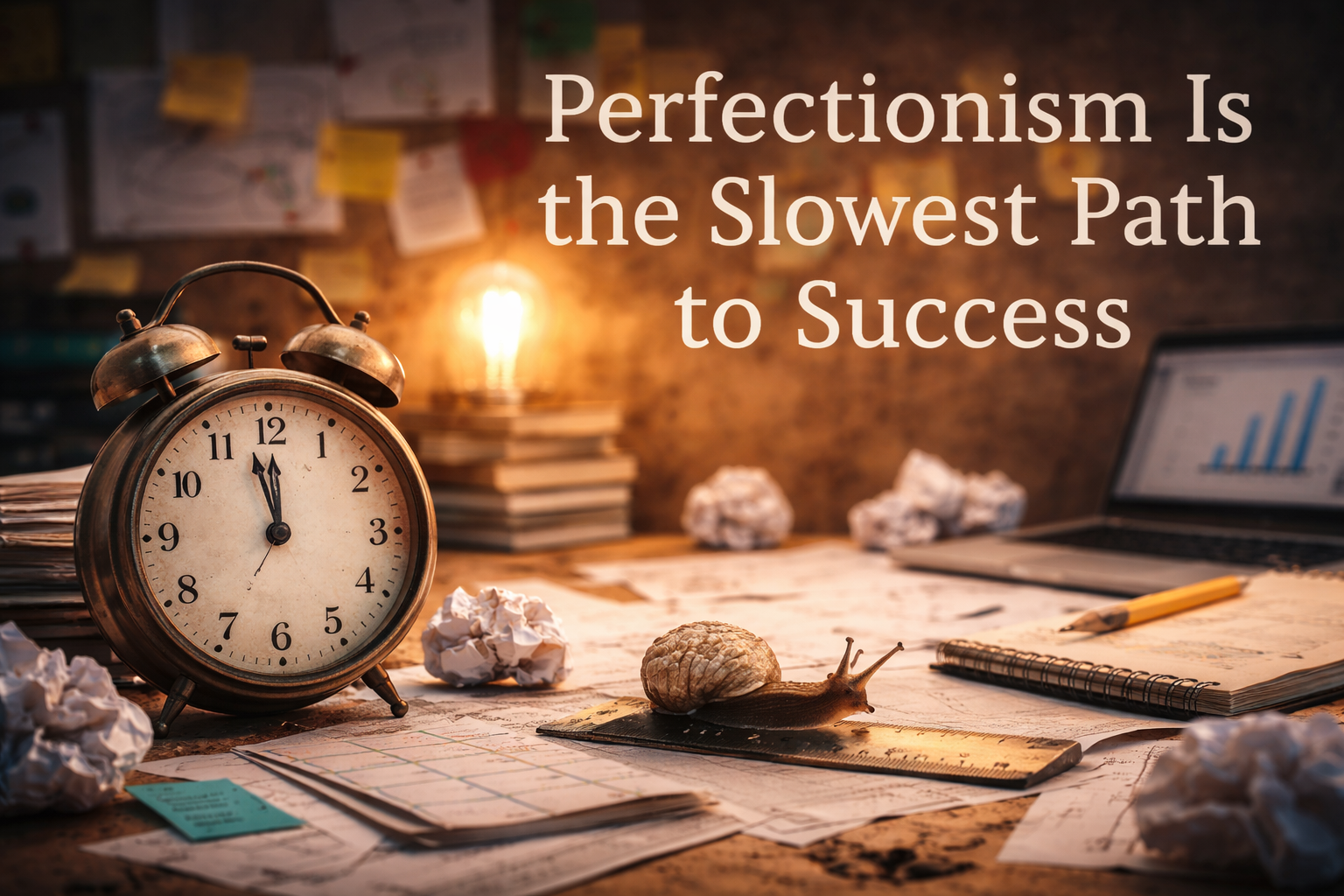
Many people believe that perfectionism is a virtue. They imagine that the people who succeed in business, art, or entrepreneurship are the ones who polish every detail until it shines. The reality is often the opposite. Perfectionism rarely accelerates success. More often, it delays it.
The reason is simple. Progress requires action, and perfectionism makes action difficult. When someone feels the need to make everything flawless before sharing it with the world, they spend enormous amounts of time refining small details that ultimately matter very little. The work remains hidden, unfinished, or endlessly revised while others move forward.In the modern world, the pace of opportunity rewards those who ship their work early and improve it over time. Businesses launch products that are incomplete but functional. Writers publish ideas that will evolve later. Entrepreneurs test concepts in the marketplace before everything is polished. They understand that feedback from the real world is far more valuable than endless internal revision.
Perfectionism prevents this cycle from happening. A perfectionist tends to believe that the work must be finished before it can be judged. But the truth is that work becomes better precisely because it is judged. Real progress happens when ideas collide with reality. Without that feedback loop, improvement slows to a crawl.
Another problem with perfectionism is that it hides a subtle form of fear. When someone delays publishing or launching their work, they avoid the possibility of criticism or failure. By continuing to refine something privately, they maintain the illusion that it might one day be perfect. Yet the longer this delay continues, the more opportunities pass by.
Successful people tend to adopt a different mindset. They focus on producing large amounts of work rather than flawless work. Each project becomes a stepping stone that teaches them something new. Over time, the accumulated experience makes their output stronger and more refined. What looks like effortless excellence from the outside is usually the result of many imperfect attempts.In entrepreneurship and creative work alike, the world rarely rewards the person who waited until everything was perfect. It rewards the person who started early, learned quickly, and improved continuously. Imperfect action creates momentum, while perfectionism creates hesitation.
The irony is that perfection is rarely the thing that makes work valuable in the first place. Value usually comes from usefulness, originality, or insight. A slightly rough idea that helps people solve a problem will often outperform a polished project that never reaches an audience.
For anyone trying to build something meaningful, the lesson is clear. Success comes from doing the work, sharing it, and refining it over time. Waiting for perfection only postpones the moment when real progress begins.