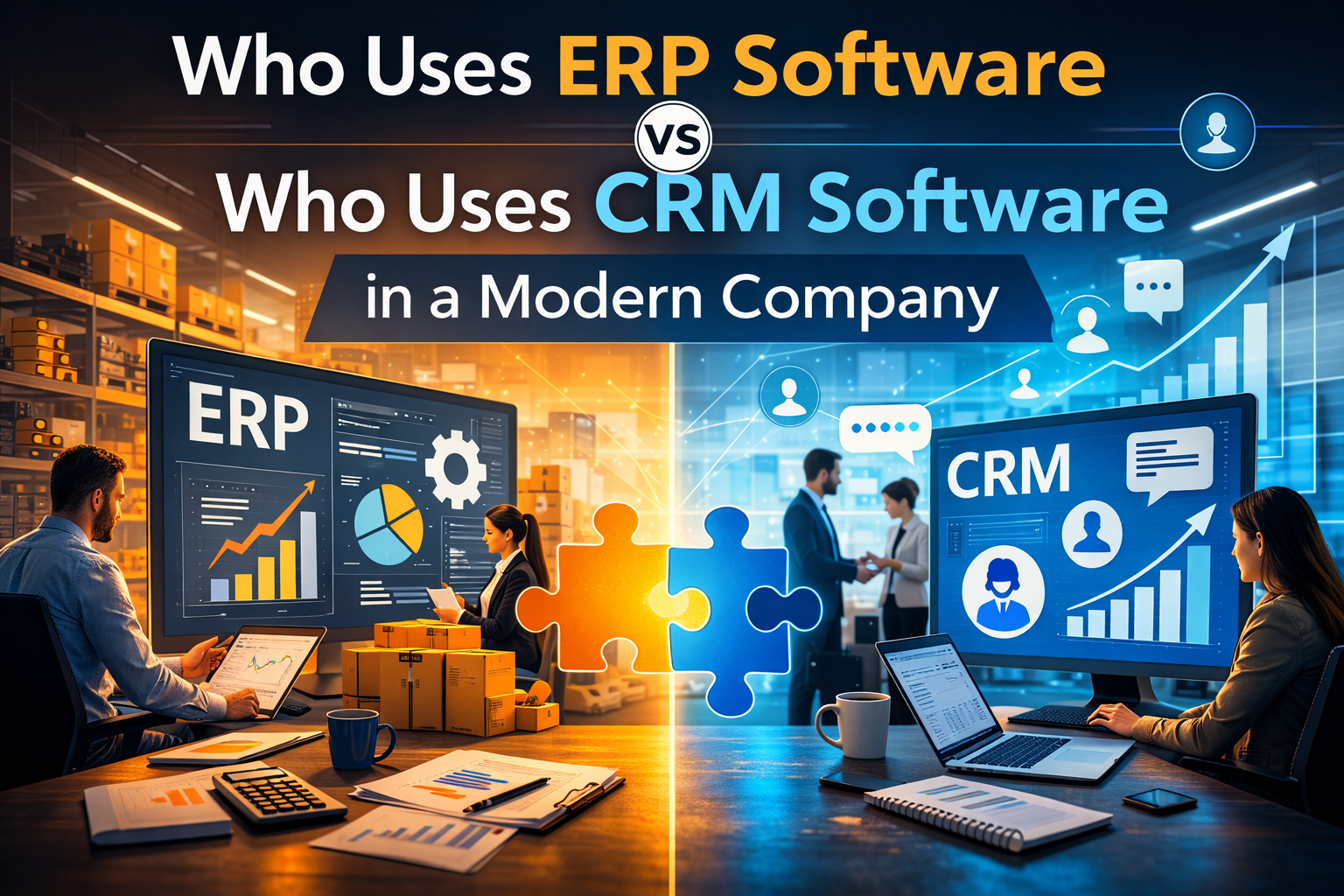
Enterprise Resource Planning software and Customer Relationship Management software are often mentioned together because both are core systems inside modern companies. They are foundational platforms that store critical business data and coordinate complex processes. Yet the two systems serve very different groups of employees and solve very different problems.The easiest way to understand the difference is to look at the parts of the organization that use them.
CRM software is primarily used by employees whose work revolves around customers, sales, and revenue generation. Sales teams rely heavily on CRM systems because they need a centralized place to track leads, conversations, deals, and opportunities. A salesperson might spend much of their day inside a CRM updating notes from calls, logging emails, tracking where a prospect is in the sales process, and forecasting potential revenue.
Marketing teams also interact with CRM platforms because these systems store valuable customer and prospect data. Marketers use that information to run campaigns, segment audiences, and measure how well different marketing efforts convert into real sales opportunities. When someone fills out a form on a website or signs up for a newsletter, that information often flows directly into the CRM so it can be tracked and nurtured.
Customer support and account management teams frequently use CRM software as well. They rely on it to see the history of interactions with a customer, understand what products or services have been purchased, and manage ongoing relationships. When a client submits a support request or asks for help, the CRM helps the support team understand the context of that customer relationship.In many organizations, anyone whose job depends on understanding customers will spend time inside a CRM system.
ERP software, on the other hand, tends to be used by employees who manage the internal operations of a company rather than its customer relationships. ERP systems are designed to coordinate resources across departments such as finance, accounting, procurement, inventory management, manufacturing, and human resources.
Accountants and finance professionals are among the heaviest ERP users. These systems track financial transactions, budgets, payroll, invoices, and financial reporting. When a company closes its books at the end of a month or quarter, much of the work happens inside the ERP system because that is where the financial data is stored and organized.
Operations teams rely on ERP software to manage supply chains, inventory levels, and purchasing. If a company manufactures products, the ERP system often controls production planning and tracks the movement of materials through the organization. Warehouse managers, procurement specialists, and logistics coordinators depend on ERP systems to make sure the company has the resources it needs to operate efficiently.
Human resources departments also interact with ERP platforms, particularly when the system includes modules for employee management, payroll, benefits, and workforce planning. The ERP becomes a central system of record for employees, just as it does for finances and inventory.
While CRM software focuses on relationships with people outside the company, ERP software focuses on the resources and processes inside the company.In practice, the two systems often work together. A sales team might close a deal in the CRM, which then triggers processes inside the ERP system such as invoicing, inventory allocation, or production scheduling. Information flows between the two systems so that customer-facing teams and operational teams remain aligned.
Despite this integration, the daily users of each system tend to belong to different parts of the organization. Salespeople, marketers, and support teams live in the CRM because it helps them understand and grow customer relationships. Accountants, operations managers, procurement teams, and HR professionals rely on the ERP because it organizes the internal machinery of the business.
Understanding this distinction also explains why these systems are so valuable. CRM software drives revenue by helping companies acquire and retain customers. ERP software protects profitability by ensuring that the company’s resources, finances, and operations run smoothly.
Together, they form the digital backbone of many modern organizations. One manages the outside world of customers and revenue, while the other manages the inside world of operations and resources.