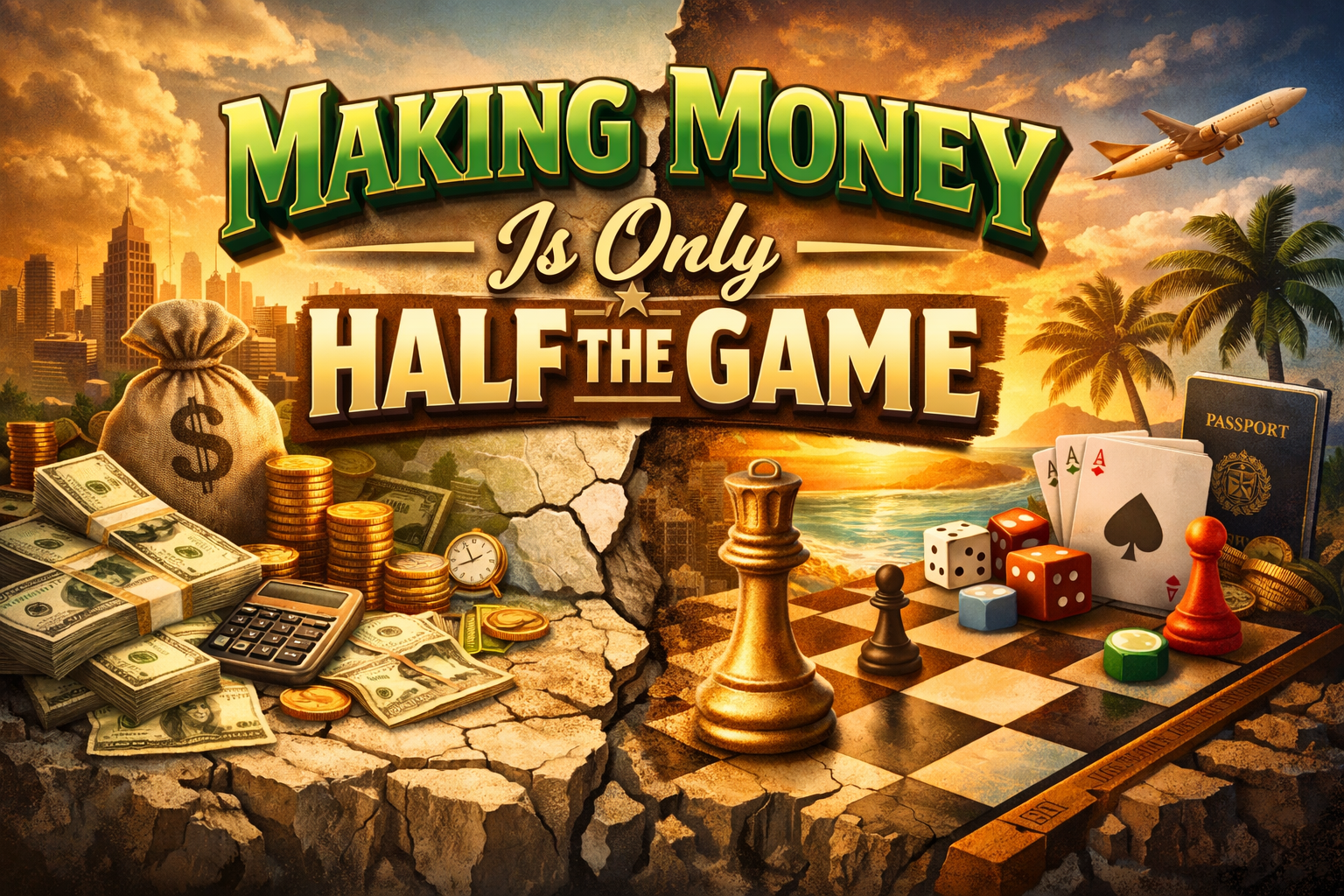
There’s a quiet assumption that once you make enough money, everything else sorts itself out. The stress disappears, the future becomes secure, and the details of daily spending stop mattering. It sounds logical. If income is high enough, how could money still be a problem?But that assumption falls apart the moment you look at how people actually live.
There are people earning modest incomes who steadily build stability, and there are people earning large incomes who remain stuck in cycles of pressure, debt, and uncertainty. The difference is not luck. It’s not even opportunity. It’s the ability to manage what comes in.
Making money creates potential. Managing money determines what that potential turns into.When income rises, so do expectations. Expenses expand quietly at first, then all at once. A slightly better apartment becomes a much more expensive one. Occasional convenience becomes constant convenience. Small upgrades stack into a lifestyle that feels normal but costs far more than it should. Nothing feels excessive in isolation, yet the total leaves no room to breathe.
This is how high earners end up living paycheck to paycheck. Not because they don’t make enough, but because they never built the discipline to control what they spend when they finally could.
On the other side, someone who understands how to manage money treats income differently. They don’t see it as something to match with spending. They see it as something to direct. Every dollar has a role, whether that role is covering necessities, building savings, or creating future income. The result is not restriction. It’s control.
Control is what most people are actually chasing when they say they want more money.
Without management, money behaves like water poured into open hands. It flows in and disappears just as quickly. With management, it becomes something you can store, grow, and use deliberately. The same income can lead to completely different lives depending on which approach is taken.
There’s also a deeper problem with focusing only on earning. Income can change. Jobs end, markets shift, businesses slow down. If your entire financial life depends on money continuing to come in at a high rate, then your stability is fragile by definition. Managing money builds a buffer against that fragility. It creates time, options, and resilience.
People often underestimate how much peace comes from simply knowing where their money is going and why. It removes the background anxiety that comes from vague numbers and unclear habits. It replaces guesswork with intention. That shift alone can change how someone experiences their entire financial life.
None of this means earning more doesn’t matter. It does. Increasing your income expands what’s possible. But without the ability to manage it, higher income only amplifies existing habits. If those habits are weak, the outcome doesn’t improve. It just becomes more expensive.The goal isn’t to choose between making money and managing it. The goal is to understand that one without the other is incomplete.
Making money opens the door. Managing it determines whether you actually move forward.