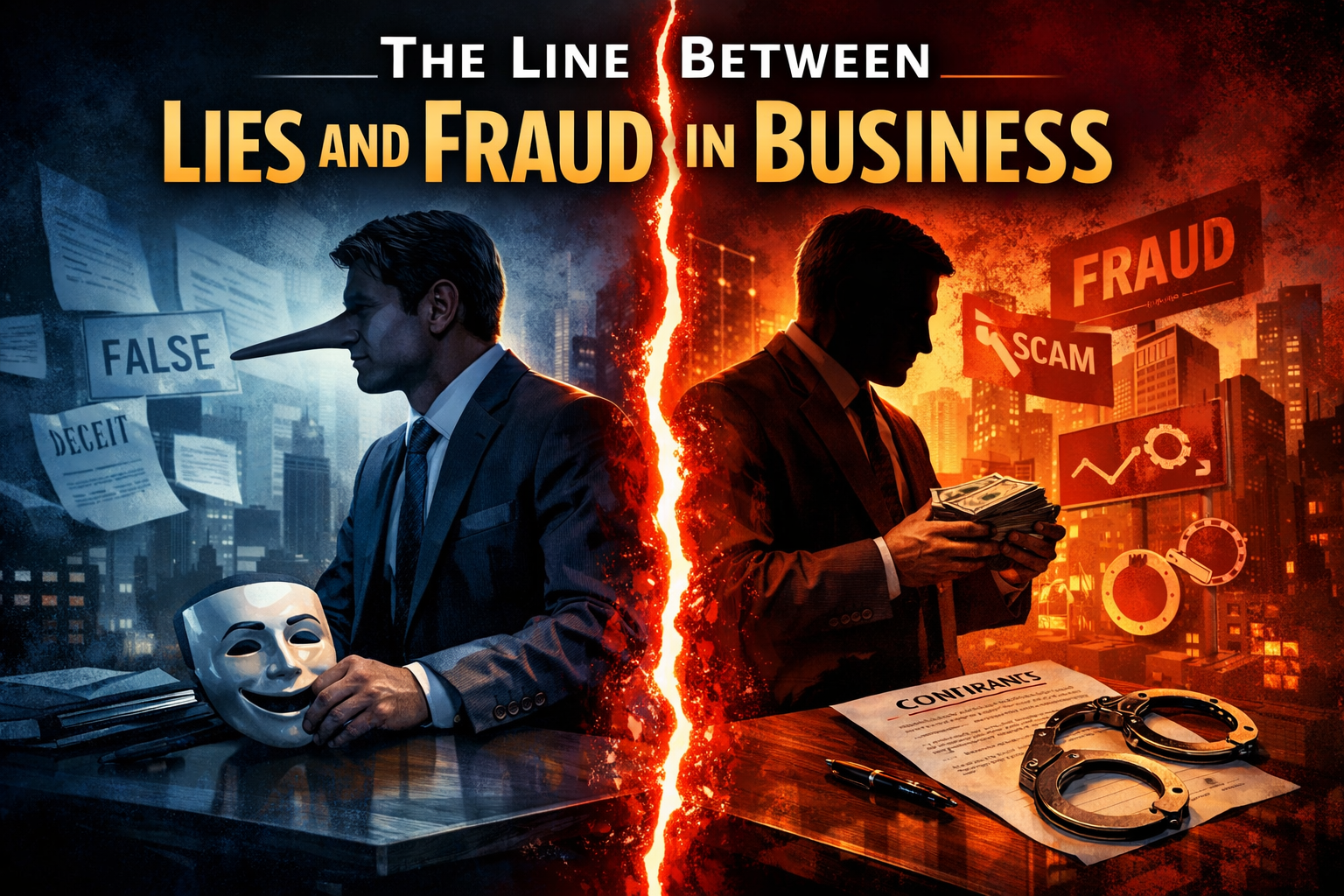
In business, people like to pretend everything falls into neat moral categories. You’re either honest or dishonest, ethical or unethical, trustworthy or corrupt. Reality doesn’t work that way. There is a difference between telling lies and committing fraud, and understanding that difference is one of the most important things you can do if you plan to operate in the real world rather than an idealized one.
Every business, at some level, is built on persuasion. You highlight strengths, downplay weaknesses, and present your product or service in the best possible light. A restaurant doesn’t describe its food as “decent on a good day.” A fitness brand doesn’t lead with how hard it is to stay consistent. A startup founder doesn’t open a pitch by explaining all the ways the company might fail. There is always a layer of framing, exaggeration, and selective truth. That’s not unique to business. That’s human communication.The problem is that people often confuse this kind of positioning with fraud. They hear “this product will change your life” and treat it as a legally binding statement rather than what it usually is: marketing language. It’s an attempt to create emotion, not a contract. Most customers understand this intuitively, even if they complain about it publicly. They know there’s a difference between being sold to and being scammed.
Fraud begins where misrepresentation turns into measurable harm based on false, material claims. It’s not about tone or exaggeration anymore. It’s about deception that directly influences a transaction in a way that wouldn’t have happened if the truth were known. If someone sells a course claiming it includes mentorship and there is none, that crosses the line. If a company reports fake financials to attract investors, that’s not clever positioning. That’s illegal. The key difference is that fraud removes the buyer’s ability to make an informed decision by hiding or fabricating critical facts.This distinction matters because if you treat all forms of persuasion as fraud, you paralyze yourself. You hesitate to promote, you soften every claim, and you end up invisible in a market full of louder voices. On the other hand, if you ignore the line entirely, you might get short-term wins but you’re building something fragile. Fraud doesn’t just carry legal risk. It destroys reputation in a way that is almost impossible to recover from, especially in a world where information spreads instantly.
The real skill is learning how to operate confidently in the space between silence and deception. You can be bold without being dishonest. You can make strong claims without fabricating reality. You can sell a vision while still delivering something real on the other side. That balance is what separates businesses that grow steadily from those that either stall out or burn down.There’s also a deeper layer to this. Many people don’t fail in business because they lack skill or opportunity. They fail because they are uncomfortable with the idea of selling at all. They associate any form of persuasive language with being a liar, so they default to being overly cautious and overly literal. Meanwhile, someone else who understands how attention works captures the market, even if their product is only marginally better.
Understanding the difference between lies and fraud doesn’t mean you aim to sit right on the edge of what you can get away with. It means you recognize the rules of the game. You communicate value in a compelling way, but you don’t invent reality. You respect the fact that people are making decisions based on what you say, and you don’t take advantage of that trust.In the end, business is not about being perfectly pure. It’s about being effective without crossing the line that turns persuasion into deception. Most people never take the time to understand where that line actually is. The ones who do tend to last longer, build stronger reputations, and create something that doesn’t collapse the moment it’s examined closely.