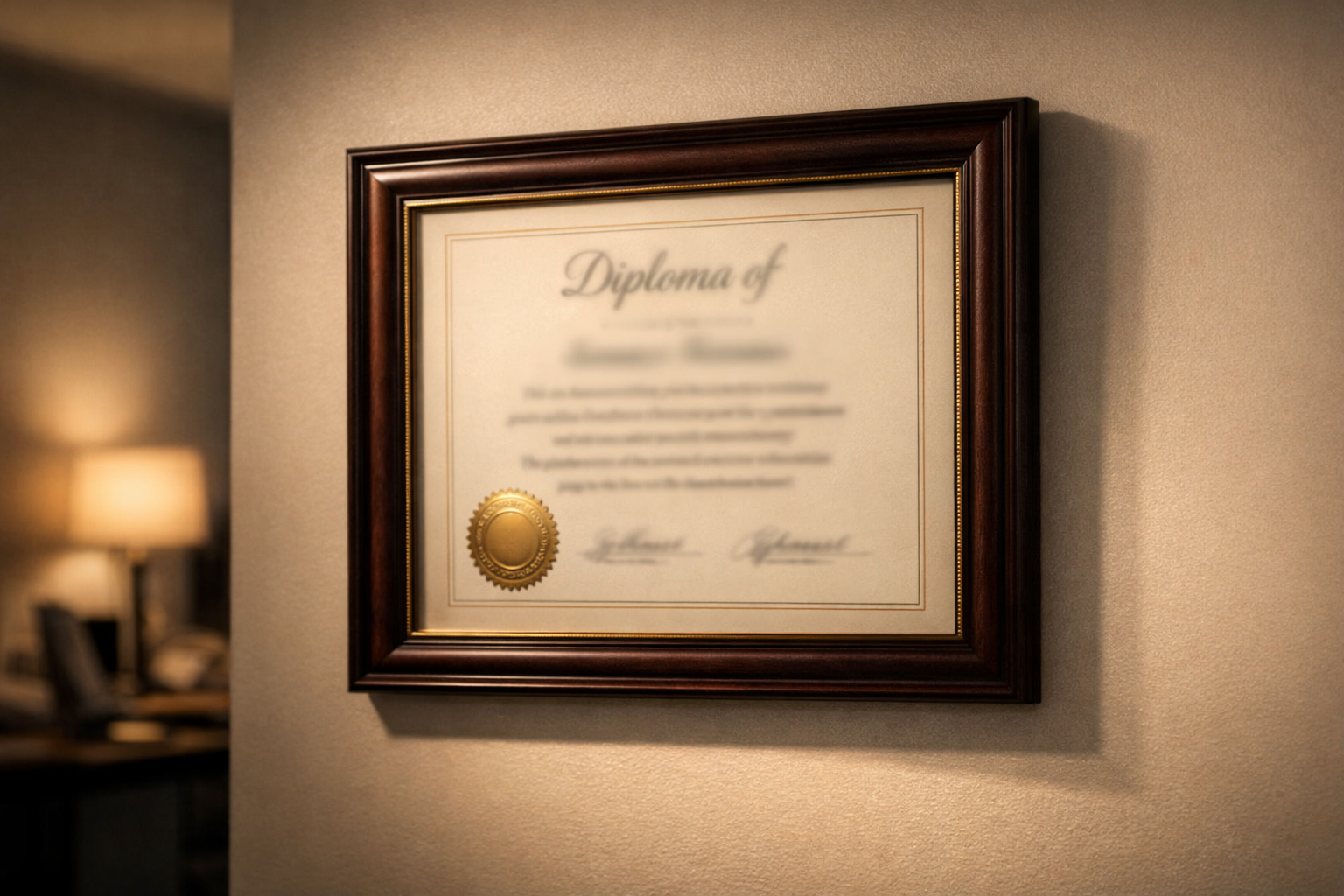
A bachelor’s degree is worth exactly what the labor market says it is — no more, and not a cent less.Every spring, hundreds of thousands of graduates walk across a stage, accept a rolled piece of paper, and believe — genuinely and reasonably — that they have just purchased something of lasting value. They have spent four years, considerable money, and the better part of their early adulthood earning a credential that society has long promised will open doors. What that promise quietly omits is its own fine print: a diploma is not an asset in any meaningful economic sense. It is a claim. And a claim is only as good as whoever agrees to honor it.
This is not cynicism dressed up as insight. It is a simple observation about how credentials function in a market economy. A degree in engineering from a well-regarded institution, sought after by dozens of employers who will pay handsomely for it, is a genuinely valuable thing. A degree in a field where no employer is actively hiring, or where the credential has been so thoroughly diluted that it signals nothing distinctive, is closer to an expensive hobby — one with homework and a commencement ceremony, but a hobby nonetheless.
The moment no employer treats your degree as relevant, it ceases to be an investment. It becomes a memory.
This framing makes people uncomfortable, and that discomfort is worth examining. We have attached enormous cultural weight to the idea of higher education as intrinsically valuable — as a process that produces a better, more complete human being regardless of economic outcome. There is something real in that idea. Learning to think rigorously, to read difficult texts, to argue carefully and change your mind when the evidence demands it — these are genuinely good things. But we have confused the personal enrichment that can accompany a degree with the financial return that a degree supposedly guarantees. They are not the same transaction, and conflating them has caused a great deal of harm.
The harm shows up in student loan balances. It shows up in graduates who pursued fields they were told were “safe” only to find themselves competing for jobs that pay less than the interest accumulating on their debt. It shows up in the uncomfortable silence that falls when someone asks a twenty-six-year-old with a master’s degree and a coffee shop job whether their education was “worth it.” The honest answer to that question is not found in the quality of the coursework or the reputation of the institution. It is found in a paycheck — or in its conspicuous absence.
None of this means that college is a bad choice. For many fields, a degree is not merely useful but legally or practically required — medicine, law, engineering, education, and dozens of others. In these cases, the labor market has built the credential directly into its hiring infrastructure, and the value of the degree is not speculative. It is structural. The credential is the key, and the door exists and will continue to exist. This is what a genuinely valuable degree looks like: not a bet on future relevance, but a known and present requirement for a known and present job.
The danger lies in the degrees that exist in the middle — the ones that are neither structurally required nor clearly useless, but whose value depends entirely on the graduate’s ability to translate them into employment. These are the degrees where the commencement speech and the economic reality diverge most sharply. A hiring manager does not evaluate a resume as a record of intellectual growth. They evaluate it as evidence that a candidate can do a specific job. If your degree does not speak to that question, it will be skimmed past, regardless of what it cost or what you learned while earning it.
This is where the conversation about higher education tends to break down. Defenders of the liberal arts, for instance, are not wrong to argue that studying history or philosophy develops skills that employers value — critical thinking, clear writing, the ability to synthesize complex information. They are wrong, however, when they treat that argument as settled rather than as something a graduate must actively prove in every application, interview, and early year of their career. The degree does not make the case for itself. The graduate does. And many graduates are never told this clearly enough, early enough, to do anything useful with the information.
The question prospective students should be asking is not “is college worth it?” in the abstract. It is far more specific than that: who will hire me, at what salary, because I hold this particular degree from this particular institution? If that question has a clear and satisfying answer, then the degree is likely worth pursuing. If the answer is vague — if it relies on phrases like “opens doors” or “teaches you how to think” without connecting those outcomes to actual employers and actual job titles — then the student is being asked to make a significant financial commitment on the basis of a metaphor.That is not a reasonable ask. And yet it is the ask that millions of eighteen-year-olds accept every year, encouraged by guidance counselors, parents, and an admissions industry with every incentive to sell the dream and no obligation to guarantee the outcome.
A degree is a tool. Like any tool, its value is entirely determined by whether it can do the job required of it. A hammer is useless to someone who needs a scalpel. Four years of coursework and a credential at the end are useless to someone whose target employers do not recognize or require that credential. The wood-paneled offices, the professors with impressive titles, the alumni network, the brand name on the diploma — none of it matters if the person on the other side of the hiring desk looks at your degree and feels nothing.
Acknowledging this is not an attack on education. It is a defense of students — particularly the ones from families without the financial cushion to absorb a bad bet, the ones who will be paying for an investment that doesn’t pay off long after the graduation photos have faded. They deserve honesty more than they deserve inspiration. The most useful thing anyone can tell a young person considering a four-year degree is simple: find out who is hiring, find out what they’re paying, and find out whether this credential is what gets you in the room. Everything else is decoration.