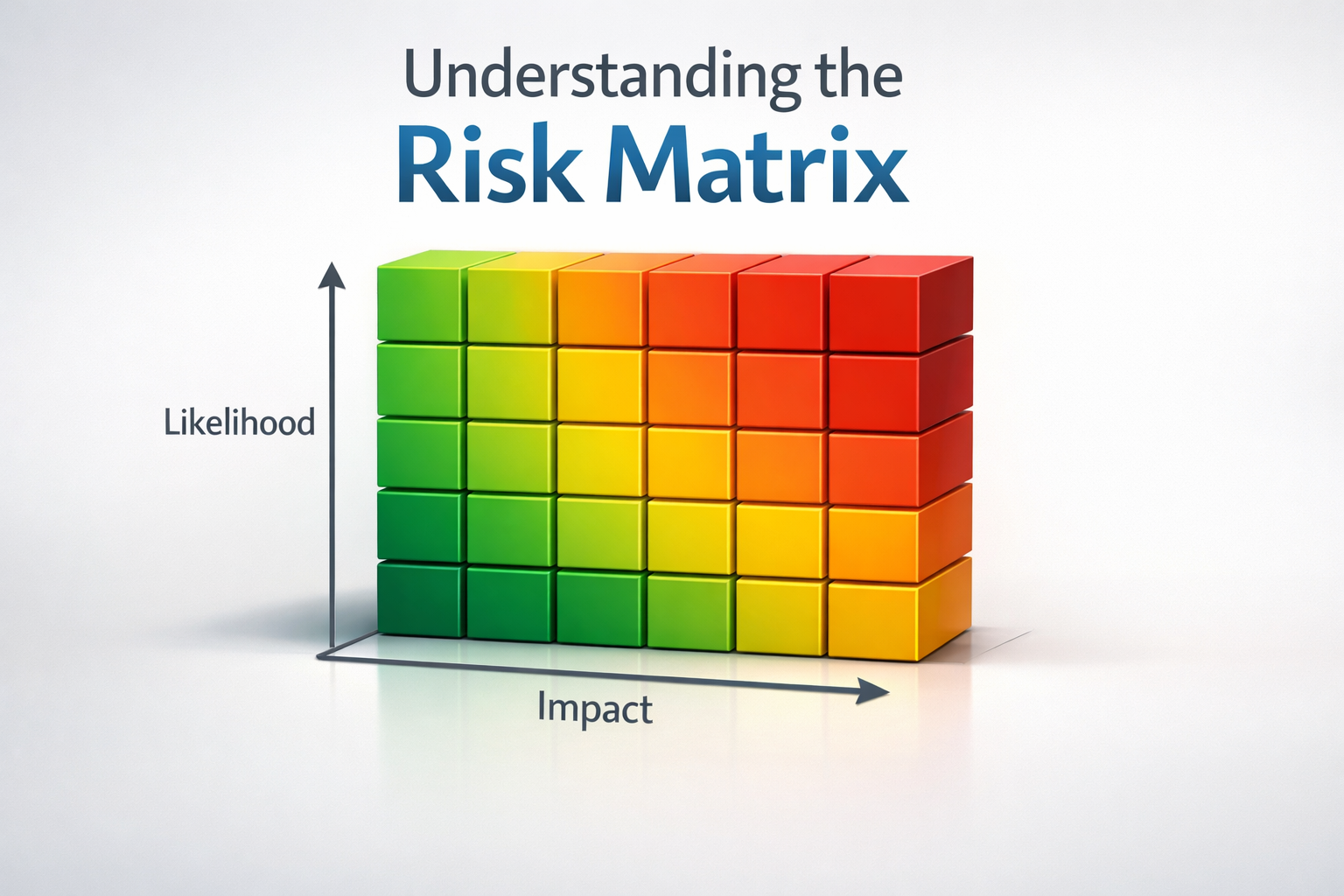
In business, engineering, and project management, decisions often come with uncertainty. Not every choice is straightforward, and potential threats can range from minor inconveniences to catastrophic failures. That’s where a risk matrix comes in. A risk matrix is a tool designed to help individuals and organizations evaluate and prioritize risks so they can act strategically rather than reactively.
At its core, a risk matrix organizes risks based on two key dimensions: the likelihood of an event occurring and the severity of its impact. By examining these two factors together, decision-makers can visualize which risks demand immediate attention and which can be monitored or accepted. A rare event with a minimal impact might be noted but not prioritized, whereas a highly probable event with severe consequences would demand urgent action.
The practical beauty of a risk matrix lies in its simplicity. Even complex projects can be broken down into a series of risks that are easier to manage when placed within this framework. It encourages teams to think critically about the consequences of each potential risk and fosters a culture of proactive planning rather than waiting for problems to arise.
Beyond planning, a risk matrix also supports communication. When everyone in a team or organization can see how risks are assessed and prioritized, it creates a shared understanding of potential threats. This transparency makes it easier to justify decisions, allocate resources effectively, and ensure that everyone is aligned on what matters most.
Using a risk matrix doesn’t eliminate uncertainty, but it does bring clarity. It helps transform abstract fears into actionable insights, guiding organizations toward choices that minimize negative outcomes while maximizing opportunity. In a world where risks are inevitable, understanding and applying a risk matrix can mean the difference between chaos and control.
By taking the time to evaluate risks systematically, leaders, managers, and project teams can navigate uncertainty with confidence, knowing that their decisions are informed, deliberate, and strategically sound.