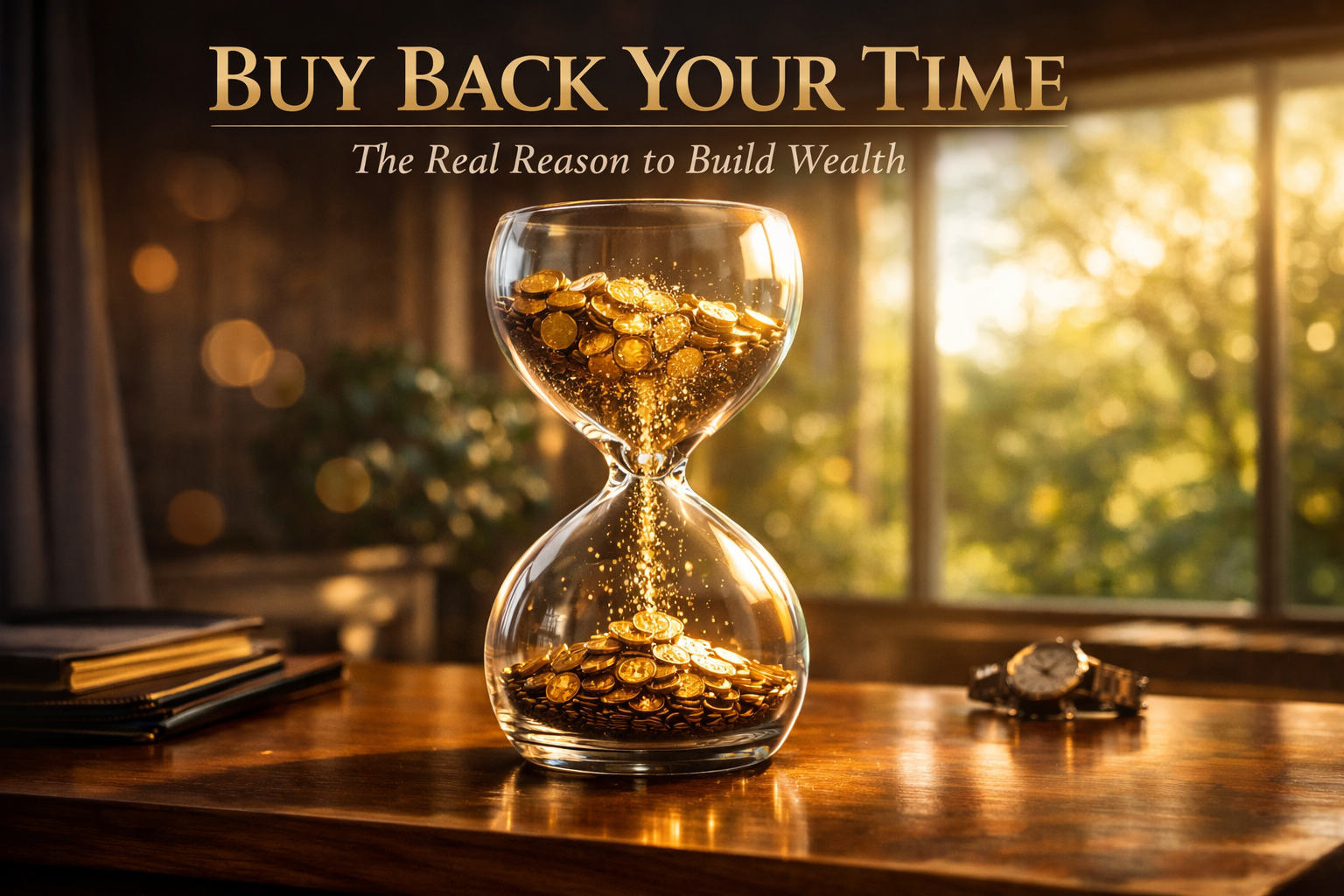
Most people view wealth as a gateway to luxury. Expensive cars, large houses, luxury travel, and everything that signals success from the outside. It’s an easy picture to sell because it’s visible and immediate. You can point to it, photograph it, and compare it. But that version of wealth misses the deeper point. The real value of money is not what it allows you to buy. It’s what it allows you to stop doing.
Time is the one resource you can never earn back once it’s gone. Every hour spent on something you don’t care about is permanently lost. Yet most people trade their time away for decades without questioning it, because the system rewards income more than freedom. They chase raises, promotions, and bigger paychecks, believing that one day it will translate into a better life. Sometimes it does, but often it just leads to more obligations and higher expenses.
Wealth, when approached correctly, breaks that cycle. It gives you the ability to decide how your days are structured. You are no longer forced to take on work just to cover your costs. You can walk away from situations that drain you. You can focus on projects that matter to you, even if they don’t pay immediately. That shift is subtle, but it changes everything about how you live.
The mistake is using money to impress instead of to free yourself. Fancy purchases feel rewarding in the moment, but they often come with hidden costs. They increase your need for income, which ties you more tightly to the very system you were trying to escape. Instead of gaining freedom, you create a lifestyle that requires constant maintenance. The result is a paradox where you earn more but feel just as constrained.
Buying back your time requires a different mindset. It means keeping your expenses under control even as your income grows. It means prioritizing flexibility over appearance. When you spend intentionally, you create a gap between what you earn and what you need. That gap is what eventually turns into freedom. It allows you to step back, to slow down, or to walk away entirely if you choose.
There is also a psychological shift that comes with valuing time over things. You start to measure decisions differently. Instead of asking whether you can afford something, you ask what it will cost you in terms of freedom. Will it lock you into more work? Will it limit your ability to make changes later? These questions lead to choices that compound in your favor over time.
None of this means you can’t enjoy your money. The point is not to avoid spending, but to make sure your spending aligns with what actually improves your life. Experiences, relationships, and peace of mind tend to deliver more lasting value than objects meant to signal status. When your priorities are clear, it becomes easier to avoid distractions that don’t serve you.
In the end, wealth is not about reaching a number or displaying success. It is about control. It is about waking up and knowing that your time belongs to you. Everything else is secondary. When you understand that, your decisions change, your path becomes clearer, and the purpose of building wealth finally makes sense.