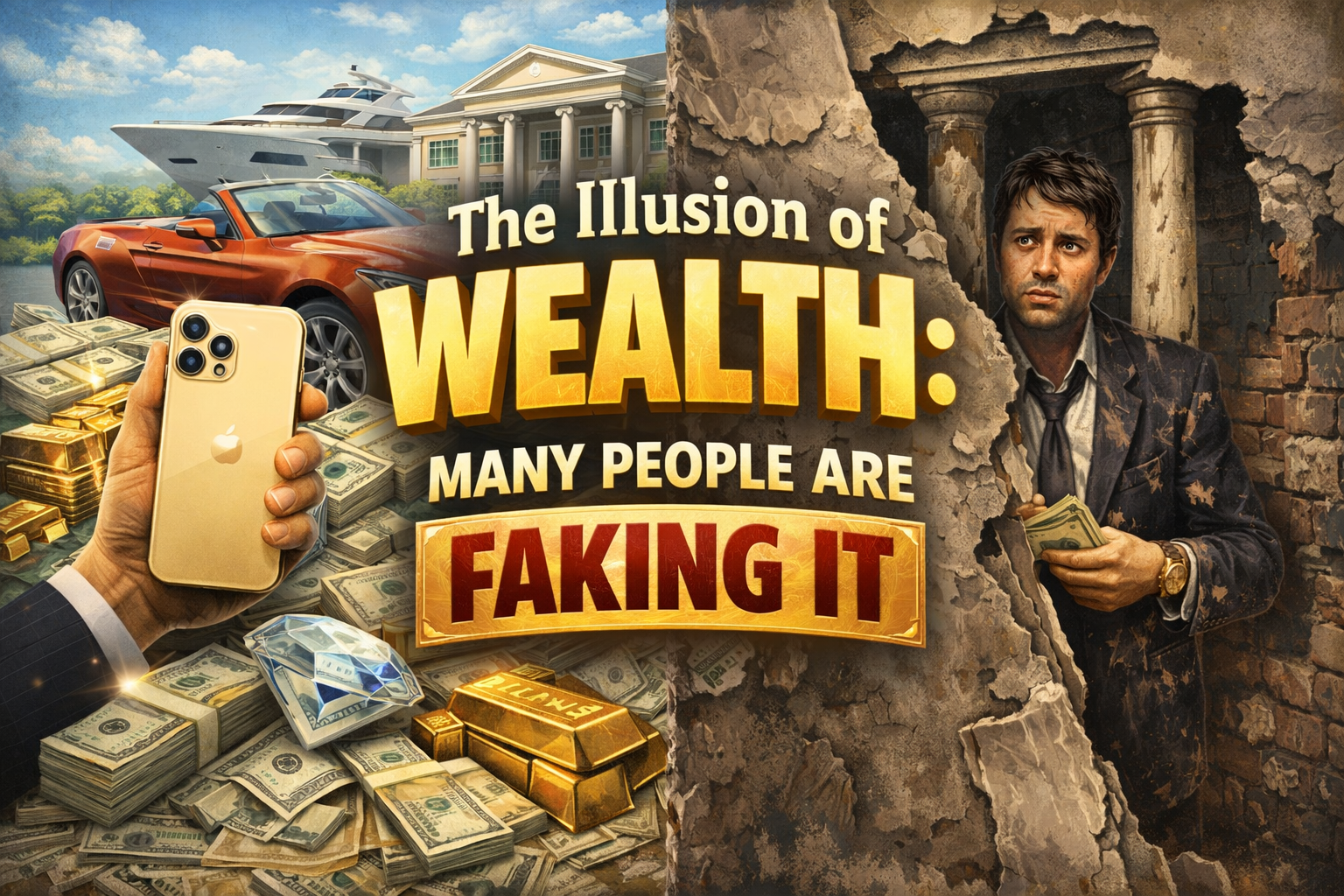
Scroll through social media long enough and it starts to feel like everyone is rich. Luxury cars appear as casually as grocery runs. Designer clothes look like everyday wear. Exotic vacations seem like routine weekends. It creates a quiet pressure, the sense that you’re somehow behind if your life doesn’t look the same. But what most people don’t realize is that a large portion of that “wealth” isn’t real. It’s staged, borrowed, financed, or carefully edited to look like something it’s not.Wealth, in its true form, is often quiet. It doesn’t need to announce itself constantly. People who are genuinely financially secure tend to focus more on maintaining and growing what they have rather than proving it to strangers. They value privacy because privacy protects their peace and their assets. The louder the display, the more likely it is that the foundation underneath is weak.
A lot of what gets presented as wealth is actually debt in disguise. Cars are leased. Clothes are bought on credit. Trips are paid off over months or even years. There’s nothing inherently wrong with financing things, but the illusion becomes dangerous when it’s framed as ownership rather than obligation. Someone might look like they’re living a high-end lifestyle, but behind the scenes they’re juggling payments, stressing over bills, and trying to keep up appearances.
Social media amplifies this illusion because it rewards visuals, not truth. A single photo can suggest a lifestyle that doesn’t exist outside of that moment. A person might take dozens of pictures in one luxury setting and spread them out over weeks, making it seem like a constant reality. In some cases, people rent items just to create content. Cars, watches, even private jets can be staged for a few hours, long enough to capture the image of success without actually having it.
There’s also a psychological side to it. People want to be seen a certain way. They want validation, respect, and sometimes envy. Displaying wealth, even if it’s not real, can bring attention and a sense of status. It can open doors socially or online that might otherwise stay closed. Over time, though, this creates a cycle where the image has to be maintained. The performance becomes exhausting, because the gap between reality and appearance keeps growing.
What gets lost in all of this is the difference between income and wealth. Someone can make a decent amount of money and still have very little saved. Another person might earn less but build quietly over time, investing, saving, and avoiding unnecessary expenses. The second person rarely looks impressive on the surface, but they are often in a much stronger position. Real wealth is about control and security, not just appearance.
Believing everything you see can distort your expectations. It can make you feel like progress isn’t happening fast enough, or that you need to spend more to “look successful.” That mindset is exactly what traps people in the cycle of fake wealth. They chase the image instead of building the reality. The truth is that most sustainable success looks boring from the outside. It involves consistency, patience, and a willingness to delay gratification.
If you look closely, the people who are actually doing well over the long term tend to move differently. They are less concerned with proving themselves and more focused on positioning themselves. They think in years instead of moments. They don’t need constant validation because their confidence comes from what they’ve built, not what they can show.
Understanding that much of what you see is exaggerated or outright fake gives you an advantage. It allows you to step out of the comparison trap and focus on your own path. Instead of chasing appearances, you can build something that doesn’t need to be constantly displayed to feel real. In a world full of noise and illusion, that kind of quiet progress is what actually lasts.