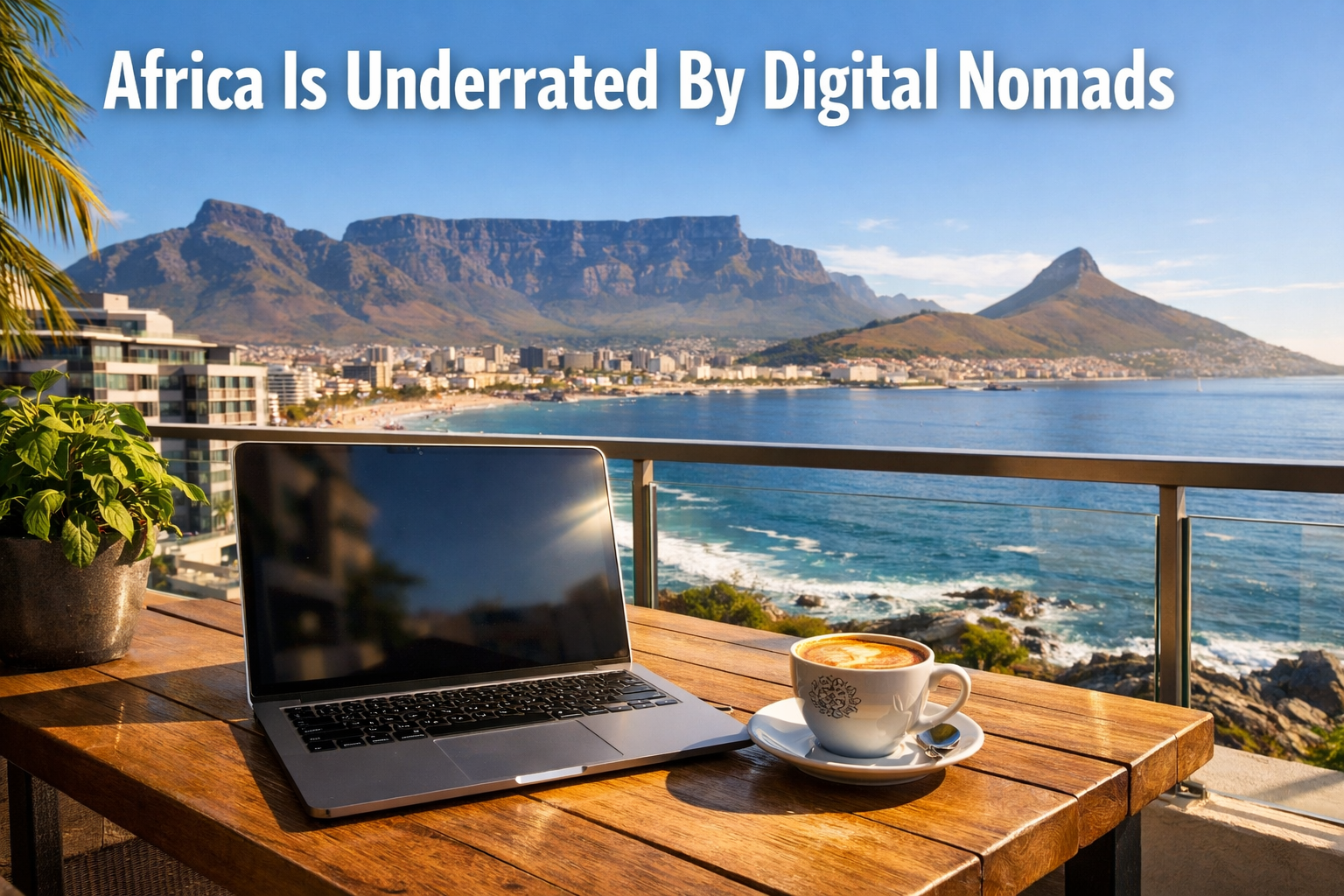
When people think about digital nomad destinations, Africa rarely comes to mind. Instead, their mental map is often filled with Southeast Asia, Europe, or Latin America—places that have been heavily marketed as nomad-friendly hubs. Yet Africa, with its diverse landscapes, vibrant cultures, and rapidly growing cities, is a continent that more aspiring digital nomads should seriously consider.
Part of the reason Africa gets overlooked is perception. Many assume it is unsafe, lacks modern infrastructure, or cannot support remote work. While these concerns may have some basis in certain regions, they ignore the many pockets of stability, connectivity, and opportunity that exist across the continent. Cities like Accra, Nairobi, and Cape Town are modern metropolises with reliable internet, coworking spaces, and a rising community of remote workers. Even smaller towns and coastal areas are increasingly equipped to meet the needs of people who work online.
Another factor is awareness. Travel blogs, social media influencers, and online guides rarely feature African destinations as nomad hotspots. This has created a feedback loop: fewer digital nomads visit Africa, which means fewer stories are shared, and so the continent remains underrepresented in the nomad narrative. Yet for those willing to explore, Africa offers a unique combination of affordability and quality of life. Rent, food, and local services are often cheaper than in the more “popular” nomad cities, allowing remote workers to live comfortably while investing in experiences, learning local languages, or supporting local communities.
Cultural richness is another overlooked draw. Africa’s diversity means that no two countries—or even regions—offer the same experience. From the vibrant music and art scenes in West Africa to the breathtaking landscapes of East Africa and the beaches of Southern Africa, nomads who venture here find inspiration around every corner. Beyond aesthetics, connecting with local communities can provide a deeper understanding of the world, far beyond what traditional travel or social media portrayals can offer.
Finally, Africa represents opportunity. Its cities are growing rapidly, digital infrastructure is improving, and entrepreneurial ecosystems are developing in ways that are perfect for remote workers looking to build networks, launch ventures, or collaborate internationally. By ignoring the continent, aspiring digital nomads miss not just affordability and adventure, but a chance to be part of something emerging and dynamic.
In short, Africa challenges the assumptions many digital nomads carry. It may not yet have the polished “nomad city” image of Chiang Mai or Lisbon, but for those willing to look beyond conventional maps, it offers affordability, diversity, connectivity, and inspiration. Aspiring remote workers who overlook Africa risk missing out on experiences that could shape both their personal and professional lives in ways no other region can.