Posted on

Why Authority Matters in Affiliate Marketing

Affiliate marketing is often presented as a simple equation. Promote a product, share a link, and earn a commission when someone buys. While this description is technically correct, it leaves out one of the most important elements of successful affiliate marketing: trust. People rarely purchase products from someone they do not trust, especially when there are countless other options competing for their attention. This is where authority becomes extremely valuable.

Authority is the perception that you know what you are talking about. It is built gradually through consistent communication, useful information, and visible expertise in a particular topic. When people view someone as knowledgeable and credible, they are far more likely to follow their recommendations. In affiliate marketing, this trust can make the difference between a link that gets ignored and one that generates consistent commissions.

A blog is one of the most powerful tools for building this kind of authority. Writing regularly about a specific subject allows you to demonstrate knowledge over time. Each article becomes another piece of evidence that you understand the topic and have spent time thinking about it. As readers encounter your content repeatedly, they begin to associate your name or brand with that subject. This familiarity creates confidence, and confidence is what ultimately leads to purchases.

Social media plays a similar role, but in a slightly different way. While a blog often contains deeper and more structured content, social media allows you to maintain a steady presence in front of your audience. By sharing insights, responding to questions, and discussing the tools or services you use, you reinforce the idea that you are actively engaged in the field. This visibility helps transform you from a random internet account into a recognizable voice.

When a blog and social media work together, they create a reinforcing cycle. The blog demonstrates depth of knowledge, while social media maintains frequency and connection with the audience. Over time, this combination can turn a simple content creator into a trusted source of recommendations. Once that trust exists, affiliate marketing becomes much more effective because the audience is already predisposed to take your suggestions seriously.

Without authority, affiliate marketing often feels like shouting into the void. Links are shared, but few people click them, and even fewer make purchases. With authority, the dynamic changes. Recommendations feel more like guidance than advertising. Readers and followers begin to see the affiliate not as a salesperson, but as someone helping them make better decisions.

This is why many of the most successful affiliate marketers spend a large portion of their time building content and engaging with their audience. They understand that commissions are not created by links alone. They are created by trust, and trust is built through consistent demonstrations of knowledge and value.

In the long run, authority becomes one of the most reliable assets an affiliate marketer can possess. A blog filled with thoughtful articles and a social media presence that reinforces expertise can continue generating influence for years. Once that foundation exists, recommending products becomes far easier because the audience already believes that the recommendations are coming from someone worth listening to.

Posted on

Hustle Porn Doesn’t Teach You How to Make Money

There is a category of content on the internet that is extremely popular but surprisingly unhelpful when it comes to actually making money. It is often called “hustle porn.” These are the motivational clips, speeches, and posts that glorify grinding, waking up at 4 a.m., working endlessly, and sacrificing everything in pursuit of success. The problem is that while this content can feel energizing in the moment, it rarely teaches the actions that actually produce income.

Hustle porn focuses heavily on intensity rather than direction. It promotes the idea that working harder is the key variable that determines success. In reality, income is not just a function of effort. It is a function of performing actions that have economic value. Someone can work fourteen hours a day on tasks that do not generate revenue and still end the month with nothing to show for it. Meanwhile, another person might spend only a few hours performing high-value tasks and produce far greater financial results.

The difference lies in the type of work being done. Hustle porn rarely explains how money actually moves through the economy. It does not teach how businesses acquire customers, how products are positioned, how deals are negotiated, or how distribution works. These are the mechanics that determine whether an activity is lucrative or not. Without understanding these mechanisms, motivation alone cannot create income.

This is why many people who consume large amounts of motivational content feel busy but remain financially stuck. They are constantly told to push harder, wake up earlier, and grind longer, but they are not being shown the specific actions that generate revenue. They are given emotional fuel without a steering wheel.

Making money is much more practical than motivational content makes it seem. It usually involves identifying a problem that people are willing to pay to solve and then consistently performing the activities that connect your solution to those buyers. That might involve selling, marketing, building systems, negotiating partnerships, or improving a product. These activities are directly tied to revenue because they influence how value is exchanged.When someone learns to perform these kinds of actions, the need for constant motivation begins to disappear. The work becomes more focused and predictable. Instead of chasing energy or hype, the person is simply executing processes that have historically produced income.

This is why people who eventually succeed in business often reduce the amount of motivational content they consume. They realize that inspiration is not a substitute for skill. What matters is learning how markets operate and then participating in those markets in a way that creates measurable value.

Hustle porn sells the feeling of progress, but feelings are not the same as results. Real financial progress comes from mastering the activities that the market rewards. Once someone understands this distinction, the path to making money becomes much clearer. It is no longer about how hard you appear to be working, but about whether the work you are doing actually produces value that someone is willing to pay for.

Posted on

Your True Potential Only Reveals Itself After Years of Mastery

Most people underestimate what they are capable of achieving because they judge themselves far too early in the process. They attempt something difficult for a short period of time, encounter resistance, and quickly form conclusions about their limits. When this happens, what they are really measuring is not their potential, but their patience.

Human ability compounds over time. The first months of learning almost anything are usually slow and frustrating. Skills feel awkward, progress appears minimal, and the results rarely match the effort invested. This early phase can create the illusion that improvement will always be this difficult. In reality, the beginning is simply where the foundations are being built.

Once a person commits to learning something deeply for years rather than weeks, the entire experience changes. Small improvements begin to stack on top of each other. Knowledge that once felt abstract becomes intuitive. Tasks that once required intense concentration become automatic. The individual who once struggled with the basics gradually becomes someone capable of handling complexity with confidence.

This long period of development is where potential begins to reveal itself. It is impossible to know how good you can become at something when you are still standing at the starting line. Potential only becomes visible after thousands of hours of practice, experimentation, and correction. What felt impossible early on often becomes routine after sustained effort.

Another reason potential remains hidden for so long is that the brain adapts to challenge. When you push yourself to operate at a higher level consistently, your mind slowly reorganizes itself to handle that level of difficulty. The person you become after years of disciplined learning is not the same person who first started. Your thinking becomes sharper, your judgment improves, and your tolerance for complexity increases.

Because of this transformation, many people surprise themselves after enough time passes. Someone who once doubted their ability to speak confidently may later become an excellent communicator. Someone who once struggled to understand a technical subject may eventually master it. What looked like a hard limit early in the journey was often just a temporary stage of development.

The mistake many people make is quitting before this transformation has time to occur. They judge their capabilities after a few months and assume that their performance at the beginning represents their permanent ceiling. In reality, they simply never stayed long enough to see the deeper layers of ability that emerge with experience.

Excellence is rarely a sudden breakthrough. More often it is the result of years spent refining a skill, correcting mistakes, and steadily raising standards. Those who stay committed long enough eventually reach a point where their capabilities exceed anything they originally imagined.

For this reason, the most important decision is not whether you are talented at the start. The more important question is whether you are willing to remain committed long enough to discover what you might become.The truth is that no one knows the full extent of their potential on day one. It only reveals itself to those who spend years learning to excel.

Posted on

The Ten Best Platforms for Cold DM Outreach

Cold direct messaging has become one of the most powerful ways to reach potential clients, partners, and customers on the internet. Instead of waiting for people to discover your website or advertising campaigns, cold outreach allows you to start conversations directly with the people who are most likely to benefit from what you offer. The effectiveness of this approach depends heavily on choosing the right platforms, because some networks are built for conversation while others are designed primarily for passive content consumption.

One of the most effective places to begin is LinkedIn. The platform was built specifically for professional networking, which means users are already conditioned to receive business-related messages. Decision-makers, founders, marketers, and agency owners are all highly active there. When a message is written clearly and respectfully, many professionals are willing to engage in conversation because networking is part of the culture of the platform.

Instagram has quietly become another powerful outreach channel. While it is widely known as a social and lifestyle platform, it is also heavily used by entrepreneurs, influencers, coaches, and small business owners who actively manage their messages. Because Instagram blends personal and business communication, direct messages often feel less formal and more conversational. This environment can make it easier to start a dialogue without sounding overly corporate.

Facebook remains a surprisingly strong outreach platform despite the rise of newer networks. Many business owners still run their companies through Facebook pages, groups, and Messenger. Small local businesses in particular are extremely reachable through Facebook messages because many of them monitor Messenger as part of their daily operations.

X, formerly known as Twitter, is another valuable environment for cold messaging because it functions as a real-time conversation platform. Users frequently interact with strangers through replies and direct messages. When someone is active on the platform, it is possible to move from a public conversation to a private message very quickly. The speed of communication on X makes it particularly effective for building quick rapport before introducing a business conversation.

TikTok has emerged as a newer but rapidly growing outreach channel. While it is primarily known for short-form video, the messaging system allows creators and businesses to communicate directly. Many brands, agencies, and creators monitor their inboxes closely because partnerships and promotional opportunities often originate there. This makes TikTok an interesting place to connect with companies that are actively investing in social media growth.

Reddit operates differently from most social networks, but it can still be powerful for outreach when used carefully. The platform is built around communities that discuss specific topics, industries, and interests. By participating in relevant discussions and establishing credibility, it becomes possible to transition into private conversations with people who are already interested in a specific problem or niche.

Discord has grown into an important communication platform for online communities, startups, and digital businesses. Many founders and operators spend hours inside Discord servers related to their industry. Because communication there is constant and informal, private messages often feel like natural extensions of ongoing conversations rather than cold outreach attempts.

Telegram is widely used in international business communities and online entrepreneurial circles. Many founders, developers, and marketers prefer Telegram because of its speed and privacy features. In some industries, it functions almost like a replacement for email, which means direct messages can lead quickly to real discussions about partnerships or services.

WhatsApp is another extremely powerful messaging platform, particularly for international communication. In many parts of the world it is the primary way people conduct both personal and business conversations. When someone shares their number publicly on a website or social profile, WhatsApp can become one of the most direct ways to start a conversation.

Email may not technically be a social media platform, but it still deserves recognition as one of the most effective forms of cold outreach. It remains the universal communication channel of business. When written clearly and respectfully, a cold email can reach executives, founders, and decision-makers who might never see a message on a social platform.

Cold outreach ultimately works best on platforms where communication feels natural and expected. The goal is not simply to send messages but to start genuine conversations with people who might benefit from what you offer. By understanding where professionals spend their time and how they prefer to communicate, it becomes much easier to turn a simple message into a productive business relationship.

Posted on

Why Stepping Away Is Sometimes the Most Productive Thing You Can Do

There is a natural instinct to keep pushing when something refuses to work. Whether it is a technical problem, a stubborn piece of writing, or a task that simply will not cooperate, many people believe the correct response is to double down and keep forcing the issue. Persistence is valuable, but there is a point where continued effort stops being productive and starts becoming counterproductive. At that moment, the smartest move is often to briefly shift your attention to something else.

When a task breaks down, especially when technology or equipment is involved, there is always the possibility that the problem is temporary. Software freezes, connections fail, files refuse to load, and systems behave unpredictably. In many cases, these issues resolve themselves after a few minutes. Servers reconnect, programs restart, and systems stabilize without any further intervention. Instead of wasting time staring at a screen and repeatedly trying the same action, it can be far more efficient to move on to another task and return later.

Even when the problem does not fix itself, stepping away still provides a powerful advantage. Frustration has a way of narrowing your thinking. When you spend too long trying to solve a problem that is not responding, your mind can become locked into the same set of assumptions. You keep trying the same approaches in slightly different ways, hoping that persistence alone will force a breakthrough.

A short break interrupts that pattern. By shifting your attention elsewhere, your brain resets. The tension surrounding the original problem fades, and when you return to it, you are more likely to see details you missed before. What felt like an impossible obstacle can suddenly appear simple once your perspective changes.

This principle shows up across many fields of work. Programmers often leave a bug unsolved for hours, only to notice the mistake immediately when they revisit the code later. Writers struggle with a paragraph until they step away and return with a clearer idea of what they were trying to say. Entrepreneurs wrestle with business decisions until distance gives them the clarity needed to choose the right direction.

The key insight is that productivity is not always about pushing harder in the moment. Sometimes the fastest path forward comes from temporarily letting go of the problem. Progress does not require constant direct pressure. It often requires rhythm: periods of effort followed by moments of distance.

When something refuses to work, stepping away is not a sign of defeat. It is a strategic pause. If the issue is caused by equipment or systems, time may solve it on its own. If it is caused by your own thinking, distance gives you the fresh perspective needed to solve it.

Either way, the result is the same. A brief shift in attention often saves far more time than stubbornly forcing a solution that is not ready to appear.

Posted on

The Best Reputation Management Software for 2025: A Strategic Guide to Protecting Your Brand

In an era where a single review can influence thousands of potential customers, reputation management has evolved from a marketing luxury into a business imperative. The digital landscape of 2025 demands sophisticated tools that not only monitor what customers say but actively shape how brands are perceived across an increasingly fragmented ecosystem of review sites, social platforms, and AI-generated search results. Selecting the right reputation management software requires understanding not just feature lists, but how these platforms align with your organization’s size, industry, and strategic objectives.

For enterprises managing hundreds or thousands of locations, the complexity of maintaining brand consistency while enabling local responsiveness presents unique challenges. SOCi has emerged as a powerhouse in this space, engineered specifically for multi-location marketing with its AI-powered Genius agents that automate review responses and optimize local listings at scale. Its unified approach to local search, social media, and reputation management provides franchises and property management groups with a single source of truth across their distributed operations. Similarly, Yext leverages its enterprise-grade infrastructure to offer deep direct integrations with publishers including notoriously difficult platforms like Yelp, ensuring that review requests and responses flow efficiently across the entire digital ecosystem. For organizations where governance and brand compliance across numerous storefronts are paramount, these platforms offer the automation and control necessary to operate effectively without drowning in manual oversight.

Mid-market businesses and multi-location brands seeking comprehensive experience marketing often gravitate toward Birdeye, which positions itself as an all-in-one platform extending well beyond traditional reputation management. Its BirdAI agents represent a significant evolution in automated response technology, purpose-built to deliver outcomes while trained on specific brand voices and industry contexts. The platform consolidates reviews, listings, web chat, surveys, and even payment processing into a unified dashboard, making it particularly valuable for healthcare providers, retailers, and hospitality groups looking to reduce vendor sprawl. ReviewTrackers, now part of the InMoment experience improvement suite, offers a more focused alternative for data-driven teams prioritizing deep analytics over broad feature sets. Its strength lies in aggregating feedback from over one hundred review sites and transforming simple star ratings into actionable customer experience insights through AI-driven sentiment analysis and competitor benchmarking.

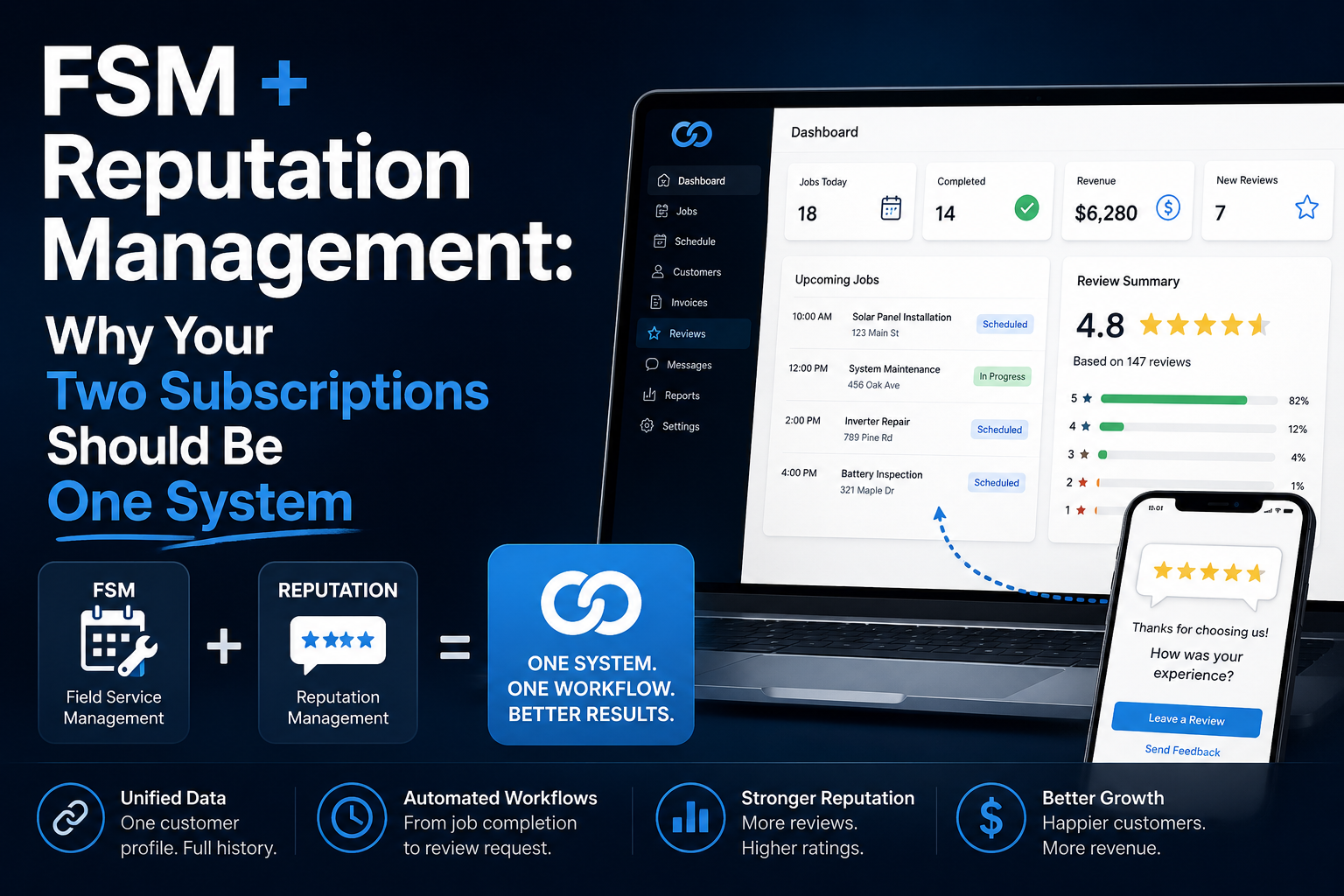
Local service businesses and healthcare practices often find that their reputation management needs intersect closely with customer communication and lead conversion. Podium has carved out a distinctive niche here by building its entire platform around text-based interaction, recognizing that the easiest path to a review, sale, or resolved issue runs through SMS. By centralizing webchat, text messages, and Google Business Profile communications into a unified inbox while seamlessly integrating payment processing, Podium streamlines the entire customer journey from initial contact to final payment and subsequent review request. This conversational approach proves particularly effective for automotive shops, home service providers, and medical practices where immediate, personal communication drives both satisfaction and revenue.

For small to medium-sized businesses and single-location service providers, the reputation management landscape offers accessible entry points that integrate directly with local SEO strategies. BrightLocal combines essential review generation and monitoring tools with a broader suite of local search optimization features including rank tracking and citation building. Its transparent pricing starting at thirty-nine dollars monthly and fourteen-day free trial provide a low-risk entry point for businesses viewing reputation management as a component of their overall search visibility rather than a standalone enterprise solution. NiceJob takes an even more streamlined approach, focusing exclusively on automating review generation for service businesses through simple SMS and email invitation workflows. Its lightweight design and seventy-five dollar monthly starting price make it ideal for contractors, cleaners, and local professionals seeking to build review volume without navigating complex enterprise feature sets.

Marketing agencies and resellers face their own distinct requirements, needing platforms that enable them to manage multiple client accounts while maintaining their own brand identity. Grade.us addresses this need through purpose-built white-label capabilities, allowing agencies to deliver fully branded reputation management services without developing proprietary technology. Its seat-based pricing and multi-location dashboards support scalable operations across numerous clients, while customizable email and SMS funnels direct satisfied customers to relevant review platforms. This agency-centric design makes it a go-to solution for firms serving local service industries where reputation management represents a critical component of their client value proposition.

The emergence of AI-generated search results has introduced entirely new dimensions to reputation management that traditional platforms are only beginning to address. AICarma represents a pioneering solution in this space, specifically designed to monitor how brands appear within large language models and AI-powered search engines. By providing daily brand visibility scores across major LLMs and benchmarking against competitors, it enables organizations to understand and optimize their presence in an environment where traditional search engine optimization rules no longer apply. This focus on generative engine optimization proves especially valuable for brand teams seeking to maintain message consistency and gain early-mover advantage as consumer search behavior shifts toward AI-first interactions.

When evaluating these solutions, organizations must look beyond surface-level features to consider integration capabilities, scalability, and total cost of ownership. Enterprise platforms like Birdeye offer over three thousand integrations with CRM, marketing, and healthcare systems, while specialized tools may provide deeper functionality within narrower operational contexts. Pricing models vary significantly from transparent monthly subscriptions to quote-based enterprise contracts, with some platforms requiring significant implementation investments before delivering value. The most successful implementations typically occur when businesses match their selection not to the most comprehensive feature set available, but to the platform whose strengths align most closely with their specific operational pain points and growth objectives.

The reputation management software market of 2025 reflects broader trends in customer experience technology: increasing automation through artificial intelligence, consolidation of disparate tools into unified platforms, and growing specialization for specific industries and use cases. Whether your organization requires enterprise-grade governance across thousands of locations, seamless integration of payments and reviews for local services, or simply a straightforward way to convert satisfied customers into visible advocates, the current landscape offers sophisticated solutions tailored to every operational context. The key lies in recognizing that reputation management is no longer merely about monitoring reviews—it is about actively shaping the entire digital narrative through which customers discover, evaluate, and choose to engage with your brand.

Posted on

What Is Reputation Management?

Reputation management is the process of shaping how individuals, businesses, and organizations are perceived by the public. In the modern world, most of that perception is formed online. Search engines, social media platforms, review sites, and news articles collectively create a digital narrative about a person or company. Reputation management is the effort to influence that narrative so that it accurately reflects the image the subject wants the public to see.

When someone searches for a business on Google, the results they find immediately influence their trust. If the first few results contain positive articles, strong reviews, and a professional online presence, the business appears credible. If the results contain complaints, negative press, or outdated information, the perception quickly shifts in the opposite direction. Reputation management exists because these search results often become the first impression people have.

The practice combines several different disciplines. It involves monitoring what is being said about a brand or individual online. It also involves responding to reviews, addressing criticism, and ensuring accurate information appears in search results. Another important part of reputation management is creating positive content that reflects the values, achievements, and credibility of the person or organization being represented. Over time, this positive content helps shape how the public understands the subject.

A major reason reputation management has become so important is the permanence of information on the internet. In previous generations, a negative story or rumor might fade away as people forgot about it. Today, search engines preserve information indefinitely, and a single article or post can appear in search results for years. Reputation management works to ensure that outdated, misleading, or unfair information does not permanently define someone’s public image.

For businesses, reputation management directly affects revenue. Customers often check reviews and search results before deciding where to spend their money. A company with strong ratings and positive visibility attracts trust, while a company surrounded by negative search results often loses customers before the first conversation even happens. Because of this, reputation management has become an important part of marketing and brand strategy.

Individuals also benefit from reputation management. Entrepreneurs, executives, and public figures often discover that their personal reputation becomes tied to their professional success. Investors, partners, and employers frequently research someone online before deciding whether to work with them. A well-managed online presence can reinforce credibility, expertise, and trustworthiness.

At its core, reputation management is about influence over perception. The internet creates a public record that millions of people can access instantly. Reputation management ensures that this record tells a fair and accurate story. By monitoring conversations, responding to feedback, and publishing positive information, individuals and businesses can guide how they are understood by the world.

In an age where a simple search can shape someone’s opinion in seconds, reputation is no longer just a matter of word of mouth. It has become a digital asset that must be actively managed. Reputation management exists to protect and strengthen that asset over time.

Posted on

AI’s Hidden Corollary: More Computing Power and Energy

Artificial intelligence is often discussed in terms of automation. Conversations usually focus on how AI will replace certain tasks, improve productivity, and change the structure of the workforce. These discussions are important, but they often overlook a simple and unavoidable reality that sits beneath the entire AI revolution.

Artificial intelligence requires enormous amounts of computing power and energy.

Every AI model runs on physical infrastructure. Behind every chatbot response, image generation, or automated workflow lies a network of servers performing vast numbers of calculations. These calculations take place inside data centers filled with specialized chips, networking hardware, and cooling systems. None of this infrastructure operates for free. It consumes electricity, requires maintenance, and must be expanded continuously as demand grows.

As artificial intelligence becomes more widely used, the need for computing capacity rises dramatically. Training large models already requires extraordinary processing power, and the demand for running those models grows as more businesses and individuals adopt AI-driven tools. Each new application increases the amount of computation required across the global network.

The consequence of this trend is straightforward. The world will need more data centers, more servers, more specialized hardware, and more electricity to power it all. Entire industries are expanding to support this infrastructure. Companies are investing billions of dollars into building new facilities, upgrading power grids, and developing more efficient hardware capable of handling the growing computational load.

Energy becomes an especially critical component in this equation. Data centers consume significant amounts of electricity, and as AI usage expands, their energy requirements grow as well. This creates demand not only for more electrical generation but also for improved transmission systems, cooling technologies, and infrastructure capable of delivering reliable power to computing facilities.

For people concerned about automation, this relationship offers an interesting insight. While artificial intelligence may replace or simplify certain forms of work, it simultaneously increases demand in the industries that make AI possible. The physical systems that power computation cannot automate themselves into existence. They must be designed, built, operated, and maintained by people with specialized knowledge.

This means that careers connected to computing infrastructure and energy systems are becoming increasingly valuable. As the digital world expands, the physical foundation that supports it must grow alongside it. The software layer may automate many tasks, but the hardware and energy systems beneath it remain essential.

History often follows this pattern during major technological shifts. When new technologies emerge, they rarely eliminate work across the entire economy. Instead, they move demand into different areas. The expansion of railroads created jobs in steel production and engineering. The growth of the internet produced entire industries centered around networking, servers, and telecommunications.Artificial intelligence is likely to follow the same pattern. While software automation may reduce the need for certain types of labor, the infrastructure required to run that software becomes more important than ever.

In other words, the rise of AI does not exist in isolation. It pulls other industries forward with it. The more artificial intelligence spreads through society, the more computing power and electricity the world will require.

For individuals thinking about long-term career security, this dynamic offers a practical lesson. If a technology depends heavily on a certain type of infrastructure, the people who build and maintain that infrastructure often remain in high demand. As AI grows, the systems that power it will only become more critical.

The future of artificial intelligence will not be shaped only by algorithms and software. It will also be shaped by the power plants, data centers, hardware engineers, and energy systems that keep the entire digital ecosystem running.

Posted on

Why You Should Always Collect a Deposit When Working With Clients

One of the most important habits any freelancer, consultant, or agency owner can develop is collecting a deposit before beginning work. While many people understand this idea in theory, they often ignore it in practice, especially when they are eager to secure a new client. Unfortunately, skipping this step can lead to frustration, wasted time, and unpaid work.

A deposit serves a very simple purpose. It confirms that the client is serious about the project. When someone agrees to pay a portion of the fee before work begins, they are making a real commitment. Money changes the psychology of the relationship. What was previously just a conversation becomes an actual business agreement.

Without a deposit, the arrangement remains fragile. A client may express excitement about the project and promise to move forward, but words alone do not create commitment. Many professionals have experienced situations where a client seemed enthusiastic at first, only to disappear once work had already begun. When that happens, the service provider absorbs the entire cost of the lost time.

Time is the most valuable resource in any service business. Every hour spent working on a project is an hour that could have been invested elsewhere. When you begin work without collecting a deposit, you are essentially taking on all the risk while the client takes on none.

A deposit balances that relationship. It ensures that both sides have something invested in the project from the beginning. If the client decides to cancel later, the deposit compensates you for the time you reserved and the initial work you performed.

Collecting a deposit also improves the quality of the clients you attract. People who hesitate to pay any portion of the fee upfront are often the same people who create problems later. They may delay decisions, request endless revisions, or question invoices once the project is complete. By requiring a deposit, you naturally filter out individuals who are not fully committed to the process.

Professionals in many industries already understand this principle. Contractors collect deposits before beginning construction. Event planners require payments before reserving venues. Photographers often charge booking fees before the date of a shoot is secured. These practices exist because experience has shown that deposits protect both the provider and the client.

Another advantage of collecting a deposit is that it creates momentum. Once a client has made a financial commitment, they are more likely to participate actively in the project. They respond to emails faster, provide the necessary materials, and move the process forward. Their investment encourages cooperation.

From a business perspective, deposits also help stabilize cash flow. Instead of waiting until the end of a project to receive payment, you begin earning revenue immediately. This can make a significant difference, especially for small businesses that must carefully manage their finances.

Some people worry that asking for a deposit might scare potential clients away. In reality, serious clients usually expect it. A deposit signals professionalism and structure. It communicates that your time and expertise have value and that your business operates with clear boundaries.

Working with clients should always be a partnership, not a gamble. Collecting a deposit ensures that both sides are committed before the work begins. It protects your time, improves the quality of your client relationships, and reinforces the professionalism of your business.

In the long run, this simple practice can prevent many of the problems that service providers face. A deposit turns interest into commitment and transforms a casual conversation into a real agreement.

Posted on

Why Social Media Platforms Favor Those Who Post Regularly

One of the most common frustrations people experience on social media is the feeling that their content simply disappears into the void. A person might post something they believe is valuable or interesting, yet it receives very little engagement. Meanwhile, other creators seem to grow steadily and consistently. At first glance it can appear mysterious, but the underlying reason is much simpler than most people realize.

Social media platforms are fundamentally designed to reward consistent activity.

Every platform, whether it is TikTok, Instagram, YouTube, X, or LinkedIn, operates on an algorithm that decides which content gets shown to users. These algorithms are not random. Their primary goal is to keep people on the platform for as long as possible. The more time users spend scrolling, watching, and interacting, the more advertising revenue the platform can generate.

Because of this goal, the platforms naturally prefer creators who regularly provide new material. A person who posts frequently gives the algorithm more opportunities to show fresh content to viewers. Each new post becomes another chance to capture attention and keep users engaged.

Someone who posts only occasionally does not provide that same steady stream of content. From the platform’s perspective, a dormant or inconsistent account is less valuable. Even if the content itself is good, the lack of regular activity makes the account less reliable as a source of engagement.

This is why consistency tends to outperform occasional brilliance on social media. A creator who posts regularly might not produce a masterpiece every time, but they are constantly giving the algorithm something to work with. Over time, this repetition increases the likelihood that one piece of content will perform well and reach a larger audience.

Frequent posting also helps the platform understand who your audience is. Algorithms learn through interaction. When you publish content regularly, the system gathers more data about who watches your posts, who likes them, who comments, and who shares them. With each post, the platform becomes better at identifying the type of users who are most likely to engage with your content.

When someone posts infrequently, that learning process slows down dramatically. The algorithm does not receive enough signals to clearly understand the audience, so distribution remains limited. The account never gains the momentum that consistent posting can create.

There is also a psychological element involved. Audiences tend to follow creators who appear active and present. When people see regular posts, they begin to expect new content and return to the profile more often. This ongoing presence builds familiarity and trust, which encourages engagement over time.

An inactive account creates the opposite effect. Followers might forget about the creator entirely, simply because nothing new appears in their feed for long periods of time. In a digital environment where attention is constantly shifting, absence can quickly lead to invisibility.

None of this means that quality does not matter. Strong content will always outperform weak content in the long run. However, quality alone rarely produces growth if it appears only once in a while. Social media is a system built around constant activity, constant testing, and constant interaction.

The creators who succeed are often the ones who understand this dynamic. Instead of waiting to produce something perfect, they focus on maintaining a steady rhythm of publishing. Each post becomes another experiment, another data point, and another opportunity for the algorithm to distribute their work.

Over time, that consistency compounds. A person who posts regularly builds familiarity with the audience, visibility within the platform, and a growing library of content that continues to attract attention. The system begins to recognize them as a reliable contributor to the platform’s ecosystem.

In the end, social media platforms reward the behavior that helps them achieve their goal of keeping users engaged. The creators who show up regularly provide the fuel that keeps the system running. As a result, those who post consistently will almost always have an advantage over those who appear only occasionally.