Posted on

Pourquoi Apprendre l’Anglais Est Essentiel Pour Maximiser Vos Opportunités Économiques

Apprendre l’anglais est aujourd’hui l’un des investissements les plus importants qu’une personne puisse faire pour améliorer ses opportunités économiques. Dans un monde où les marchés, les entreprises et les technologies sont de plus en plus connectés, la langue anglaise est devenue la principale langue du commerce international. Comprendre et parler anglais ouvre des portes qui restent souvent fermées à ceux qui ne maîtrisent que leur langue locale.

Une grande partie de l’économie mondiale fonctionne en anglais. Les entreprises multinationales utilisent cette langue pour communiquer entre leurs équipes situées dans différents pays. De nombreux contrats, logiciels, formations professionnelles et ressources techniques sont également rédigés en anglais. Lorsqu’une personne maîtrise cette langue, elle peut accéder directement à ces informations et participer à des opportunités économiques qui dépassent les frontières de son pays.

L’anglais permet aussi d’accéder à un marché du travail beaucoup plus vaste. Les emplois à distance, qui sont devenus de plus en plus courants avec l’essor d’internet, exigent souvent la capacité de communiquer en anglais. Une personne qui parle anglais peut travailler avec des entreprises aux États-Unis, au Canada, en Europe ou ailleurs, tout en vivant dans son propre pays. Cela signifie que son revenu potentiel n’est plus limité par l’économie locale.

La langue anglaise est également dominante dans les domaines de la technologie, de la science et de l’entrepreneuriat. Les nouvelles idées, les recherches, les innovations et les stratégies commerciales sont souvent publiées d’abord en anglais. Quelqu’un qui comprend cette langue peut apprendre plus rapidement, suivre les tendances internationales et appliquer ces connaissances pour créer de la valeur économique.

Apprendre l’anglais peut aussi transformer la manière dont une personne construit son réseau professionnel. Les conférences internationales, les communautés en ligne et les collaborations entre entrepreneurs se déroulent souvent en anglais. Lorsque vous pouvez participer à ces conversations, vous augmentez vos chances de rencontrer des partenaires, des clients et des mentors qui peuvent influencer positivement votre carrière.Il est important de comprendre que l’apprentissage de l’anglais n’est pas simplement une question académique. C’est une compétence économique. Comme toute compétence qui augmente votre capacité à créer de la valeur, elle peut avoir un impact direct sur votre revenu et sur les opportunités qui s’offrent à vous.

Dans un monde globalisé, les frontières économiques deviennent de moins en moins importantes, mais la barrière linguistique reste très réelle. Ceux qui prennent le temps d’apprendre l’anglais se donnent un avantage considérable. Ils peuvent accéder à plus d’informations, collaborer avec plus de personnes et participer plus facilement à l’économie mondiale.

En fin de compte, apprendre l’anglais ne garantit pas automatiquement le succès. Cependant, cela élargit considérablement le champ des possibilités. Pour toute personne qui souhaite maximiser ses opportunités économiques, la maîtrise de l’anglais est l’un des outils les plus puissants qu’elle puisse développer.

Posted on

Why Becoming a Salesforce Consultant Can Be a Powerful Career Move

Many people who want to increase their income or enter the technology industry assume they need to become programmers. While software development is one path, it is far from the only one. One of the most overlooked opportunities in the modern tech economy is becoming a Salesforce consultant.

Salesforce is one of the largest enterprise software platforms in the world. More than 150,000 companies use it to manage their customers, sales pipelines, and internal operations. Businesses rely on it to track leads, close deals, analyze performance, and automate processes that would otherwise require large teams of employees. Because every company operates differently, Salesforce almost always needs to be customized to match the way a business actually works.

This is where consultants come in.

A Salesforce consultant helps companies configure the platform so it supports their sales process, customer management, and reporting needs. Instead of writing large amounts of code, many consultants focus on understanding how a business operates and translating those needs into the structure of the software. They design workflows, automate repetitive tasks, build dashboards, and ensure that teams can easily manage their customers inside the system.

The demand for this type of expertise is extremely strong because Salesforce is such a widely adopted platform. Companies frequently need help implementing the system for the first time or improving an existing setup that has become inefficient. A well-configured CRM system can dramatically improve how a company manages its revenue, so businesses are willing to invest significant resources to get it right.

For individuals, this demand creates a compelling career opportunity. Salesforce professionals often earn strong salaries even at the entry level, and experienced consultants can command high hourly rates. Independent consultants regularly charge hundreds of dollars per hour, while larger consulting firms build entire businesses around implementing and maintaining Salesforce for clients. Because companies depend heavily on the platform once it is installed, consultants often develop long-term relationships with clients who need ongoing improvements and support.

Another appealing aspect of the field is accessibility. Many technology careers require years of formal education, but Salesforce provides a structured pathway for people who want to learn the platform on their own. The company created a free online training system called Trailhead, which allows anyone to study the fundamentals of Salesforce through interactive lessons and practical exercises. These lessons teach how data is organized inside the platform, how sales pipelines are structured, and how automations and reports are built.

As learners progress through the training, they gain experience working with the same types of tools companies use every day. Eventually many people prepare for Salesforce certifications, which demonstrate that they understand how to configure and manage the system. The Salesforce Administrator certification is often the first milestone, and it signals to employers and clients that the holder understands the platform’s core functionality.

Once someone has a solid grasp of the system, practical experience becomes the next step. Some people gain experience by working in companies that already use Salesforce internally. Others help small organizations configure their systems or volunteer on projects that allow them to practice their skills. Over time, this experience builds the knowledge needed to handle larger implementations and more complex business problems.

As consultants grow more experienced, they often begin specializing in particular areas of the Salesforce ecosystem. Some focus on sales automation, others on analytics or integrations with other software systems. Specialization allows consultants to solve more complex problems, which increases their value to clients.

For people interested in entrepreneurship, Salesforce consulting can also become a business rather than simply a job. Many consultants eventually build small firms that help companies adopt and improve Salesforce systems. These firms serve multiple clients at once, generating recurring revenue as businesses continue to expand their use of the platform.

The broader reason this career path is attractive is that it sits at the intersection of technology and business. Companies depend on software to manage their operations, but they also need people who understand how business processes actually work. Salesforce consultants operate in that middle ground, translating real-world business needs into digital systems that support growth.

In an economy where companies increasingly rely on software to manage customers and revenue, the ability to configure and optimize those systems has become a valuable skill. For individuals willing to learn the platform and understand how businesses operate, Salesforce consulting offers a pathway into the technology industry that can lead to stable, high-income work and long-term opportunities.

Posted on

Why Increasing the Value of Your Offer Is Often Easier Than Increasing Your Conversion Rate

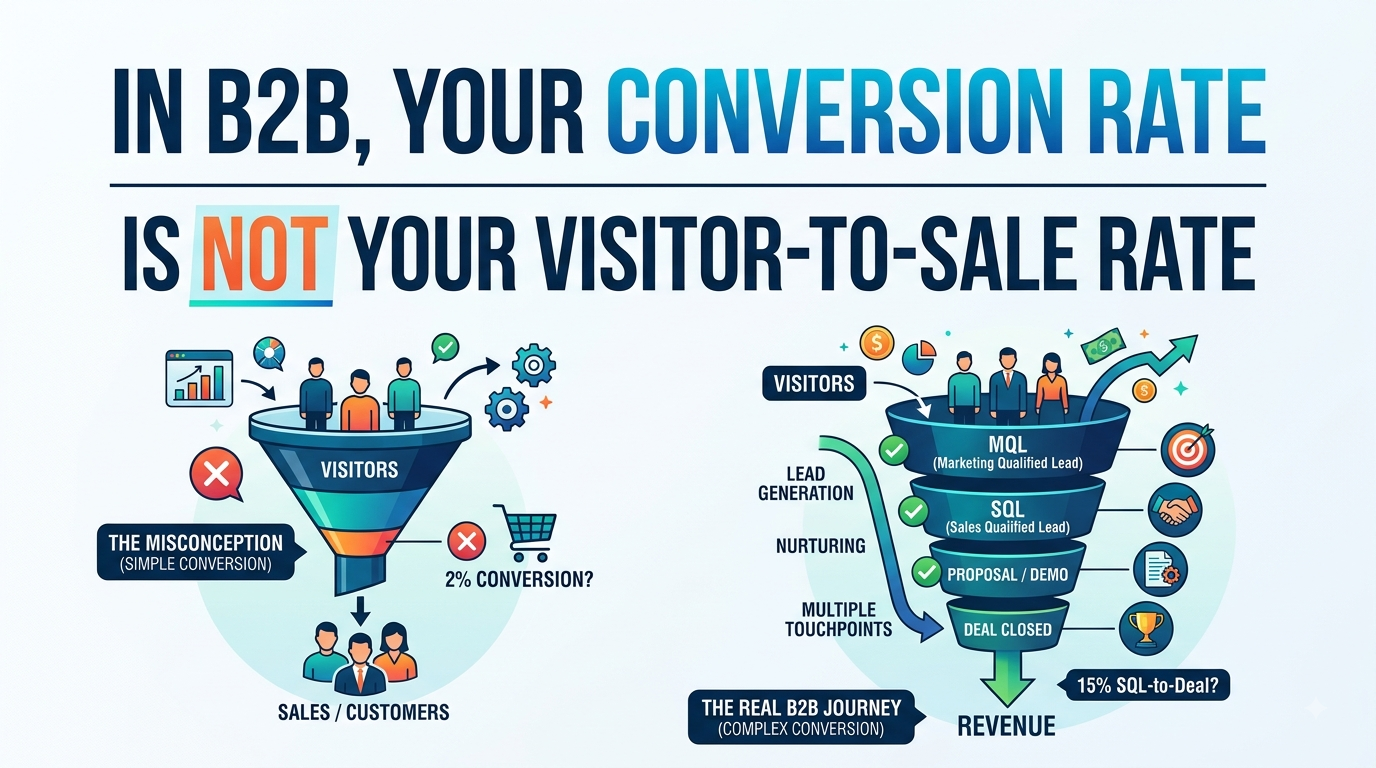
Many entrepreneurs assume that the best way to grow their revenue is by increasing their conversion rate. They imagine that if they could just tweak their landing page, rewrite a headline, or adjust their call to action, they could double their results.

While improving conversion rates can certainly help, it is usually much harder than people expect. In many cases, it is actually easier to increase the total value of the product being sold than it is to significantly improve the percentage of visitors who convert.

Conversion rates are constrained by human behavior. People are naturally cautious online. They have been exposed to countless advertisements, exaggerated claims, and low-quality products. Because of this, even well-designed offers often convert only a small percentage of visitors. Moving that percentage meaningfully higher requires a deep understanding of psychology, messaging, audience targeting, and product positioning.

Even small improvements can take months of experimentation.

Entrepreneurs frequently spend enormous amounts of time testing page layouts, adjusting copy, and experimenting with different calls to action. Sometimes these efforts produce results, but often the gains are incremental. A conversion rate might move from one percent to one and a half percent, or from two percent to two and a half percent. While these improvements matter, they rarely transform a business overnight.

Increasing the value of the offer is often far more straightforward.

Instead of trying to convince more people to buy the same product, you simply make the product more valuable. This can happen in several ways. The price of the product might increase. Additional features or services might be included. The offer might be bundled with complementary resources that raise the overall perceived value. Sometimes the product can simply be positioned for a higher-value audience that is willing to pay more.

When the value of the offer rises, revenue increases even if the conversion rate stays exactly the same.If the same number of customers purchase a product that is worth twice as much, the business earns twice the revenue without needing more traffic or better conversion optimization. The effort required to accomplish this is often lower than the effort required to persuade significantly more visitors to buy.

This is one of the reasons why experienced entrepreneurs frequently move toward higher-ticket offers over time. They recognize that selling something more valuable can dramatically change the economics of a business. A product that generates meaningful revenue from a small number of buyers can be far more powerful than a low-priced product that requires thousands of conversions.

Understanding this principle shifts how you think about growth.

Instead of obsessing over tiny improvements in conversion rate, you begin asking a different question. You start looking for ways to create more value. When the offer itself becomes stronger, the entire business becomes easier to scale.

In the long run, improving conversions will always matter. But in many cases, the fastest path to higher revenue is not persuading more people to buy. It is giving them something worth far more when they do.

Posted on

Hustle Porn Doesn’t Teach You How to Make Money

There is a category of content on the internet that is extremely popular but surprisingly unhelpful when it comes to actually making money. It is often called “hustle porn.” These are the motivational clips, speeches, and posts that glorify grinding, waking up at 4 a.m., working endlessly, and sacrificing everything in pursuit of success. The problem is that while this content can feel energizing in the moment, it rarely teaches the actions that actually produce income.

Hustle porn focuses heavily on intensity rather than direction. It promotes the idea that working harder is the key variable that determines success. In reality, income is not just a function of effort. It is a function of performing actions that have economic value. Someone can work fourteen hours a day on tasks that do not generate revenue and still end the month with nothing to show for it. Meanwhile, another person might spend only a few hours performing high-value tasks and produce far greater financial results.

The difference lies in the type of work being done. Hustle porn rarely explains how money actually moves through the economy. It does not teach how businesses acquire customers, how products are positioned, how deals are negotiated, or how distribution works. These are the mechanics that determine whether an activity is lucrative or not. Without understanding these mechanisms, motivation alone cannot create income.

This is why many people who consume large amounts of motivational content feel busy but remain financially stuck. They are constantly told to push harder, wake up earlier, and grind longer, but they are not being shown the specific actions that generate revenue. They are given emotional fuel without a steering wheel.

Making money is much more practical than motivational content makes it seem. It usually involves identifying a problem that people are willing to pay to solve and then consistently performing the activities that connect your solution to those buyers. That might involve selling, marketing, building systems, negotiating partnerships, or improving a product. These activities are directly tied to revenue because they influence how value is exchanged.When someone learns to perform these kinds of actions, the need for constant motivation begins to disappear. The work becomes more focused and predictable. Instead of chasing energy or hype, the person is simply executing processes that have historically produced income.

This is why people who eventually succeed in business often reduce the amount of motivational content they consume. They realize that inspiration is not a substitute for skill. What matters is learning how markets operate and then participating in those markets in a way that creates measurable value.

Hustle porn sells the feeling of progress, but feelings are not the same as results. Real financial progress comes from mastering the activities that the market rewards. Once someone understands this distinction, the path to making money becomes much clearer. It is no longer about how hard you appear to be working, but about whether the work you are doing actually produces value that someone is willing to pay for.

Posted on

The Best Reputation Management Software for 2025: A Strategic Guide to Protecting Your Brand

In an era where a single review can influence thousands of potential customers, reputation management has evolved from a marketing luxury into a business imperative. The digital landscape of 2025 demands sophisticated tools that not only monitor what customers say but actively shape how brands are perceived across an increasingly fragmented ecosystem of review sites, social platforms, and AI-generated search results. Selecting the right reputation management software requires understanding not just feature lists, but how these platforms align with your organization’s size, industry, and strategic objectives.

For enterprises managing hundreds or thousands of locations, the complexity of maintaining brand consistency while enabling local responsiveness presents unique challenges. SOCi has emerged as a powerhouse in this space, engineered specifically for multi-location marketing with its AI-powered Genius agents that automate review responses and optimize local listings at scale. Its unified approach to local search, social media, and reputation management provides franchises and property management groups with a single source of truth across their distributed operations. Similarly, Yext leverages its enterprise-grade infrastructure to offer deep direct integrations with publishers including notoriously difficult platforms like Yelp, ensuring that review requests and responses flow efficiently across the entire digital ecosystem. For organizations where governance and brand compliance across numerous storefronts are paramount, these platforms offer the automation and control necessary to operate effectively without drowning in manual oversight.

Mid-market businesses and multi-location brands seeking comprehensive experience marketing often gravitate toward Birdeye, which positions itself as an all-in-one platform extending well beyond traditional reputation management. Its BirdAI agents represent a significant evolution in automated response technology, purpose-built to deliver outcomes while trained on specific brand voices and industry contexts. The platform consolidates reviews, listings, web chat, surveys, and even payment processing into a unified dashboard, making it particularly valuable for healthcare providers, retailers, and hospitality groups looking to reduce vendor sprawl. ReviewTrackers, now part of the InMoment experience improvement suite, offers a more focused alternative for data-driven teams prioritizing deep analytics over broad feature sets. Its strength lies in aggregating feedback from over one hundred review sites and transforming simple star ratings into actionable customer experience insights through AI-driven sentiment analysis and competitor benchmarking.

Local service businesses and healthcare practices often find that their reputation management needs intersect closely with customer communication and lead conversion. Podium has carved out a distinctive niche here by building its entire platform around text-based interaction, recognizing that the easiest path to a review, sale, or resolved issue runs through SMS. By centralizing webchat, text messages, and Google Business Profile communications into a unified inbox while seamlessly integrating payment processing, Podium streamlines the entire customer journey from initial contact to final payment and subsequent review request. This conversational approach proves particularly effective for automotive shops, home service providers, and medical practices where immediate, personal communication drives both satisfaction and revenue.

For small to medium-sized businesses and single-location service providers, the reputation management landscape offers accessible entry points that integrate directly with local SEO strategies. BrightLocal combines essential review generation and monitoring tools with a broader suite of local search optimization features including rank tracking and citation building. Its transparent pricing starting at thirty-nine dollars monthly and fourteen-day free trial provide a low-risk entry point for businesses viewing reputation management as a component of their overall search visibility rather than a standalone enterprise solution. NiceJob takes an even more streamlined approach, focusing exclusively on automating review generation for service businesses through simple SMS and email invitation workflows. Its lightweight design and seventy-five dollar monthly starting price make it ideal for contractors, cleaners, and local professionals seeking to build review volume without navigating complex enterprise feature sets.

Marketing agencies and resellers face their own distinct requirements, needing platforms that enable them to manage multiple client accounts while maintaining their own brand identity. Grade.us addresses this need through purpose-built white-label capabilities, allowing agencies to deliver fully branded reputation management services without developing proprietary technology. Its seat-based pricing and multi-location dashboards support scalable operations across numerous clients, while customizable email and SMS funnels direct satisfied customers to relevant review platforms. This agency-centric design makes it a go-to solution for firms serving local service industries where reputation management represents a critical component of their client value proposition.

The emergence of AI-generated search results has introduced entirely new dimensions to reputation management that traditional platforms are only beginning to address. AICarma represents a pioneering solution in this space, specifically designed to monitor how brands appear within large language models and AI-powered search engines. By providing daily brand visibility scores across major LLMs and benchmarking against competitors, it enables organizations to understand and optimize their presence in an environment where traditional search engine optimization rules no longer apply. This focus on generative engine optimization proves especially valuable for brand teams seeking to maintain message consistency and gain early-mover advantage as consumer search behavior shifts toward AI-first interactions.

When evaluating these solutions, organizations must look beyond surface-level features to consider integration capabilities, scalability, and total cost of ownership. Enterprise platforms like Birdeye offer over three thousand integrations with CRM, marketing, and healthcare systems, while specialized tools may provide deeper functionality within narrower operational contexts. Pricing models vary significantly from transparent monthly subscriptions to quote-based enterprise contracts, with some platforms requiring significant implementation investments before delivering value. The most successful implementations typically occur when businesses match their selection not to the most comprehensive feature set available, but to the platform whose strengths align most closely with their specific operational pain points and growth objectives.

The reputation management software market of 2025 reflects broader trends in customer experience technology: increasing automation through artificial intelligence, consolidation of disparate tools into unified platforms, and growing specialization for specific industries and use cases. Whether your organization requires enterprise-grade governance across thousands of locations, seamless integration of payments and reviews for local services, or simply a straightforward way to convert satisfied customers into visible advocates, the current landscape offers sophisticated solutions tailored to every operational context. The key lies in recognizing that reputation management is no longer merely about monitoring reviews—it is about actively shaping the entire digital narrative through which customers discover, evaluate, and choose to engage with your brand.

Posted on

What Is Reputation Management?

Reputation management is the process of shaping how individuals, businesses, and organizations are perceived by the public. In the modern world, most of that perception is formed online. Search engines, social media platforms, review sites, and news articles collectively create a digital narrative about a person or company. Reputation management is the effort to influence that narrative so that it accurately reflects the image the subject wants the public to see.

When someone searches for a business on Google, the results they find immediately influence their trust. If the first few results contain positive articles, strong reviews, and a professional online presence, the business appears credible. If the results contain complaints, negative press, or outdated information, the perception quickly shifts in the opposite direction. Reputation management exists because these search results often become the first impression people have.

The practice combines several different disciplines. It involves monitoring what is being said about a brand or individual online. It also involves responding to reviews, addressing criticism, and ensuring accurate information appears in search results. Another important part of reputation management is creating positive content that reflects the values, achievements, and credibility of the person or organization being represented. Over time, this positive content helps shape how the public understands the subject.

A major reason reputation management has become so important is the permanence of information on the internet. In previous generations, a negative story or rumor might fade away as people forgot about it. Today, search engines preserve information indefinitely, and a single article or post can appear in search results for years. Reputation management works to ensure that outdated, misleading, or unfair information does not permanently define someone’s public image.

For businesses, reputation management directly affects revenue. Customers often check reviews and search results before deciding where to spend their money. A company with strong ratings and positive visibility attracts trust, while a company surrounded by negative search results often loses customers before the first conversation even happens. Because of this, reputation management has become an important part of marketing and brand strategy.

Individuals also benefit from reputation management. Entrepreneurs, executives, and public figures often discover that their personal reputation becomes tied to their professional success. Investors, partners, and employers frequently research someone online before deciding whether to work with them. A well-managed online presence can reinforce credibility, expertise, and trustworthiness.

At its core, reputation management is about influence over perception. The internet creates a public record that millions of people can access instantly. Reputation management ensures that this record tells a fair and accurate story. By monitoring conversations, responding to feedback, and publishing positive information, individuals and businesses can guide how they are understood by the world.

In an age where a simple search can shape someone’s opinion in seconds, reputation is no longer just a matter of word of mouth. It has become a digital asset that must be actively managed. Reputation management exists to protect and strengthen that asset over time.

Posted on

Why You Should Always Collect a Deposit When Working With Clients

One of the most important habits any freelancer, consultant, or agency owner can develop is collecting a deposit before beginning work. While many people understand this idea in theory, they often ignore it in practice, especially when they are eager to secure a new client. Unfortunately, skipping this step can lead to frustration, wasted time, and unpaid work.

A deposit serves a very simple purpose. It confirms that the client is serious about the project. When someone agrees to pay a portion of the fee before work begins, they are making a real commitment. Money changes the psychology of the relationship. What was previously just a conversation becomes an actual business agreement.

Without a deposit, the arrangement remains fragile. A client may express excitement about the project and promise to move forward, but words alone do not create commitment. Many professionals have experienced situations where a client seemed enthusiastic at first, only to disappear once work had already begun. When that happens, the service provider absorbs the entire cost of the lost time.

Time is the most valuable resource in any service business. Every hour spent working on a project is an hour that could have been invested elsewhere. When you begin work without collecting a deposit, you are essentially taking on all the risk while the client takes on none.

A deposit balances that relationship. It ensures that both sides have something invested in the project from the beginning. If the client decides to cancel later, the deposit compensates you for the time you reserved and the initial work you performed.

Collecting a deposit also improves the quality of the clients you attract. People who hesitate to pay any portion of the fee upfront are often the same people who create problems later. They may delay decisions, request endless revisions, or question invoices once the project is complete. By requiring a deposit, you naturally filter out individuals who are not fully committed to the process.

Professionals in many industries already understand this principle. Contractors collect deposits before beginning construction. Event planners require payments before reserving venues. Photographers often charge booking fees before the date of a shoot is secured. These practices exist because experience has shown that deposits protect both the provider and the client.

Another advantage of collecting a deposit is that it creates momentum. Once a client has made a financial commitment, they are more likely to participate actively in the project. They respond to emails faster, provide the necessary materials, and move the process forward. Their investment encourages cooperation.

From a business perspective, deposits also help stabilize cash flow. Instead of waiting until the end of a project to receive payment, you begin earning revenue immediately. This can make a significant difference, especially for small businesses that must carefully manage their finances.

Some people worry that asking for a deposit might scare potential clients away. In reality, serious clients usually expect it. A deposit signals professionalism and structure. It communicates that your time and expertise have value and that your business operates with clear boundaries.

Working with clients should always be a partnership, not a gamble. Collecting a deposit ensures that both sides are committed before the work begins. It protects your time, improves the quality of your client relationships, and reinforces the professionalism of your business.

In the long run, this simple practice can prevent many of the problems that service providers face. A deposit turns interest into commitment and transforms a casual conversation into a real agreement.

Posted on

Not Everyone You Book for a Sales Call Is Going to Show Up

One of the first realities people encounter in sales is that not every scheduled call actually happens. You can spend time reaching out, starting conversations, qualifying prospects, and booking meetings, only to have some of those meetings disappear when the time arrives. For someone new to sales, this can feel confusing or even discouraging. In reality, it is simply part of the process.

When people schedule sales calls, they are usually doing so in the middle of busy lives. A prospect may agree to speak with you while they are between tasks, during a short break at work, or while they are casually browsing their phone. In that moment, the idea of having a conversation about a product or service might sound appealing. But by the time the call actually arrives, their attention may have shifted to something else entirely.

Life is full of interruptions. Meetings run long. Clients demand attention. Family issues arise. Energy levels change. What felt like a good use of time earlier in the day may feel less urgent later on. Because of this, some prospects simply forget about the call, while others quietly decide that they are no longer interested enough to attend.

This does not necessarily mean the lead was bad or that the salesperson made a mistake. Even well-qualified prospects occasionally fail to appear. Interest can fade, priorities can change, and sometimes people just avoid conversations that might require a decision. None of these outcomes are unusual.

Understanding this reality helps salespeople maintain the right mindset. When someone does not show up, it is easy to interpret it as rejection. In most cases, however, it is simply a reflection of how busy and unpredictable people’s schedules can be. Sales is ultimately a numbers-driven activity, and part of those numbers includes the percentage of people who schedule calls but never attend them.

Experienced sales professionals expect this behavior and plan around it. They understand that if they book enough calls, a certain portion will always convert into real conversations, while another portion will quietly disappear. Instead of dwelling on missed appointments, they continue focusing on generating new opportunities.

There is also a deeper lesson hidden inside the no-show phenomenon. A booked call does not mean the sale is close. It only means the conversation has a chance to happen. The real work of sales begins when the prospect actually shows up and engages in the discussion.

Over time, this perspective removes much of the frustration from the process. Sales becomes less about each individual meeting and more about maintaining consistent momentum. When enough conversations are scheduled, enough people will attend, and enough of those conversations will eventually turn into customers.In the end, the absence of some prospects is not a failure. It is simply a reminder that sales is a process built on volume, persistence, and patience. Not everyone you book will show up, but the ones who do are the ones that matter.

Posted on

Good Sales Technique Begins With Listening

Many people think sales is about persuasion. They imagine a fast-talking person who overwhelms the customer with arguments, statistics, and enthusiasm until the buyer finally gives in. In reality, the best salespeople rarely behave this way. Good sales technique is not about talking more. It is about listening better.

At its core, sales is a process of understanding another person’s problem. Every purchase happens because someone wants a problem solved or a desire fulfilled. If a salesperson does not understand what the customer actually wants, then every pitch becomes a guess. The conversation turns into a performance instead of a solution.

Listening changes that dynamic entirely. When a salesperson listens carefully, they begin to hear the real motivations behind a purchase. A customer may say they want a new CRM, but what they might really want is to stop losing leads. Another person might say they want marketing software, but what they truly want is a way to grow their business without hiring more staff. The words a customer uses are only the surface. Listening allows a salesperson to understand the deeper reason behind those words.This kind of listening requires patience. Many inexperienced salespeople interrupt or rush toward their pitch. They are eager to show the features of their product, explain the benefits, and demonstrate their knowledge. Unfortunately, this approach often misses the mark because it focuses on the seller rather than the buyer. The more a salesperson talks, the less information they gather about the person they are trying to help.

A skilled salesperson does the opposite. They allow the prospect to speak at length. They ask questions and then genuinely pay attention to the answers. They notice what problems seem to frustrate the buyer the most. They observe which topics generate excitement and which ones create hesitation. Over time, the salesperson develops a clear picture of what the customer actually needs.

Once that understanding exists, the sale becomes much easier. The salesperson no longer needs to push the product aggressively. Instead, they can simply connect the product to the problem that has already been identified. The conversation becomes collaborative rather than confrontational. The buyer feels understood instead of pressured.

Listening also builds trust. People naturally trust individuals who take the time to understand them. When a salesperson listens carefully, the customer feels respected. The interaction stops feeling like a transaction and begins to feel like a consultation. This trust is often the difference between a sale and a rejection.Another benefit of listening is that it prevents wasted effort. Many sales pitches fail because they focus on features the buyer does not care about. By listening first, the salesperson can focus only on the aspects of the product that matter to the customer. This makes the message clearer and more persuasive without requiring any manipulation.

Over time, strong listening skills become one of the most powerful advantages a salesperson can develop. Markets change, products evolve, and industries transform, but the ability to understand people remains valuable in every environment. A salesperson who listens well can adapt to new products, new customers, and new challenges because they always begin with the same principle: understanding the other person.

In the end, good sales technique is not about dominating the conversation. It is about guiding it. And the first step in guiding any conversation is learning how to listen.

Posted on

You Don’t Have to Be Born a Salesperson

Somewhere along the way, we decided that the ability to sell is an innate gift — something a person either arrives with or doesn’t. The fast-talking extrovert who could charm anyone into anything. The closer who just has it. That story is not only wrong, it’s genuinely harmful, because it convinces people to give up on one of the most learnable, most transferable skills in the professional world before they ever begin.

Think about the last time you convinced someone of something — not in a boardroom, but in real life. Maybe you talked a friend into trying a restaurant they were skeptical about, or you made a case to your partner for why a weekend trip was worth the expense. You listened to their hesitation, you addressed it honestly, and you helped them see what you already saw. That, in its essence, is sales. Most of us do it constantly without ever naming it.

The myth of the “natural” salesperson persists because we remember the charismatic ones. They stand out. They make it look effortless. But effortlessness, more often than not, is the long-term result of effort — the product of hundreds of conversations, hundreds of rejections, and a quiet commitment to understanding people more deeply than the average person bothers to.Selling, at its core, is an act of empathy. It’s the practice of understanding what another person needs — sometimes before they can articulate it themselves — and helping them see how a given solution meets that need. Empathy is not a personality type. It’s a skill. And like all skills, it deepens with attention and practice.

Consider what separates the average salesperson from a great one. It isn’t volume or aggression. The best salespeople ask better questions, listen longer, and resist the urge to talk when silence would serve them better. These are learned behaviors. The average person talks too much because they haven’t yet discovered that listening is more powerful. Once they discover it — really discover it, through experience — everything changes.

There’s a concept in skill development called deliberate practice. It’s the idea that improvement doesn’t come from simply doing something repeatedly, but from doing it with intention — identifying the weak spots, isolating them, and working on them directly. Sales is no different. The person who walks away from every difficult conversation and asks “what could I have done differently?” will improve far faster than the person who relies on raw charisma and never examines their approach.

Rejection is the great teacher here. Introverts and people who are new to sales often fear rejection most, and so they avoid the situations that cause it. But rejection is information. It tells you something wasn’t quite right — the timing, the framing, the question you asked or didn’t ask. Experienced salespeople develop a kind of gratitude for a clean “no” because it lets them move forward and refine. That perspective doesn’t come naturally to most people. It is, however, something anyone can learn.

Introversion is worth addressing directly, because it’s one of the most common reasons people disqualify themselves from ever trying. The assumption is that sales requires an extrovert’s ease with people, a big personality, a certain loudness. In fact, many of the most successful people in sales identify as introverts. What they’ve cultivated is presence — the ability to focus entirely on the other person. That focus, that genuine curiosity, often creates more trust than any amount of easy charm. And trust is what closes deals.

The mechanics of good selling are also far more teachable than people assume. Learning how to structure a conversation, how to surface a prospect’s real concern rather than their stated one, how to present value in terms of what matters to the other person rather than what matters to you — all of this can be studied, practiced, and improved incrementally. Like a musician learning scales or a writer learning sentence rhythm, the fundamentals of sales can be broken down, isolated, and trained.

What holds most people back isn’t aptitude. It’s the belief that they aren’t the type. That belief is self-reinforcing: if you think you can’t sell, you won’t put yourself in the situations that would teach you. You’ll step back when you should step forward, and each retreat will confirm your original suspicion. Breaking that cycle takes a decision — a small, quiet decision to try without the expectation of being good at it immediately.

No one begins a new skill as an expert. The person you admire for their ease in a sales conversation has simply had more conversations than you have. They have been uncomfortable more times, made more mistakes with more real-world consequences, and survived every single one of them. That accumulation is available to anyone willing to start.

Selling is not a personality. It is a practice. Give it enough honest, reflective repetition and it will become one of the most powerful things you know how to do — regardless of how little of it feels natural when you begin