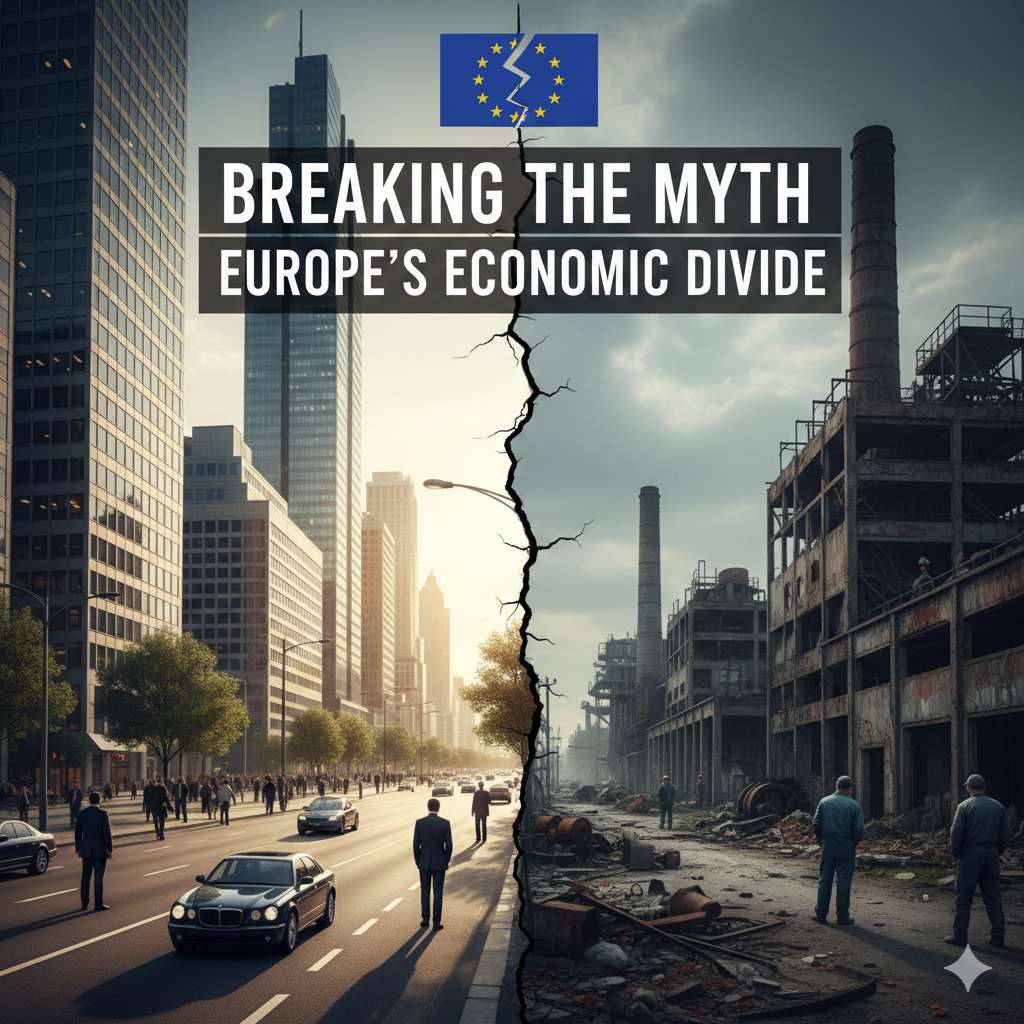
When we picture Europe, certain images dominate our imagination. We think of Paris cafés, German engineering, Scandinavian social programs, and Swiss banks. The word “European” has become almost synonymous with prosperity in the global consciousness. Yet this mental picture obscures a crucial reality: significant portions of Europe remain mired in poverty that would surprise most people who’ve never ventured beyond the continent’s wealthy western core.
The gap between perception and reality becomes starkest when you examine actual economic data. Moldova, a landlocked country wedged between Romania and Ukraine, holds the dubious distinction of being Europe’s poorest nation. With a per capita GDP that hovers around three thousand dollars annually, Moldova’s economy is smaller than that of many African nations. The average monthly salary barely exceeds three hundred dollars, and a substantial portion of the population lives below the poverty line. This is Europe, yet the living conditions in rural Moldovan villages would be unrecognizable to someone whose concept of the continent comes from travel brochures.
Ukraine, even before its recent conflicts, struggled with poverty rates that shocked many outside observers. Despite being geographically large and resource-rich, Ukraine has grappled with corruption, economic mismanagement, and the painful transition from Soviet central planning to market economics. Millions of Ukrainians have emigrated in search of better opportunities, a brain drain that further hampers development. The country’s infrastructure, particularly outside major cities, often reflects decades of underinvestment.
The Balkans present another dimension of European poverty that contradicts our stereotypes. Albania, Bosnia and Herzegovina, North Macedonia, and Kosovo all wrestle with unemployment rates that would trigger crisis-level responses in Western Europe. In some regions of these countries, youth unemployment exceeds forty percent. Economic opportunities remain scarce, public services are often inadequate, and corruption undermines development efforts. These are European Union candidate countries, yet their economic realities bear little resemblance to Brussels or Amsterdam.
Even within the European Union itself, the wealth disparities are jarring. Bulgaria and Romania, despite joining the EU in 2007, continue to rank among the poorest countries in Europe. Rural Romania, in particular, presents scenes that challenge our conception of European life: villages without running water, roads that become impassable in winter, and elderly residents living on pensions of less than two hundred euros monthly. The contrast between these realities and the gleaming towers of Frankfurt or London couldn’t be starker.
The reasons for this persistent poverty are complex and vary by country, but several themes recur. The collapse of communism left many Eastern European nations with obsolete industries, environmental devastation, and institutional frameworks ill-suited for market economies. The transition has been rocky and uneven, with some countries navigating it far more successfully than others. Geographic isolation has also played a role, particularly for landlocked nations distant from major markets and trade routes.
Corruption represents another persistent obstacle. In several poor European countries, kleptocratic elites have captured state resources, stunting development and driving away foreign investment. When government officials view their positions as opportunities for personal enrichment rather than public service, the entire society pays the price through deteriorating infrastructure, inadequate public services, and an environment hostile to legitimate business.
Demographic trends compound these challenges. Many poor European countries face severe population decline as young, educated citizens emigrate to wealthier nations. This exodus depletes the human capital necessary for economic development, creating a vicious cycle where poverty drives emigration, which in turn perpetuates poverty by removing the very people who might have driven change.The existence of poor European countries matters for how we understand global inequality. We tend to organize the world into neat categories: wealthy West, developing Asia, impoverished Africa. Europe fits awkwardly into this schema, and rather than adjust our mental models, we often simply ignore the parts that don’t fit. This willful blindness prevents us from understanding that poverty isn’t determined by continental boundaries or racial categories, but by complex historical, political, and economic factors that can affect any society.
Recognizing European poverty also challenges the narrative of European exceptionalism. The idea that Europe possesses some unique cultural or institutional genius that guarantees prosperity crumbles when confronted with the reality of persistent poverty within its borders. European wealth, concentrated primarily in the west and north, resulted from specific historical circumstances including colonial exploitation, early industrialization, and post-war reconstruction aid. It was never inevitable, and it certainly wasn’t universal.
For the citizens of poor European countries, this misperception carries real costs. When the world assumes all Europeans are wealthy, it becomes harder to attract development aid, easier to dismiss legitimate grievances about economic hardship, and more difficult to advocate for policies that might address inequality. These countries exist in a strange limbo, too “European” to qualify for programs aimed at developing nations, yet too poor to keep pace with their continental neighbors.
The European Union has attempted to address these disparities through structural funds and development programs, with mixed results. Some countries have used these resources effectively to modernize infrastructure and institutions. Others have seen funds disappear into corrupt networks or spent on prestige projects that do little for ordinary citizens. The challenge of bringing Europe’s poorest regions up to the living standards of its richest remains one of the continent’s most pressing political and economic questions.
Understanding that Europe contains both extreme wealth and persistent poverty doesn’t diminish the continent’s achievements. Rather, it provides a more nuanced and accurate picture of a diverse region still grappling with the legacies of history and the challenges of the present. Poverty doesn’t respect borders or our comfortable stereotypes, and acknowledging its presence throughout Europe is the first step toward addressing it.