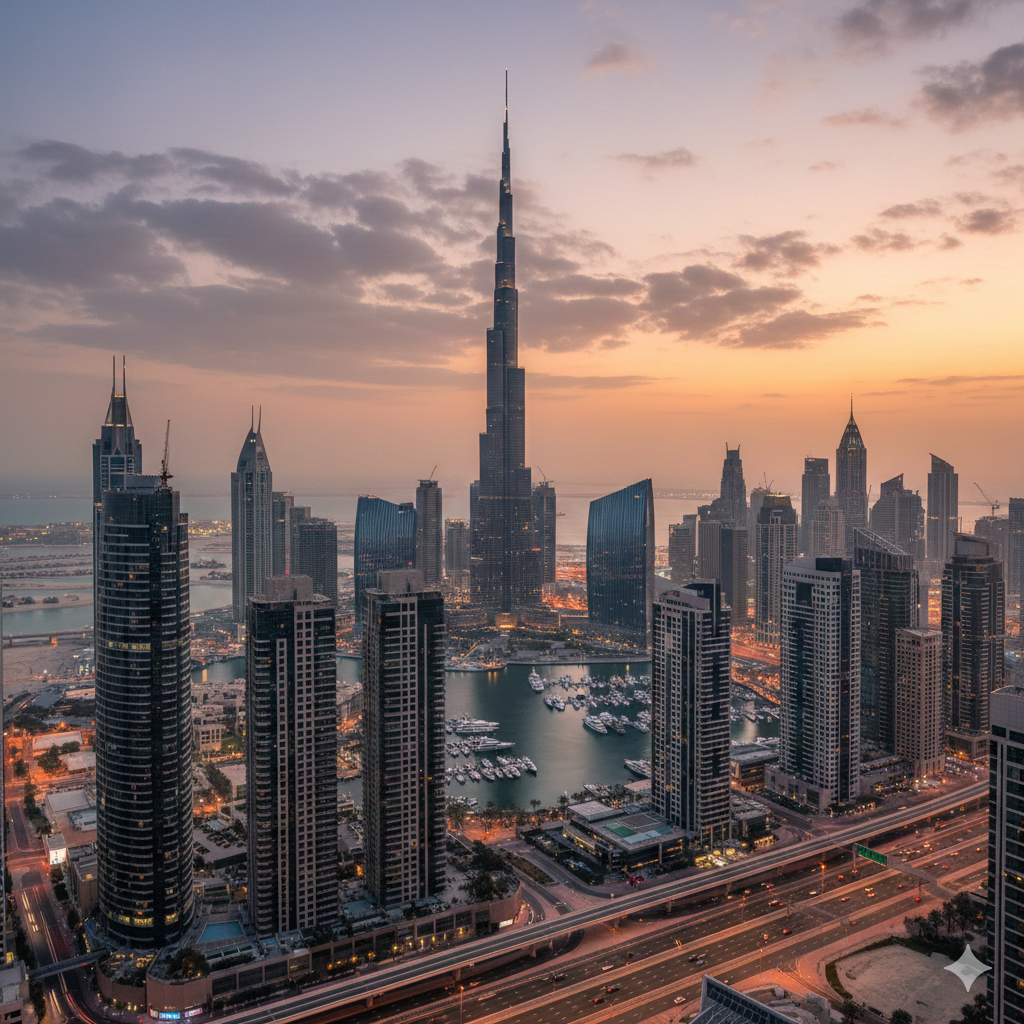
To understand Dubai, you must first understand the core advantage that comes worh living there: convenience. It isn’t about luxury or opulence, though those are often byproducts. It’s a deeper, foundational culture that has been meticulously engineered into the very fabric of the city, shaping daily life and business. Dubai operates on a simple principle: remove friction and human energy is freed.
This begins in the physical realm. In a city born from the harsh demands of desert and sea, the mastery of environment was the first convenience. Towering glass cliffs now shade walkways cooled by mist. A metro so sleek and automated it feels like gliding through the future connects vast air-conditioned malls, which are not just shopping centers but climate-controlled town squares. The heat is held at bay, not just tolerated, creating a perpetual, comfortable indoors. From your doorstep to your destination, the transition is often effortless, a journey through curated spaces.
But this engineered ease extends far beyond infrastructure into the minutiae of everyday living. Here, errands are an antiquated concept. Your groceries appear at your door within the hour, curated by a dozen competing apps. A government document, once the subject of dreaded bureaucracy, is secured online between sips of morning coffee. A doctor can be consulted via a video call, a prescription dispatched to your pharmacy of choice. The city seems to anticipate need, offering a solution before the frustration of delay can even set in. This creates a peculiar sense of time: not saved, but expanded. Hours once lost to logistics are reclaimed, fueling the city’s ethos of productivity.
This convenience is also deeply social and transactional. The melding of over two hundred nationalities creates a unique social contract built on smooth, efficient interaction. English serves as a neutral bridge. Business is often direct, cutting through ceremony to the heart of the matter. The city’s entire service economy, from the high-end concierge to the delivery rider, is calibrated to respond quickly. It fosters a culture of “can-do” pragmatism, where a problem is simply a solution waiting to be activated.
Yet, this culture of seamless living prompts its own quiet reflections. Some wonder if the very friction that defines a traditional community, the chance encounters, the buildup of local knowledge, the minor struggles that weave a shared narrative, is missing. In removing all obstacles, does one also remove the texture of a place? Dubai answers this by redefining texture. The community is built not on geographic proximity but on shared ambition and ease of connection. Relationships are formed in soaring office buildings, pristine beaches, and over coffee delivered to a park bench, all facilitated by the invisible networks that keep the city humming.
Ultimately, Dubai’s culture of convenience is a statement of philosophy. It asserts that human potential is the most valuable resource, and that anything which unnecessarily consumes time, energy, or comfort is a barrier to progress. The city has chosen to invest not in the romance of struggle, but in the poetry of possibility. It is a place designed so you can focus on your work, your dreams, your leisure—on living, rather than on the logistics of life. You may not notice it until you leave, but that is the point. In Dubai, the greatest luxury is not something you see, but something you feel: the ease of everything just working.
