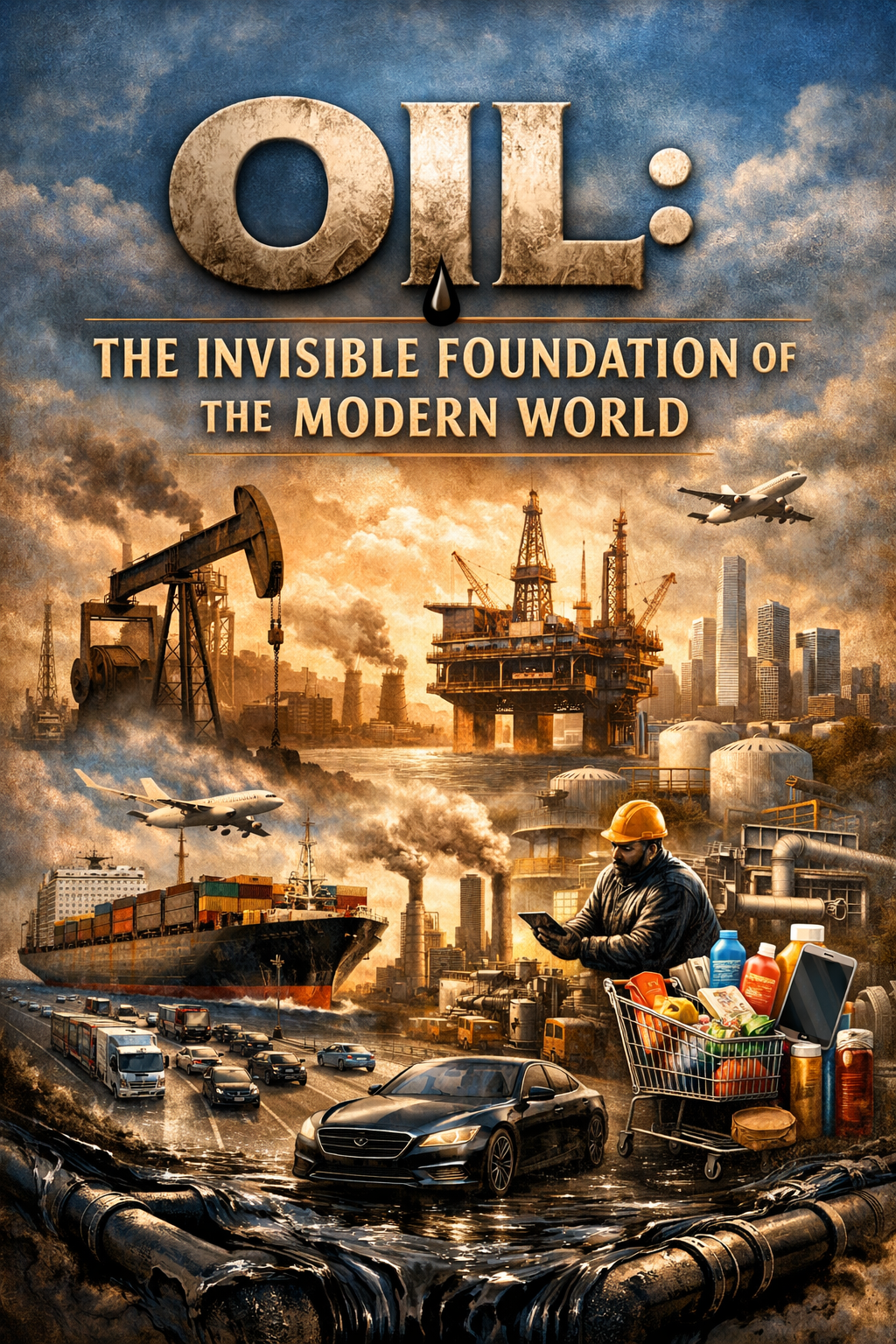
When most people think about oil, they imagine gasoline in cars or fuel used to generate electricity. While energy production is certainly one of oil’s most visible uses, it represents only a portion of what crude oil actually powers in modern life. Oil is not just an energy source. It is also one of the most important raw materials in the global economy. Entire industries rely on it not for fuel, but for the physical materials that shape everyday products.
One of the most significant uses of oil is in the production of plastics. Modern plastics originate from petrochemicals derived from crude oil and natural gas. These materials are transformed into everything from food packaging and medical devices to smartphones and car interiors. Plastic allows manufacturers to create products that are lightweight, durable, and inexpensive to produce at scale. Without oil, many of the materials that make modern manufacturing efficient and affordable would simply not exist.
Oil also plays a central role in the clothing industry. Synthetic fibers such as polyester, nylon, and acrylic are produced from petroleum-based chemicals. These fabrics are now common in everything from athletic clothing to carpets and upholstery. Even clothing that appears natural often contains petroleum-derived fibers blended with cotton or wool to improve durability and reduce cost.
Another important application of oil lies in transportation infrastructure. Asphalt, the material used to pave most roads around the world, is a product derived from crude oil refining. This thick, sticky substance provides the durability and flexibility required for highways, airport runways, and parking lots. Without petroleum-based asphalt, the development of large-scale road networks would be significantly more difficult and expensive.
Oil also contributes heavily to agriculture. Petrochemicals are used to manufacture many fertilizers, pesticides, and herbicides that help modern farming achieve high crop yields. In addition to these chemical inputs, oil-based materials appear in irrigation systems, greenhouse plastics, and food packaging. Even if tractors and farm equipment ran entirely on alternative energy, petroleum would still remain embedded in the systems that support large-scale food production.
The pharmaceutical industry depends on oil as well. Many medicines are synthesized using petrochemical compounds as building blocks. The chemical versatility of petroleum allows scientists to create complex molecules that form the basis of drugs used to treat infections, chronic illnesses, and other medical conditions. In hospitals, petroleum-derived materials are also found in items such as syringes, IV bags, tubing, and sterile packaging.
Cosmetics and personal care products provide another example of oil’s reach. Ingredients derived from petroleum appear in moisturizers, shampoos, lipsticks, and lotions. These substances help stabilize formulas, improve texture, and extend shelf life. Even products marketed as simple or everyday often contain compounds that originated from crude oil refining.
Oil also supports the manufacturing of countless industrial materials. Lubricants derived from petroleum reduce friction in machines and engines, allowing factories, vehicles, and industrial equipment to operate efficiently. Synthetic rubber, another petroleum product, is essential for tires, seals, and gaskets used across transportation and manufacturing. Solvents made from petrochemicals are used in paints, coatings, adhesives, and cleaning products.
When people discuss oil, the conversation usually focuses on energy. Yet a deeper look reveals that oil is more than fuel. It is a foundational industrial input that enables the production of materials used throughout modern society. From clothing and medicine to roads and electronics, petroleum quietly supports systems that most people rarely notice.
Understanding this broader role changes how we think about oil. It is not simply burned to power machines. It is transformed into the physical materials that shape daily life. Even in a future where electricity increasingly comes from renewable sources, the industrial uses of oil will remain deeply intertwined with how modern economies function.