Posted on

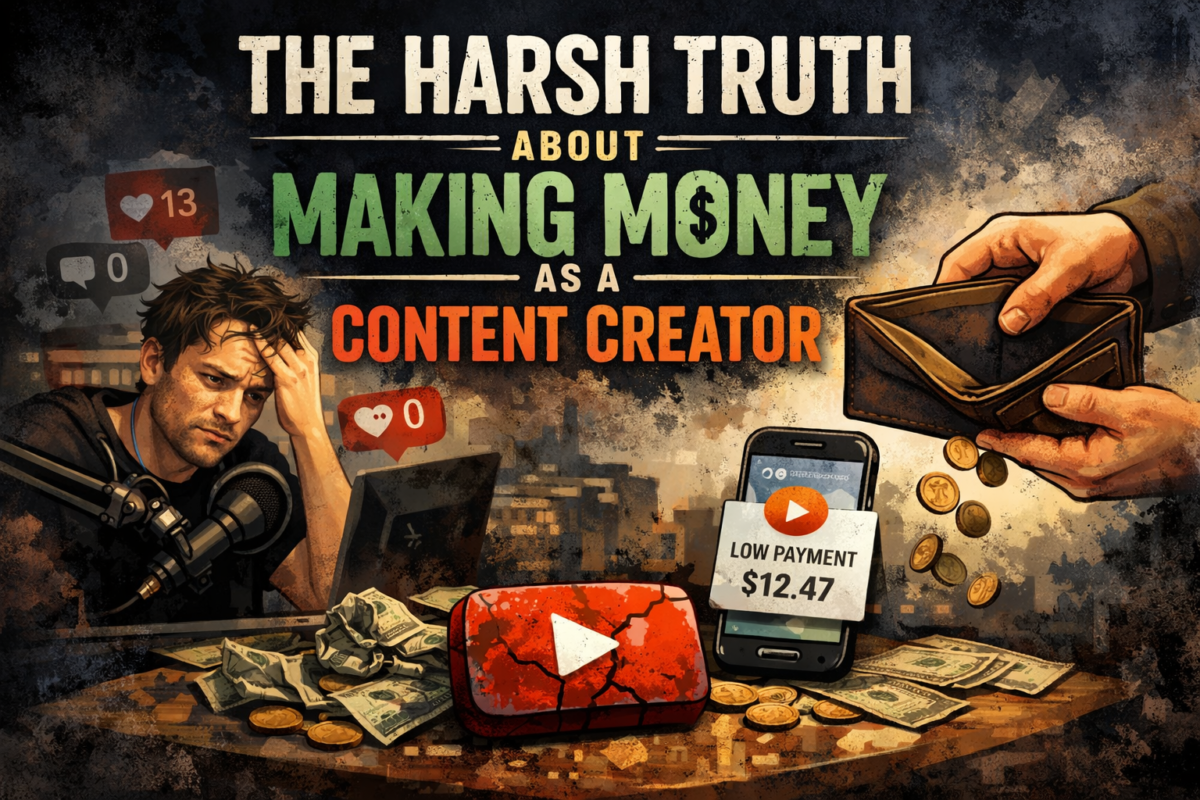
The Harsh Truth About Making Money as a Content Creator

The internet has done a remarkable job of selling a particular dream. You have seen it countless times — the laptop on a beach, the passive income screenshot, the creator who built an audience of millions and now earns more in a month than most people make in a year. It looks attainable. It looks like a meritocracy where talent and consistency are all you need. And for a small number of people, that version of events is more or less true.

For the overwhelming majority of people who try it, the reality is something else entirely.

The Math Nobody Talks About

The content creation economy runs on a winner-take-most model that the platforms marketing themselves to aspiring creators are not particularly eager to advertise. On YouTube, the top one percent of channels capture the vast majority of views, ad revenue, and sponsorship deals. The same pattern holds on Instagram, TikTok, Spotify, and every other major platform. There is an enormous pool of creators producing content, and the economic rewards are concentrated at the very top of that pool in a way that makes the odds of meaningful income look more like the lottery than a career.

The average YouTube channel with ten thousand subscribers — which is itself a milestone that takes most creators years to reach — earns somewhere between $200 and $500 per month from ad revenue. That figure, before taxes, represents the return on potentially thousands of hours of work across scripting, filming, editing, optimizing, promoting, and engaging with an audience. When you divide the income by the hours invested, the effective hourly rate for most content creators is not just modest — it is frequently below minimum wage.

The Hidden Costs

What the highlight reel of successful creators almost never shows is the infrastructure required to produce content at a competitive level. The camera equipment, lighting, microphones, and editing software that make a channel look professional are not cheap. Neither is the time spent learning to use them. A creator who wants to compete with established channels in almost any niche quickly discovers that the barrier to entry, while lower than it was a decade ago, is still substantial in terms of both money and time.Then there are the softer costs that are harder to quantify but just as real. The mental energy of constantly generating ideas. The emotional labor of putting your face, voice, and opinions in front of a public audience and managing the feedback — including the negative kind. The relentless pressure of the algorithm, which rewards consistency above almost everything else and punishes creators who slow down or take a break. Burnout among content creators is not just common — it has become something of a defining feature of the profession, with some of the platform’s biggest names regularly stepping away or quitting entirely after describing the grind as unsustainable.

The Monetization Timeline

One of the most misleading aspects of the content creator dream is the implied timeline. The success stories that circulate on social media tend to compress years of grinding work into a narrative that feels sudden and inevitable in retrospect. What rarely gets discussed is how long most successful creators worked before earning meaningful income — and how many people with equivalent talent and effort simply never got there.YouTube requires a channel to accumulate one thousand subscribers and four thousand watch hours before it can even apply to monetize through ads. For most creators starting from zero, that threshold alone takes between one and three years to reach. And crossing it does not mean the income becomes significant — it means the income becomes possible. The gap between possible and livable is vast, and most creators never close it.

Sponsorship deals and brand partnerships, which represent the real money for mid-tier creators, generally do not materialize until a channel has demonstrated consistent viewership in the tens of thousands. Building to that level while earning little to nothing along the way requires either a secondary income source, substantial savings, or a tolerance for financial stress that most financial planning advice would not endorse.

The Opportunity Cost Nobody Calculates

Perhaps the most underappreciated dimension of the content creation gamble is what economists call opportunity cost — what you give up by pursuing one path instead of another. The thousands of hours a person invests in building a YouTube channel or a blog or a podcast that never gains traction are hours that could have been spent developing a marketable skill, building a freelance client base, advancing in a career, or starting a service business with a far more predictable income trajectory.

A person who spends two years and two thousand hours trying to build a monetizable content channel, only to abandon it with a few hundred subscribers, has not just lost the income they hoped to earn. They have also foregone two years of progress toward something that might have actually worked. That is a cost that rarely appears in the conversation about content creation as a path to financial freedom.

When It Does Work, It Usually Looks Different

The content creators who do build sustainable income from their work tend to share a few characteristics that the surface-level success narrative leaves out. Most of them entered a niche early, before it became saturated. Many of them had pre-existing audiences, platforms, or professional credibility that gave them a head start. A significant number of them treat content creation as a marketing tool for a separate business — a consulting practice, a course, a software product, a service — rather than the business itself. In these cases, the content is not the product. It is the funnel.

This distinction matters enormously. A CPA who creates YouTube videos about small business tax strategy is not trying to earn ad revenue — they are attracting clients. A business coach who publishes a newsletter is not monetizing the newsletter directly — they are filling their coaching program. When content creation is in service of something else that generates reliable income, the math changes significantly. When content creation is the income strategy itself, the math is brutal for most people who try it.

A More Honest Conversation

None of this means content creation is without value or that nobody should try it. It means that anyone considering it as a path to financial independence deserves an honest accounting of the odds, the timeline, the costs, and the alternatives. The platforms that benefit from a large pool of aspiring creators have very little incentive to provide that honesty. The creators who made it have survivorship bias baked into every piece of advice they give — they are, by definition, not representative of the people who tried and failed.

The dream is real for some people. The work is real for almost everyone. And the income, for the vast majority who pursue it, never arrives in the form the dream promised.Before investing years of your life and thousands of hours into building an audience that may never come, it is worth asking whether there is a more direct path to what you actually want — and whether the content creator identity is the goal, or simply one possible route to a destination that has other roads leading to it.
Posted on

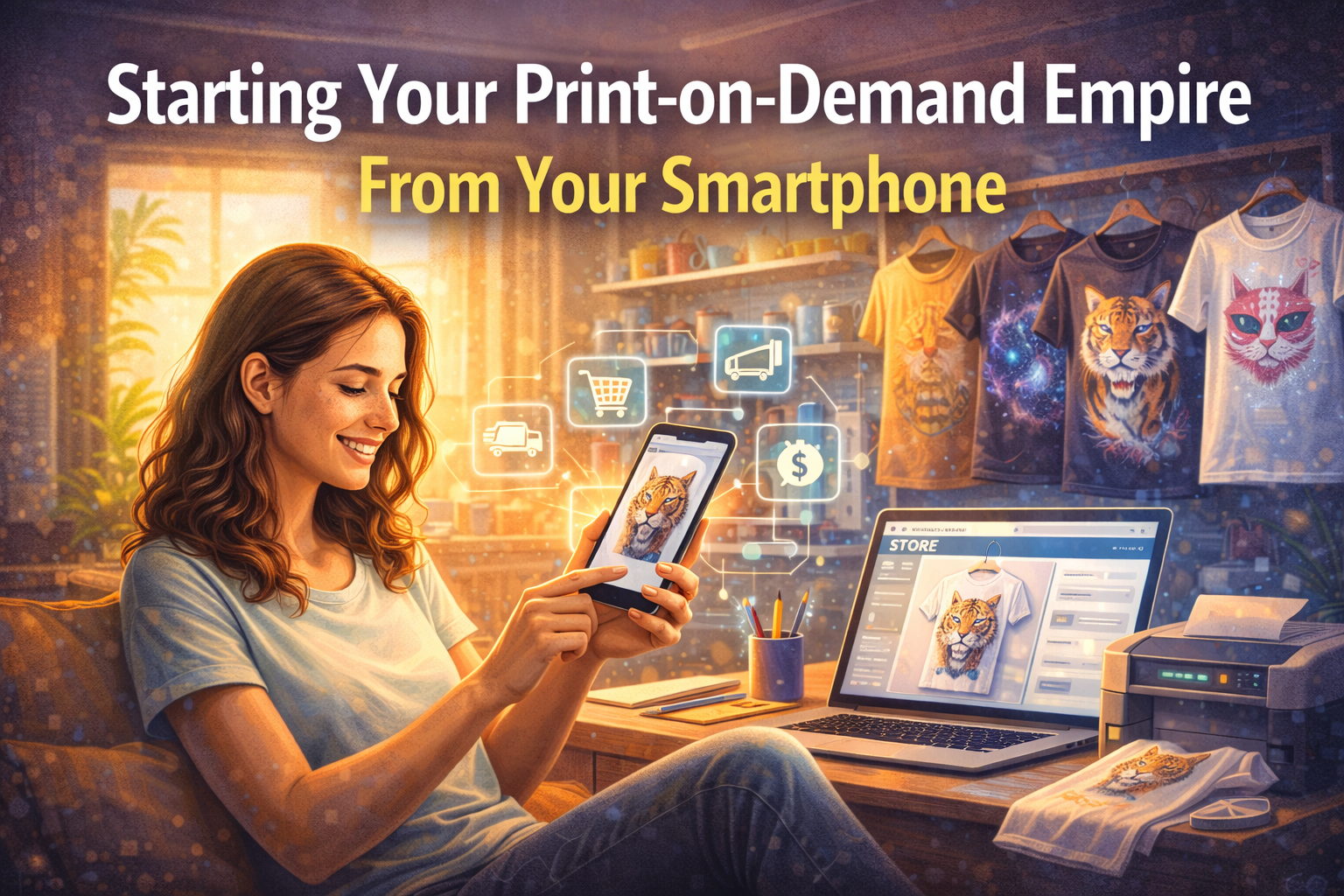
Starting Your Print-on-Demand Empire From Your Smartphone

The barrier to entry for online businesses has never been lower, and nowhere is this more apparent than in the print-on-demand industry. You don’t need expensive equipment, a warehouse full of inventory, or even a laptop. Everything you need to launch and run a successful print-on-demand business fits right in your pocket.

Print-on-demand is a business model where you create custom designs for products like t-shirts, mugs, phone cases, and posters, but you never actually touch the inventory. When a customer orders from your store, a third-party supplier prints your design on the product and ships it directly to the customer. You simply collect the profit margin between what the customer pays and what the supplier charges.

The beauty of managing this entirely from your phone starts with the platforms themselves. Services like Printful, Printify, and Redbubble have robust mobile apps that let you upload designs, create product mockups, and manage your entire catalog. You can literally be sitting on a bus, open the app, upload a design you created on your phone, and have it live on multiple products within minutes.

Design creation is often the biggest concern people have when considering a mobile-only approach. However, modern smartphones are surprisingly capable creative tools. Apps like Canva, Adobe Express, and Over provide professional-grade design capabilities optimized for touchscreens. You can create text-based designs, combine graphics from extensive libraries, manipulate images, and export print-ready files without ever needing a computer. For more complex illustration work, apps like Procreate on iPad or even free alternatives like IbisPaint X give you digital drawing capabilities that rival desktop software.

Connecting your print-on-demand supplier to your sales channel is seamless on mobile as well. If you’re selling through Etsy, Shopify, or even your own website, these platforms all have mobile apps with full functionality. Shopify’s mobile app, for instance, lets you manage your entire store, add products, adjust prices, process orders, and respond to customer inquiries. The integration between print-on-demand apps and these sales platforms means products sync automatically, and orders flow through without any manual intervention required from you.

Marketing your products is entirely manageable from your phone too. Social media platforms like Instagram, TikTok, Pinterest, and Facebook are actually designed to be used primarily on mobile devices. You can create content showcasing your products, engage with potential customers, run paid advertising campaigns, and build your brand entirely through your smartphone. The camera in your phone is the same tool professional content creators use, and video editing apps give you everything you need to create compelling promotional content.

Customer service is another aspect that works seamlessly on mobile. You can respond to messages, handle questions, process refunds if necessary, and maintain your business relationships through the same apps you use to run everything else. Most print-on-demand suppliers handle the technical customer service about shipping and product quality, so your role is primarily building relationships and ensuring customer satisfaction with their orders.

Financial management is straightforward as well. Payment processing through platforms like PayPal, Stripe, or the built-in payment systems on Etsy and Shopify all have excellent mobile apps. You can track your revenue, monitor expenses, transfer money to your bank account, and keep tabs on your profit margins right from your phone. Apps like QuickBooks Self-Employed or Wave can help you track business finances and prepare for taxes without needing a computer.The practical workflow might look something like this: you wake up, check your phone for overnight orders, spend thirty minutes creating a new design in Canva while drinking your coffee, upload it to Printify through their app, sync it to your Shopify store, create an Instagram post showcasing the new product, respond to a few customer messages, check your sales analytics, and then go about your day. When new orders come in, you get notifications, but the fulfillment happens automatically.

There are some considerations to keep in mind. While you can do everything on your phone, having a tablet can make design work more comfortable, especially if you’re creating detailed graphics. The larger screen of an iPad or Android tablet gives you more precision while still maintaining portability. However, this is a luxury rather than a necessity, as countless successful print-on-demand entrepreneurs operate exclusively from their smartphones.

The key to success in this business model isn’t the equipment you use but rather your ability to identify niches, create appealing designs, and market effectively. Your phone is simply the tool that makes all of this accessible. You can research trending topics on social media, identify underserved niches by browsing Reddit or niche forums, validate design ideas by posting them to communities for feedback, and then bring products to market within the same day.Starting a business from your phone also means you can work from anywhere at any time. Whether you’re traveling, waiting in line, commuting, or just prefer working from the couch, your business is always accessible. This flexibility is particularly valuable if you’re building your print-on-demand business as a side hustle while maintaining other commitments.

The investment required is minimal. Most print-on-demand platforms are free to use, taking their cut only when you make a sale. Selling platforms like Etsy charge small listing fees and transaction fees, while Shopify has monthly plans that start quite affordably. Marketing can be done organically through social media, or you can invest in paid advertising with budgets as small as a few dollars per day. Your smartphone itself is likely something you already own, so the actual startup cost can be nearly zero.

The print-on-demand industry continues to grow, with consumers increasingly comfortable purchasing custom products online. The technology supporting this business model becomes more sophisticated every year, and mobile apps are often the first to receive new features and capabilities. What would have required a full office setup a decade ago now fits comfortably in the palm of your hand.

Your phone is no longer just a communication device but a complete business platform. With the right apps, some creativity, and consistent effort, you can build a legitimate print-on-demand business that generates real income, all without ever sitting down at a desktop computer. The question isn’t whether it’s possible to run this business from your phone—it’s why you wouldn’t take advantage of the incredible convenience and accessibility this approach offers.

Posted on

Think of The Internet Like Digital Real Estate

When you stop thinking of the internet as a glowing rectangle full of noise and start treating it as land, the whole game changes. Land can be squatted on, rented out, flipped, subdivided, or left to appreciate while the city grows around it. The same is true of every URL, handle, hashtag, and search-results page. Once you see this, the awkward question “How do people actually make money online?” dissolves into the older, simpler question “How do people make money with real estate?” and the answers arrive wearing familiar clothes.

Imagine a nameless suburb in 1973. The roads are still dirt, the Walmart has not landed, and a forty-acre tract on the edge of town is trading for the price of a used pickup. Two neighbors buy adjacent lots. One plants soybeans and earns a thin, honest margin each season. The other does nothing except pay the taxes and keep the fences standing. Fifteen years later the interchange goes in, the outlet mall arrives, and the idle parcel is suddenly worth two hundred times what the farmer paid. The neighbor who worked the soil is still working the soil, now under a landlord who never broke a sweat. The difference was never effort; it was placement, timing, and patience. Online, the same parable plays out hourly. A dormant Tumblr registered in 2010, a five-letter Twitter handle, an exact-match domain that looks silly today—these are the dirt-road lots. Their value is not in what they produce right now but in what they might carry once the traffic arrives.

Traffic, of course, is the internet’s version of population density. A decade ago the densest neighborhoods were Google search pages and the Facebook news feed. Rents were reasonable, the sheriff was rarely seen, and a shopkeeper could hang a shingle and prosper. Then the algorithmic zoning laws changed. Google kept the best corners for itself, Facebook began charging for foot traffic that once arrived free, and the independent tenants discovered they were sharecroppers on someone else’s plantation. The reaction was natural: pioneers pushed outward, looking for the next intersection of cheap land and incoming traffic. Pinterest in 2012. Instagram in 2014. TikTok in 2019. Each migration felt risky until it looked inevitable, and the same storefront that had been evicted arrived in the new district early enough to buy the whole block.

The tools for surveying digital land are already in every pocket. Type a phrase into Google and look at the bottom of the page: “Related searches.” That is a plat map showing where the crowd wants to go next. Scroll through Reddit until you find a subreddit that makes you mutter “I didn’t know people were this into that.” That is the sound of dirt-road conversations that will one day be a paved main street. Buy the domain, reserve the handle, publish the first hundred posts, and you have staked a claim. It may feel like play-acting, but so did fencing an empty prairie. The filing cabinet at the county clerk’s office does not care whether you ever plant wheat; it only cares that you paid the fee and drew the boundaries. The internet’s filing cabinets work the same way.

Monetization is simply the moment when the land is put to its highest use. Sometimes that means building: a newsletter, a storefront, a paid community, a software tool. Sometimes it means leasing: sponsorships, affiliate links, licensing the brand you now own. Sometimes it means holding: letting the parcel appreciate while you pay the negligible taxes of registration fees and hosting costs. The mistake is to assume that only the first option counts as business. A landlord who collects rent is no less an entrepreneur than the developer who builds the condo, and both are richer than the tenant who insists on farming someone else’s field forever.

There is a darker, more recent layer to the metaphor: digital eminent domain. The platform that once gave you free acreage can decide a new highway needs to run straight through your kitchen. You wake up to find the algorithm rerouted, the audience gone, the investment wiped out. The only defense is the same one settlers used two centuries ago: diversify your holdings. Own more than one tract. Keep a homestead that no platform can repossess—an email list, a domain you control, a reputation that travels with you. These are the iron stakes that survive fires, rezoning, and even the collapse of entire territories.

The beauty of the real-estate lens is that it replaces moral questions with mechanical ones. Instead of asking whether you deserve an audience, you ask whether the lot you bought sits on the future parade route. Instead of lamenting that the web feels crowded, you study the coming railroad. Instead of begging platforms for mercy, you buy the adjacent lot before the news breaks. The drama drains away; the geometry remains. Land is land, online or off. Those who learn to read the map early arrive in time to name the streets.

Posted on Leave a comment

Building Your Own Home: A Smart Investment for Budget-Conscious Living

When it comes to major life decisions, few carry as much weight—both financially and personally—as where you’ll live. While buying an existing home is the traditional route, building a new house deserves serious consideration, especially if you’re looking to maximize your investment and live well without breaking the bank.

Understanding the ROI of New Construction

The return on investment for building a new home varies significantly based on location, materials, timing, and market conditions, but understanding the general landscape can help you make an informed decision.

Historically, newly built homes appreciate at rates comparable to existing homes in the same area—typically around 3-5% annually in stable markets, though this can vary widely. However, the real financial advantage of building new often comes from what you’re getting for your money rather than rapid appreciation alone.

When you build, you’re starting with zero maintenance costs and modern systems that won’t need replacement for years or even decades. Your HVAC, roof, plumbing, and electrical systems are all under warranty and built to current efficiency standards. This translates to lower utility bills and minimal repair costs during your first 10-15 years of ownership—savings that can amount to thousands of dollars annually compared to maintaining an older home.

Additionally, new construction typically includes modern insulation, energy-efficient windows, and updated building techniques that can reduce heating and cooling costs by 20-30% compared to homes built just 20 years ago. These ongoing savings compound significantly over time, improving your effective ROI beyond simple appreciation.

Why Building Is Better for Tight Budgets

This might seem counterintuitive at first. After all, building a custom home sounds expensive, right? But here’s where the math gets interesting for budget-conscious buyers.

You Control the Costs

When you build your own home, you’re the decision-maker at every stage. Want to splurge on a great kitchen but save money with simpler flooring you can upgrade later? You can do that. Willing to invest sweat equity by handling some of the finishing work yourself? That option exists. With an existing home, you’re paying for everything—including features you don’t want and upgrades you wouldn’t have chosen.

Building allows you to prioritize what matters most to your lifestyle and allocate your budget accordingly. You might choose a smaller footprint with high-quality finishes rather than a larger home with builder-grade everything. These choices can help you avoid overpaying for square footage you don’t need.

Avoid the Renovation Money Pit

That charming older home with the attractive price tag? It often comes with hidden costs. Outdated electrical systems, aging roofs, inefficient HVAC, old plumbing—these aren’t just inconveniences, they’re expensive repairs waiting to happen. Many buyers find themselves spending $30,000-$50,000 or more within the first few years on necessary updates and repairs.

When you build new, you’re starting with a blank slate. Everything is up to code, under warranty, and built with modern materials designed to last. Your money goes into creating your home, not fixing someone else’s deferred maintenance.

Energy Efficiency Means Real Savings

Modern building codes require energy efficiency standards that older homes simply can’t match without extensive retrofitting. A well-built new home can save you $100-$300 monthly on utilities compared to a similar-sized older home. Over a 30-year mortgage, that’s $36,000-$108,000 in savings—real money that stays in your pocket rather than going to the utility company.

Build Exactly What You Need

One of the biggest budget traps in home buying is paying for space or features you don’t actually use. A 2,500 square foot home sounds impressive, but if you’re really only living in 1,800 square feet of it, you’re heating, cooling, furnishing, and maintaining 700 square feet for no reason.Building allows you to design for your actual lifestyle. Need a home office but don’t need a formal dining room? Build that way. Want an open concept but can skip the fourth bedroom? You decide. This customization means every dollar you spend is working for you.

Making Building Work on Your Budget

If you’re intrigued but concerned about affordability, here are strategies to make building work on a tighter budget:

Start with a smaller, well-designed footprint. A thoughtfully designed 1,400 square foot home can live larger than a poorly laid out 1,800 square foot home, and you’ll save on both construction costs and ongoing expenses.

Consider a simple floor plan. Complex rooflines, multiple wings, and elaborate designs increase costs. A straightforward rectangular design with a simple roof structure is significantly more affordable to build and can still be beautiful and functional.

Choose your lot carefully. Land costs vary dramatically by location, and sometimes moving just a few miles outside your ideal area can make building feasible. Rural or developing areas often offer affordable lots with room to grow.Be strategic about DIY. While you’ll likely need professionals for the major systems, finishing work like painting, landscaping, or installing fixtures can be tackled by motivated homeowners, shaving thousands off your final costs.

Building your own home isn’t just about creating a space that’s perfectly suited to you—though that’s certainly valuable. It’s about making a smart financial decision that allows you to live well while staying within your means. By avoiding the hidden costs of older homes, maximizing energy efficiency, and building only what you truly need, you can create a living situation that’s both comfortable and financially sustainable.

The ROI of building extends beyond simple property appreciation. It’s found in the money you don’t spend on repairs, the utility bills that stay manageable, and the satisfaction of living in a space designed around your life rather than someone else’s vision. For those willing to be thoughtful and intentional about the process, building your own home can be one of the smartest financial moves you make—proving that sometimes the best way to afford the life you want is to build it yourself.

Posted on Leave a comment

Blogging About Your Service Makes You a Trusted Expert

You know what’s interesting? Most service businesses treat their expertise like a trade secret—something to guard until a client signs on the dotted line. But the businesses that consistently attract the best clients? They’re doing the opposite. They’re giving away their knowledge freely through blogging, and it’s turning them into the obvious choice in their market.

Here’s why blogging about the service you sell might be the smartest trust-building strategy you’re not using yet.

You demonstrate mastery before anyone asks

When you write detailed posts about your field, you’re essentially allowing potential clients to peek inside your brain. A financial advisor who blogs about retirement planning strategies isn’t just sharing information—they’re proving they actually know what they’re talking about. A web designer who writes about the psychology of color in branding is showing their depth of understanding.This matters because trust begins with competence. Before anyone hands you money, they need to believe you can actually deliver. Your blog becomes your proof of concept, available 24/7 to anyone who’s researching whether you’re the real deal.

You answer the questions clients are already asking

Every service business gets asked the same questions repeatedly. What’s your process? How long does it take? Why does this cost so much? What makes you different?

A blog lets you answer these questions once, thoroughly and thoughtfully, instead of rushing through them on discovery calls. When a potential client finds a post that addresses their exact concern—written clearly, without sales pressure—something powerful happens. They think, “Finally, someone who gets it.” That’s the beginning of trust.

You show up where the research happens

Here’s the reality of modern buying behavior: people research obsessively before they ever contact you. They’re Googling questions, comparing options, trying to educate themselves enough to make a smart decision.

If you’re blogging about your service, you have the chance to be part of that research phase. You’re not interrupting their process with ads or cold outreach—you’re genuinely helpful at the exact moment they need help. That positions you completely differently than a competitor they only discover through an ad or a cold email.

You build familiarity over time

Trust rarely happens instantly. It accumulates through repeated, positive exposure. Someone might read one of your blog posts today, another one three weeks from now, and stumble across a third when they’re finally ready to hire someone.By the time they reach out, you’re not a stranger. They’ve spent time with your ideas, your approach, your way of explaining things. You feel familiar, and familiarity dramatically lowers the barrier to trust. They’re not taking a leap of faith on an unknown—they’re taking the next logical step with someone they already feel they know.

You differentiate through perspective, not just promises

Every service provider claims to be experienced, professional, and client-focused. These words mean nothing because everyone uses them.But your blog? That reveals your actual perspective. How you think about problems. What you prioritize. The nuance you bring to your work. A blog post about why you always start projects with a particular diagnostic process tells clients infinitely more about working with you than “we deliver exceptional results” ever could.

You create a referral asset

When someone wants to recommend you, what do they send? A blog post you wrote is perfect. It’s not salesy. It demonstrates your expertise naturally. It gives their friend or colleague something valuable while making the referrer look good for sharing it.Your blog essentially creates easy on-ramps for word-of-mouth marketing. Every post is a shareable piece of proof that you know your stuff.

The bottom line

Blogging about your service flips the traditional trust-building model on its head. Instead of asking people to trust you based on testimonials and promises, you’re letting them evaluate your expertise directly. You’re being generous with your knowledge, helpful without expectation, and present during their research journey.

The businesses that do this consistently don’t have to convince people they’re trustworthy. Their content already did that work. By the time someone reaches out, the question isn’t whether to trust you—it’s when they can start.

Posted on Leave a comment

Introducing Manus: The Autonomous AI Agent That Does It All

In today’s fast-paced digital world, the demand for versatile, intelligent, and autonomous tools is higher than ever. We are thrilled to introduce Manus, an autonomous general AI agent designed to be your ultimate partner in productivity, creativity, and problem-solving. Manus is not just another AI; it’s a complete, sandboxed virtual machine environment with a comprehensive suite of tools, ready to tackle virtually any task you can imagine.

What Makes Manus Different? The Power of Autonomy and Versatility

Manus is built on a foundation of deep integration and a wide array of capabilities, allowing it to move beyond simple text generation and into the realm of complex, multi-step task execution.

1. The Full-Stack Problem Solver

Manus is equipped to handle tasks across multiple domains, making it a true generalist AI. Its capabilities span the entire digital workflow. For Information and Research, Manus excels at gathering information, checking facts, and producing comprehensive documents or presentations, making it ideal for market analysis, academic literature reviews, fact-checking, and report generation. In the realm of Data and Analysis, it processes data, performs complex analysis, and creates insightful visualizations or spreadsheets, supporting tasks like financial modeling, trend analysis, statistical reporting, and data cleaning.

For Content Creation, Manus writes multi-chapter articles, in-depth research reports, and compelling marketing copy, perfect for blog posts, white papers, technical documentation, and creative storytelling. When it comes to Software Development, Manus builds well-crafted websites, interactive applications, and practical software solutions, handling full-stack web development, API integration, custom script writing, and bug fixing. Furthermore, its Media Generation capabilities allow it to generate and edit images, videos, audio, and speech from text and media references, which is crucial for creating visual assets, audio transcription, voiceovers, and media editing. Finally, Manus specializes in Workflow Automation, collaborating with users to automate complex workflows and execute scheduled tasks, such as booking appointments, purchasing items, running recurring reports, and system maintenance.

2. A Dedicated, Secure Workspace

Every Manus task runs within a sandboxed virtual machine environment. This is a critical differentiator, providing a clean, isolated workspace that ensures security, protects your privacy, and prevents interference from other processes. Unlike many cloud-based tools, you get a complete Linux environment with a shell, file system, and pre-installed tools like Python, Node.js, and various command-line utilities. This unparalleled level of access allows Manus to perform real-world actions—such as installing dependencies, running code, and managing files—just like a human developer or analyst, but with the speed and precision of an AI.

3. Tool-Native Intelligence

Manus doesn’t just talk about using tools; it uses them natively and intelligently. It is programmed to select and invoke the right tool for the job. It can Browse the Web by navigating to any URL, reading content, and performing transactions using a dedicated browser tool. It can Interact with the Shell to execute commands, manage the file system, and install software. It can Manage Files by reading, writing, appending, and editing files with precision. It can Search and Discover by accessing up-to-date information, images, APIs, and research papers using a powerful search tool. Most importantly, it can Plan and Execute, breaking down complex goals into manageable, sequential phases using its internal planning tool, ensuring a structured and reliable path to completion.

The Manus Advantage: Autonomy in Action

The true power of Manus lies in its autonomous agent loop. It doesn’t wait for step-by-step instructions from the user. Instead, it operates in a continuous cycle: it Analyzes your request and the current context, Thinks through the best course of action, Selects the most appropriate tool, Executes the action in the sandbox, and Iterates until the task is complete.

This means you can hand off an open-ended objective—like “Build a web application that tracks stock prices” or “Write a 10-page report on the future of AI in healthcare”—and Manus will manage the entire process, from research and planning to coding and final delivery, without constant hand-holding.

Why Manus is the Next Evolution in AI: A Comparative Look

In a crowded field of AI applications, Manus stands apart. While many popular AI tools excel in a single, specialized area, they often fall short when a task requires a combination of skills, real-world execution, and persistence. Manus is not a specialized Large Language Model (LLM) chatbot, nor is it merely a code interpreter; it is a complete operating environment.Consider the difference in Execution Environment. Specialized LLM chatbots, such as GPT-4 or Gemini, often operate in an ephemeral, limited, and often stateless environment. Code interpreters offer an isolated Python environment with no external access. Manus, by contrast, provides a Full Linux VM Sandbox that is persistent, secure, and includes a real file system. This allows it to maintain context and state across long-running, multi-phase projects.

When it comes to Tool Use, most competitors rely on simulated or limited external API calls through plugins or function calling. Manus, however, uses Native Tool Invocation, giving it direct access to the Shell, a real Browser for automation, the File System, and a comprehensive Search capability. This enables it to perform actions that are simply impossible for other models.This difference is most evident in Task Complexity. While specialized chatbots are best for single-turn or short-chain tasks—primarily text-in, text-out—and code interpreters handle data analysis on uploaded files, Manus is built for Multi-Step, Multi-Domain Projects. It seamlessly integrates coding, research, web browsing, and file management into a single, cohesive workflow.The key takeaway is execution. A standard LLM can write the code for a web application, but Manus can build the project structure, install the dependencies, write the code, run the server, and expose the live application to you. It bridges the critical gap between AI planning and real-world doing, making it the most capable autonomous agent on the market.

Ready to Experience the Future of AI?

Stop juggling multiple specialized AI tools. With Manus, you get a single, powerful, and versatile agent that can adapt to your every need. Whether you’re a developer, a researcher, a content creator, or a business professional, Manus is here to amplify your capabilities and redefine what you can achieve.

Posted on Leave a comment

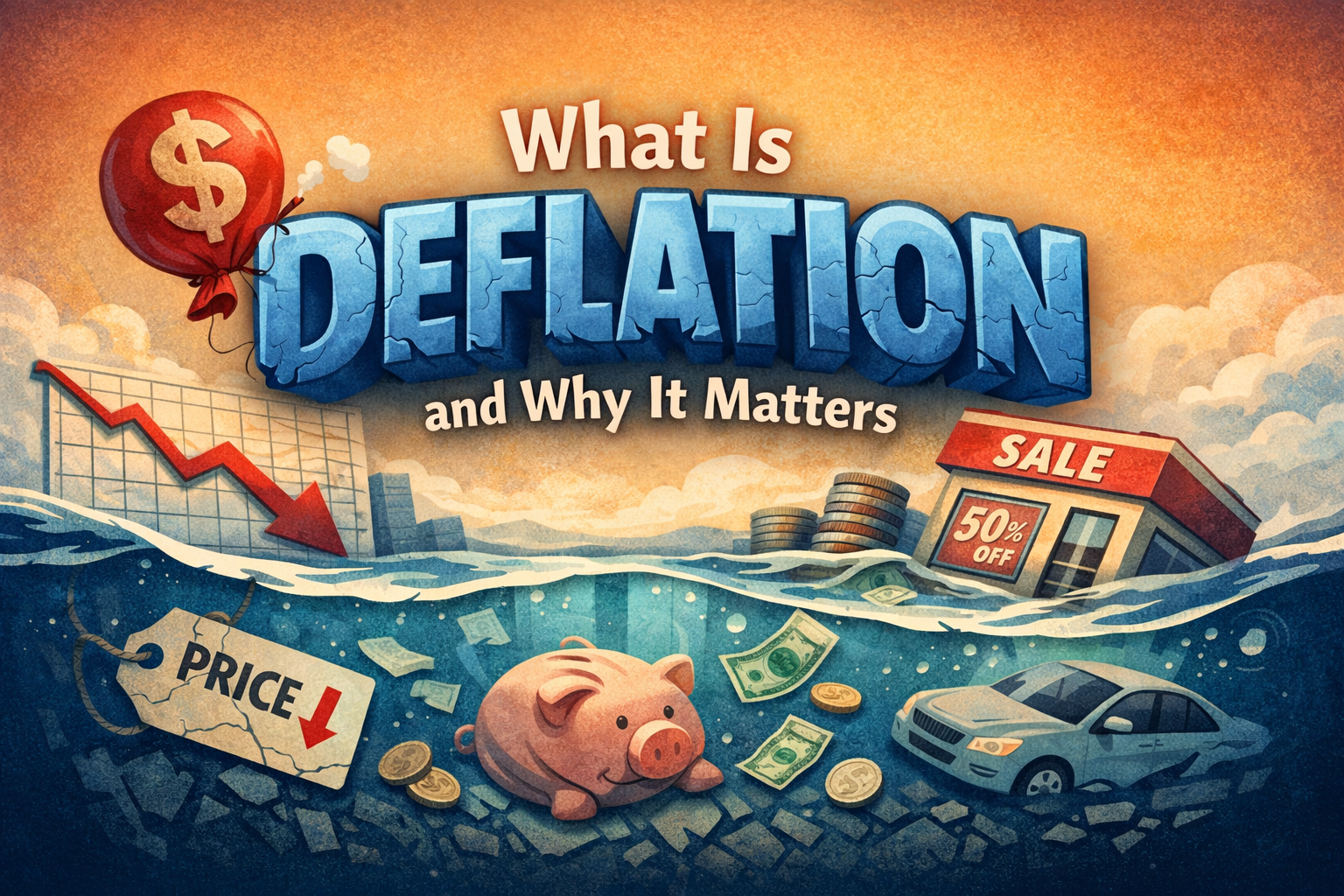
What Is Deflation and Why It Matters

Deflation is one of those economic terms that sounds harmless — after all, who doesn’t like lower prices? But in reality, deflation is often a sign of deeper problems in the economy. It represents a decline in the general price level of goods and services over time, and while it may seem like a win for consumers, it can have destructive long-term effects if it persists.

The Basics: Inflation vs. Deflation

To understand deflation, you first have to understand inflation.Inflation means prices are rising, and your money buys less over time.Deflation means prices are falling, and your money buys more over time.So why would falling prices be bad? The answer lies in behavior.

Why Deflation Happens

Deflation usually happens when demand in the economy falls sharply. This can be caused by:

1. A slowdown in consumer spending – People stop buying because they expect prices to drop even more later.

2. Falling wages or high unemployment – If people earn less, they spend less, lowering demand further.

3. Debt overhang – When too many people or companies owe money, they focus on paying off debt instead of spending.

4. Technological improvement – Sometimes, productivity gains make products cheaper (though this “good deflation” is different from the harmful kind).

The Vicious Cycle

Deflation often creates a self-reinforcing spiral:Prices fall → businesses earn less → layoffs increase → spending drops further → prices fall again.This makes debts harder to repay since the value of money rises over time. For example, if you owe $100, that debt becomes more expensive in real terms when prices fall, not less.

Why Central Banks Fear Deflation

Central banks like the U.S. Federal Reserve target mild inflation (around 2%) because it encourages spending and investment.During deflation:Consumers delay purchases.Businesses hold off on expansion.The economy stagnates or shrinks.Japan experienced this for decades in what economists call the “Lost Decade,” where low demand and deflation kept growth weak despite government efforts.

When Deflation Isn’t Bad

Not all deflation is harmful. When it’s driven by innovation and efficiency — like cheaper computers or better logistics — it can benefit everyone. This is known as “good deflation.” The danger arises when prices fall because of collapsing demand, not rising productivity.

Deflation might sound appealing at first glance, but it’s often a warning sign of a struggling economy. It discourages spending, hurts debtors, and can trap nations in long periods of stagnation.

Healthy economies grow with moderate inflation — not too high, not too low — just enough to keep money moving and people motivated to build, buy, and invest.

Posted on Leave a comment

Understanding Percentiles: What They Are and Why They Matter

When reading statistics, test scores, or income reports, you might encounter the term percentile. But what does it actually mean? Let’s break it down.

What Is a Percentile?

A percentile tells you how a particular value compares to the rest of the data in a set. In simple terms:> “The Xth percentile is the value below which X% of the data falls.”For example, if you score in the 90th percentile on a test, it means you scored better than 90% of all test takers.

How Percentiles Work

Percentiles divide data into 100 equal parts. Think of them like checkpoints along a number line:

25th percentile (Q1): The bottom quarter of the data

50th percentile (median): The middle value — half the data is below, half above

75th percentile (Q3): The top quarter starts here

So if a child is in the 40th percentile for height, it means they are taller than 40% of children and shorter than 60%.

Percentiles vs. Percentages

Percentiles are not the same as percentages. A 90% score on a test doesn’t always mean the 90th percentile. Percentiles are relative — they depend on everyone else’s scores. You could get 90/100 points, but if most people scored higher, your percentile might be lower.

Why Percentiles Are Useful

1. Education: Standardized test scores often use percentiles to show performance compared to peers.

2. Health: Pediatric growth charts use percentiles to track children’s development.

3. Finance & Economics: Income or wealth percentiles help analyze economic inequality.

4. Data Analysis: Percentiles identify outliers and understand distributions.

Quick Example

Imagine 10 students scored on a math test:50, 55, 60, 65, 70, 75, 80, 85, 90, 95The 50th percentile (median) is 70.The 90th percentile is 95. So, a student scoring 95 did better than 90% of the class.

Final Thoughts

Percentiles are a powerful tool for comparing values in context. They help turn raw numbers into meaningful insights, whether you’re tracking grades, growth, or income. Understanding percentiles makes it easier to see not just your score, but where you stand relative to the group.

Posted on Leave a comment

Pinterest: The Only Website Designed to Drive Traffic Directly to Your Website

In the world of social media marketing, most platforms prioritize engagement within their own ecosystems—likes, comments, and shares keep users on their apps. However, Pinterest stands out as the only major platform designed to drive traffic directly to external websites. Unlike Facebook, Instagram, or TikTok, where links are often buried or restricted, Pinterest encourages users to click through to the source of the content.

For bloggers, e-commerce stores, and content creators, Pinterest is a powerful search engine that can send consistent, long-term traffic to their websites. In this article, we’ll explore:

  1. Why Pinterest is the best platform for driving website traffic
  2. How to design high-converting Pins using just your smartphone
  3. Best practices for posting Pins to maximize clicks

Why Pinterest is the Best Platform for Driving Website Traffic

1. Pinterest is a Visual Search Engine, Not Just Social Media

Unlike other platforms where content disappears after a few hours, Pins have a long lifespan—they can continue generating traffic for months or even years. Users come to Pinterest to discover ideas, not just to scroll passively.

  • SEO-Driven: Pins rank in Pinterest’s search results based on keywords, similar to Google.
  • Link-Friendly: Every Pin can (and should) link back to your website.
  • High Buyer Intent: 85% of Pinners use Pinterest to plan purchases (Source: Pinterest Business).

2. Other Platforms Suppress External Links

  • Instagram limits links to just the bio (unless you pay for ads).
  • Facebook and TikTok prioritize keeping users on their platforms.
  • YouTube requires viewers to manually click links in descriptions.

Pinterest, however, is built around the idea of driving traffic elsewhere.

3. Evergreen Traffic Potential

A well-optimized Pin can keep bringing visitors long after posting, unlike Instagram Reels or TikTok videos that lose reach quickly.


How to Design High-Converting Pins Using Just Your Smartphone

You don’t need expensive software—just your phone and a few free apps. Here’s how to create click-worthy Pins in minutes.

1. Ideal Pin Dimensions & Format

  • Recommended Size: 1000 x 1500 pixels (2:3 ratio works best).
  • Vertical Pins perform better than square or horizontal ones.
  • Use high-quality images (avoid blurry or pixelated graphics).

2. Free Mobile Apps for Designing Pins

  • Canva (Best for templates, text overlays, and branding).
  • PicsArt (Great for photo editing and creative effects).
  • Adobe Express (Professional designs with easy resizing).

3. Step-by-Step Pin Design (Using Canva Mobile App)

  1. Open Canva and search for “Pinterest Pin.”
  2. Choose a template or start with a blank design.
  3. Upload your own image or use a free stock photo.
  4. Add bold text (Use a clear, attention-grabbing headline).
  5. Include your branding (logo, website URL, or consistent colors).
  6. Save as a high-quality PNG or JPEG.

4. What Makes a Pin Clickable?

  • Strong Headline: Example: “10 Easy Dinner Recipes (Ready in 20 Minutes!)”
  • Bright, Contrasting Colors (Stand out in the feed).
  • Minimal, Clean Text (Avoid overcrowding).
  • A Clear Call-to-Action (CTA): “Click for the Full Guide!”

How to Post Pins for Maximum Website Traffic

1. Uploading Pins Directly from Your Phone

  1. Open the Pinterest app and tap the “+” button.
  2. Select “Create Pin.”
  3. Upload your Pin image.
  4. Add a keyword-rich description (Include your website link).
  5. Select a relevant board (Or create a new one).
  6. Publish!

2. Optimizing Pins for Search (SEO Tips)

  • Use Keywords in the Title & Description (Example: “Best DIY Home Decor Ideas 2024”).
  • Add Alt Text (Helps Pinterest understand your image).
  • Link to a Relevant Page (Don’t send users to your homepage—link directly to the blog post or product).

3. Best Posting Strategies

  • Post consistently (3-5 Pins per day for best results).
  • Mix fresh Pins with repurposed content (Update old Pins with new images).
  • Join group boards (Increases reach).
  • Use Rich Pins (Auto-update product info/blog post details).

4. Track Performance with Pinterest Analytics

  • Check which Pins drive the most clicks.
  • See what keywords users are searching for.
  • Adjust your strategy based on data.

Final Thoughts: Pinterest is a Traffic Goldmine

While other platforms make it difficult to send users off their apps, Pinterest actively encourages outbound clicks. By designing eye-catching Pins and optimizing them for search, you can turn Pinterest into a consistent traffic source for your website—all from your smartphone.

Key Takeaways:

Pinterest is designed for driving website traffic—unlike Instagram or TikTok.
Use Canva (mobile) to create scroll-stopping Pins in minutes.
Post daily, use keywords, and track analytics for long-term growth.

Start implementing these strategies today, and watch your website traffic grow!

Posted on Leave a comment

Why You Should Vote Against a High National Debt

National debt is a huge problem in today’s society, and people like to pretend it isn’t. Economic pundits claim that debt never needs to be paid back, while business gurus claim that personal debt is good. Neither of these two things could be farther from the truth, as far as I’m concerned. In my opinion, a high national debt is one of the biggest and most commonplace problems facing us in today’s world. Everybody should be voting against a high national debt, if possible.

What is the national debt?

A country’s national debt is exactly what it sounds like, the debt its government incurs in order to create leverage for its projects and to help its citizens during emergencies. The national debt changes at any given time, and governments control it by setting interest rates and issuing bonds. Bonds function as guarantees that the government pays its debts. This is why people care about the bond market. If the government defaults on its debts, bonds become worthless and impossible to redeem. If that were to happen to the US government, trillions of dollars in wealth would disappear overnight.

National debt payments can be made slowly, but they are still loans from future generations

Money is a store of value. So, either someone works to pay back a debt, or the value is lost. This means that in order to maintain the sanctity of the global economy, every single piece of national debt must be recovered from the production of future generations. This means that you need to create an environment in which you’re not robbing future generations too much in order to create progress. It’s better to do the responsible thing than it is to go for immediate gratification. There’s no such thing as pleasure without discipline.

National debt takes a long time to pay back, which means you can lose an entire set of decades/a generation

This might not sound so bad if you’re a member of the affected generation. But it is bad for you too. You’ll be wealthier, but you’ll be in a stagnant country. The youth will be unmotivated. Wages won’t rise. Your investments will yield less and less with each passing year. You lose out on valuable good times as you’re forced to help your country pay its creditors back. Trust me, it will show up in your life somehow. I see it with my older relatives and their friends. Their savings go less and less far with each passing year. It’s sad and hurtful to watch things get harder for them. Especially those who voted responsibly.

Rising national debt doesn’t necessarily mean growth

Look at Greece and Argentina. Some countries, such as the United States and Canada, are able to make debt work for them. Others aren’t. Having a high national debt doesn’t mean you’ll have a successful country. As a matter of fact, many successful countries such as Denmark and South Korea have very low nation debt levels. Probably because they know better than to borrow against the earnings of future generations.

Rising national debt staves off reality

Something I’ve noticed when comparing other countries to mine is how similar our situations are when it comes to wealth, when you adjust for age. For reference, my country has a GDP in the high four digits annually. I find that the people, while having lower salaries, are as wealthy as countries in which. Meaning they own homes and cars, while people in those other countries are living better but renting. They own nothing. I’ve noticed that the people in countries that are more indebted also are older, on average. This means that even though have higher salaries, they had to wait longer to achieve them. Rising national debt gives the illusion of growth, but when you look under the hood, there’s usually something wrong.

My theory on why debt has a negative effect

Maybe I’m just rambling. But I believe humans struggle to spend money wisely. So, when we borrow, we become more selfish as a collective. Pay for my food, pay for my healthcare. Not all of this is bad. It’s actually quite humane. But it has knock-on effects. People have fewer kids. They get complacent. They invest in and create useless businesses like froyo shops. It’s not good to rob peter to pay Paul. The money is never properly spent, and it’s very painful when it needs to be paid back. People don’t realize how much they overconsume.

Sometimes debt is necessary.

If your people are food insecure, or there is a problem with defense, then spending needs to go up. This is also precisely why the debt should be kept as low as possible most of the time. You want something to be able to be done if it all goes wrong. If your country takes on debt just to “develop” itself and ends up building casinos, you guys are shit out of luck. The young people of your country will need to work their butts off to pay that debt off.

Pundits and economists who say debt doesn’t matter are being disingenuous. It only takes a basic application of logic to see that debt is very important, and that people should be anxious to hold their governments accountable for misusing it. You should be one of those people, if you’re a thinking person. Don’t let the money printer fool you into thinking you have sustainable growth. Debt will only end up bringing you down in the long run.

Thanks for paying attention.