Posted on

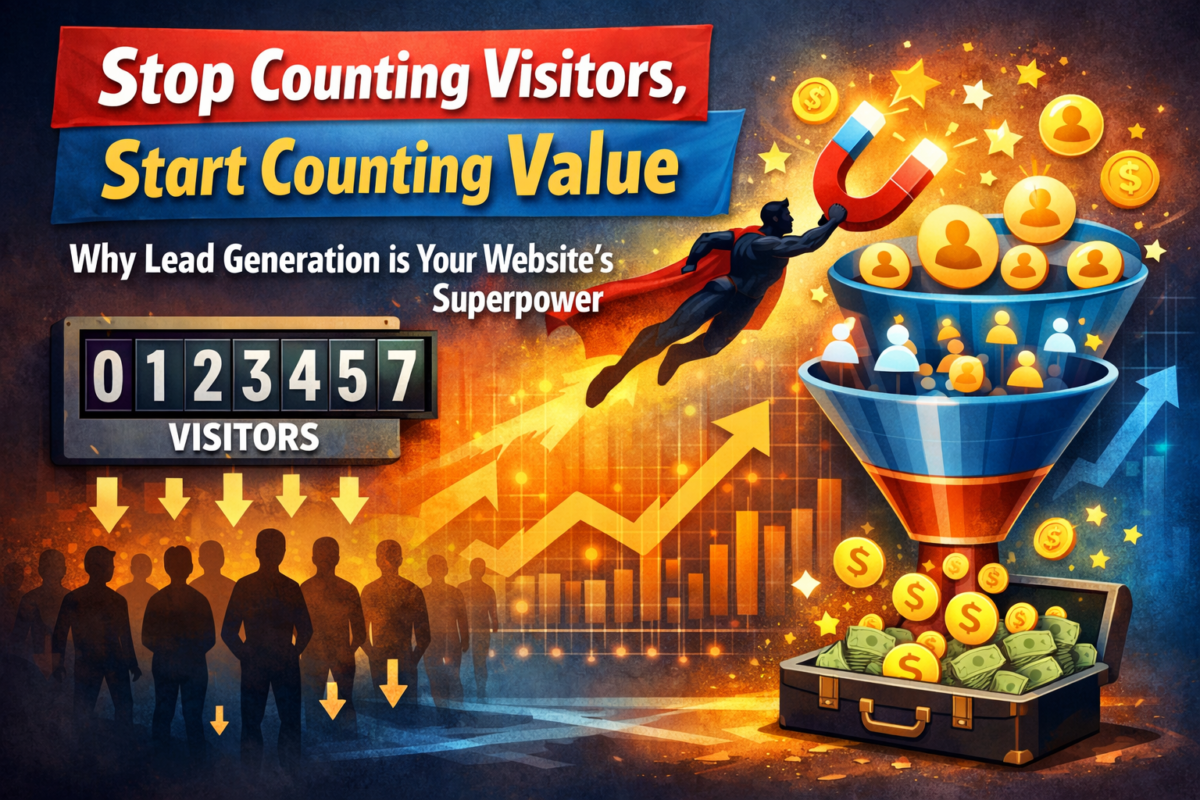
Stop Counting Visitors, Start Counting Value: Why Lead Generation is Your Website’s Superpower

If you have a website, you’ve likely celebrated a high-traffic day. Maybe you hit a record number of visitors last month. It feels good to see those numbers climb on your analytics dashboard. But here is a tough question for you: How many of those visitors actually turned into customers? If the answer is “not many,” you aren’t alone. Many website owners fall into the trap of “vanity metrics”—focusing on views rather than value. Traffic is great, but without lead generation, your website is just a digital brochure. It looks nice, but it isn’t working for you. To turn your website from a passive asset into an active revenue driver, you need to understand the art and science of lead generation.

What is Lead Generation, Really?

In simple terms, lead generation is the process of attracting strangers to your website and converting them into someone who has shown interest in your product or service. Usually, this happens when a visitor trusts you enough to give you their contact information—whether that’s an email address, a phone number, or a social media connection. It’s the bridge between “just looking” and “ready to buy.”

Why Lead Generation is Crucial for Website Owners

If you aren’t prioritizing lead generation, here is why you need to start today. Firstly, you own the relationship. Relying on walk-ins or social media algorithms is risky. If Instagram goes down or Facebook changes its algorithm, your reach disappears overnight. However, when you generate a lead via your website, you capture an email address or a phone number, giving you direct access to that person. You aren’t renting an audience; you own the means to contact them again.

Furthermore, it is vital to recognize that most people aren’t ready to buy right now. Did you know that only about 3% of your website traffic is ready to make a purchase immediately? The other 97% are in research mode, browsing, comparing, and learning. Lead generation allows you to capture that 97%. By offering a discount code in exchange for an email, a free PDF guide, or a consultation booking, you can stay top-of-mind. When they are ready to buy, they will come back to you instead of your competitor.

Additionally, lead generation builds trust and authority. When someone gives you their email address, they are giving you a small piece of their privacy, which is a psychological commitment. By providing valuable content in exchange, such as a newsletter or an ebook, you begin a relationship built on value. Over time, this turns a cold lead into a warm prospect who sees you as an authority in your field. Finally, it provides a huge return on investment. Paid advertising is expensive; you pay for every click, and once the visitor leaves your site, they are often gone forever. Lead generation makes your marketing spend efficient because you capture the visitor data. Even if they leave your site today, you can market to them for free tomorrow via email, making it the most cost-effective way to maximize your budget.

How to Get Started with Lead Generation

You don’t need a massive budget to start generating leads; you simply need to give your visitors a reason to stick around. Start by creating a “lead magnet,” which is an incentive you offer to potential buyers in exchange for their email address. This could be a checklist, a discount code, a free chapter of your book, or a webinar. You should also use clear calls-to-action. Don’t assume your visitors know what to do; tell them with buttons and banners that say things like “Get My Free Guide” or “Book a Free Consultation.” Lastly, optimize your forms by not asking for too much information right away. The more fields you have in your form, the fewer people will fill it out, so it is best to start with just a name and email address.

Your website is the hardest-working employee in your business. It never sleeps. But if it isn’t generating leads, it’s leaving money on the table 24 hours a day. Stop measuring success by how many people pass through your digital front door. Start measuring how many are willing to sit down and have a conversation. Focus on lead generation, and you turn anonymous traffic into a loyal community—and a thriving business.

Posted on

Why Entrepreneurship Is Easier With a Mentor

Entrepreneurship is often portrayed as a solo journey. The lone founder working late nights, figuring everything out through trial and error, building something from nothing through sheer willpower. While independence and resilience are important traits, the reality is that entrepreneurship becomes significantly easier when you have a mentor.

Starting and growing a business requires constant decision-making. Pricing, positioning, hiring, marketing, partnerships, cash flow, product development, and customer service all compete for attention. Every decision carries consequences. Without experience, it is easy to waste time solving problems that someone else has already solved. A mentor shortens that learning curve.

Experience is the primary reason mentorship matters. A good mentor has already navigated many of the challenges you are facing. They have made mistakes, absorbed losses, and adjusted their strategy accordingly. Instead of discovering every lesson the hard way, you benefit from their hindsight. What might take you years to understand can sometimes be clarified in a single conversation.

Mentorship also reduces emotional volatility. Entrepreneurship is not just a strategic challenge. It is a psychological one. Revenue fluctuations, client issues, uncertainty, and comparison to competitors can create doubt. When you are alone, small setbacks can feel overwhelming. A mentor provides perspective. They remind you which problems are normal and temporary, and which ones actually require action. That emotional stability allows you to make better decisions.

Clarity is another advantage. New entrepreneurs often chase too many ideas at once. They experiment constantly but struggle to focus. A mentor can help you identify what truly matters. They ask better questions. They challenge assumptions. They redirect energy toward activities that generate real results. This clarity prevents burnout and improves momentum.

Networking becomes easier as well. Established mentors often have relationships, partnerships, and industry insight that would take years to build independently. Even if they do not directly introduce you to opportunities, they can guide you toward the right rooms, communities, or conversations. Entrepreneurship thrives on proximity to experience and influence.

Accountability plays a powerful role. When you are building alone, it is easy to delay difficult tasks. A mentor creates subtle pressure to execute. Knowing that someone will ask about your progress encourages follow-through. This structure increases discipline without removing autonomy.

Mentorship does not eliminate failure. It does not guarantee success. What it does is reduce unnecessary mistakes and accelerate growth. Instead of stumbling in the dark, you move forward with informed guidance. The path is still yours to walk, but the direction becomes clearer.Importantly, mentorship does not mean dependency. A strong mentor does not make decisions for you. They help you sharpen your own thinking. Over time, you become more confident and capable. The goal is not to rely on them forever but to grow faster because of their insight.

Entrepreneurship will always require courage, adaptability, and persistence. Those qualities cannot be outsourced. But the journey does not need to be isolating. With the right mentor, challenges feel more manageable, decisions feel more grounded, and progress feels more deliberate. Instead of learning everything the hard way, you build with guidance, perspective, and a clearer vision of what is possible.

Posted on

The Real Key to Blogging: Finding the Most Valuable Visitors

Most people approach blogging with the same goal: get more traffic. They chase page views, obsess over impressions, and measure success by how many visitors land on their site each month. But traffic alone is not the point. The real key to blogging is not attracting the most visitors. It is attracting the most valuable visitors.

A valuable visitor is someone whose problems, goals, and purchasing power align directly with what you offer. They are not casually browsing. They are looking for answers, solutions, and guidance. They are closer to making decisions. When these people find your content, your blog stops being a hobby and starts becoming an asset.

High traffic with low relevance rarely converts into meaningful results. You can write broad, trending articles that pull in thousands of readers from around the world, but if those readers have no intention or ability to buy from you, the numbers become vanity metrics. They may boost your analytics dashboard, but they will not grow your business.

When you focus on valuable visitors, everything changes. Your topics become sharper. Your language becomes more specific. Your examples become more practical. Instead of writing for everyone, you write for a clearly defined audience with a clearly defined need. That clarity makes your content more persuasive and more useful.

Consider the difference between writing about “how to save money” and writing about “tax strategies for high-income real estate investors in California.” The first topic may attract a wide audience. The second will attract fewer people, but those people are far more likely to require specialized services. In many cases, one highly aligned reader is worth more than a thousand random ones.

Finding valuable visitors begins with understanding who you actually want to serve. What industries do you work best with. What income levels or business stages make the most sense for your services. What problems do these people urgently want solved. Once you answer these questions, your blog becomes a magnet for the right audience instead of a net cast into the ocean.

Search intent plays a critical role in this process. When someone types a detailed, specific question into a search engine, they reveal what they care about. By creating content that directly answers those high-intent questions, you position yourself in front of readers who are already thinking about action. This is far more powerful than writing generic thought pieces that attract passive interest.

The financial impact of valuable visitors is dramatic. A blog that attracts ten thousand casual readers per month might generate little to no revenue. A blog that attracts two hundred highly targeted readers could generate significant income if those readers represent ideal clients. The difference lies in alignment, not volume.This approach also changes how you measure success. Instead of focusing only on traffic numbers, you begin to track inquiries, consultations, qualified leads, and conversions. You care less about how many people visited and more about who visited. Over time, your content library becomes a collection of targeted entry points that guide the right people toward your services.

Blogging is not about shouting into the void. It is about building authority in a specific space. When the right readers consistently find your insights helpful, trust grows. When trust grows, business follows. The compounding effect of attracting valuable visitors month after month is far more powerful than temporary spikes in attention.

In the end, blogging is a strategic tool. If your goal is influence, revenue, or client acquisition, then relevance matters more than reach. The most successful blogs are not the ones with the biggest audiences. They are the ones with the most aligned audiences. When you focus on attracting the most valuable visitors, your blog stops being content for its own sake and becomes a growth engine for your business.

Posted on

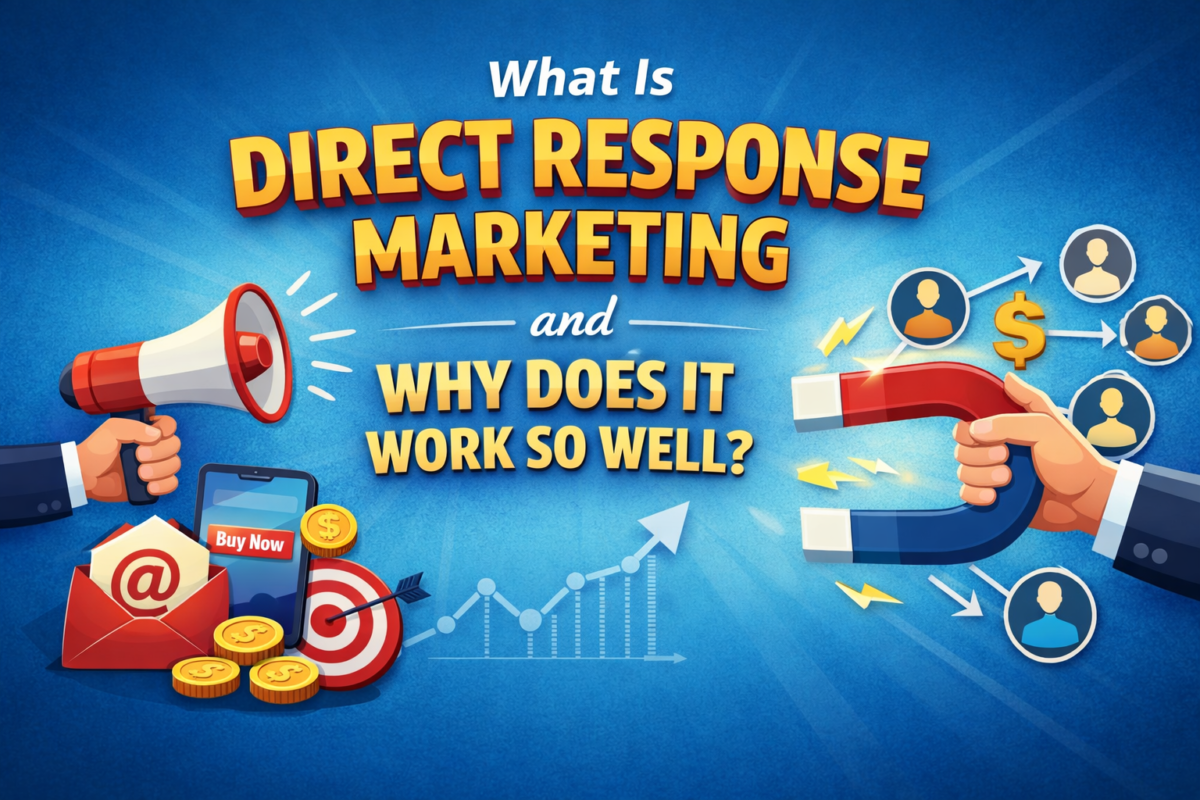
What Is Direct Response Marketing and Why Does It Work So Well

Most marketing is an act of faith. A company buys a billboard, runs a television commercial, sponsors a podcast, or plasters their logo on the side of a stadium and hopes that somewhere down the line, some portion of the people who saw it will eventually become customers. There is no way to know which exposure led to which sale, no mechanism for measuring what worked and what did not, and no direct line between the money spent and the revenue generated. This kind of marketing is called brand advertising, and for large companies with enormous budgets and the patience to play a very long game, it can be justified.

For everyone else, there is direct response marketing — and it operates on an entirely different philosophy.

The Core Idea

Direct response marketing is any form of marketing designed to elicit an immediate, measurable action from a specific audience. The name says exactly what it is. You send a message. You want a direct response. You measure whether you got one.That response might be a phone call, a form submission, a click, a purchase, a reply to an email, or a visit to a specific page. The exact action varies depending on the campaign and the business. What does not vary is the requirement that the marketing piece itself contains a clear call to action, targets a defined audience, and produces results that can be tracked, measured, and evaluated against the cost of generating them.This is the fundamental distinction between direct response marketing and brand advertising. Brand advertising asks you to remember a name. Direct response marketing asks you to do something right now — and it knows whether you did.

Where It Came From

Direct response marketing did not begin on the internet. Its roots go back well over a century, to the era when mail order catalogs were the dominant form of commerce for rural Americans who could not easily reach a city. Entrepreneurs like Richard Sears understood early that a well-written letter sent to a targeted mailing list, with a specific offer and a clear mechanism for responding, could generate predictable revenue in a way that general awareness advertising could not.Claude Hopkins, one of the founding figures of modern advertising and the author of the 1923 classic Scientific Advertising, articulated the philosophy that would define direct response for generations to come. He believed that advertising should be judged by the sales it produced, not by the attention it attracted. He tested headlines, offers, and copy relentlessly, keeping what worked and discarding what did not. He insisted on measurability at a time when most of his contemporaries were satisfied with vague notions of brand prestige.

David Ogilvy, who built one of the most celebrated advertising agencies of the twentieth century, described direct response as his secret weapon and the discipline that had taught him more about what actually works in marketing than any other. Gary Halbert, Dan Kennedy, and a generation of direct mail copywriters built entire careers — and made fortunes for their clients — by applying the same principles Hopkins had articulated decades earlier.The internet did not invent direct response marketing. It simply gave it new channels and made its defining feature — measurability — more precise and immediate than ever before.

What Makes a Direct Response Campaign

Every effective direct response marketing piece shares a set of structural characteristics that distinguish it from general awareness advertising.It speaks to a specific person with a specific problem. Rather than broadcasting a message to the widest possible audience and hoping some percentage of them are relevant, direct response begins by defining precisely who the ideal respondent is and crafting a message designed to resonate with that person in particular. The more specifically a piece of marketing can describe the reader’s situation — their frustrations, their goals, their fears, the exact problem they are trying to solve — the more powerfully it tends to perform.

It makes a clear and compelling offer. Direct response does not invite vague interest. It presents something specific — a product, a service, a free consultation, a downloadable resource, a discount — and explains in concrete terms what the reader will get, why it is valuable, and what it will cost them. Ambiguity is the enemy of response. The reader should never finish a direct response piece uncertain about what they are being asked to do or why they should do it.It creates urgency. Human beings are inclined toward inaction. Given the option to decide later, most people will choose later, and later has a way of becoming never. Effective direct response marketing gives the reader a reason to act now rather than setting the piece aside and forgetting about it. A deadline, a limited quantity, a price that increases, or a bonus available only to early responders all serve this function.

It includes a specific call to action. Not a general suggestion to get in touch sometime, but an explicit instruction: call this number, visit this page, reply to this email, scan this code. The call to action removes any ambiguity about what the next step is and makes taking it as frictionless as possible.

And critically, it is measurable. Every direct response campaign is designed from the beginning with measurement in mind. Different headlines are tested against each other. Different offers are compared. Different audiences are evaluated. The question at the center of every direct response campaign is not “did people see this?” but “did people respond to this, and was the cost of generating that response justified by the value it produced?”

Why It Matters for Small and Mid-Sized Businesses

For businesses without the budget to saturate a market with brand advertising and wait years for it to produce returns, direct response marketing is not just a useful tool — it is the only rational approach. It produces results that can be measured within days or weeks rather than years. It allows a business to test a message with a small investment before scaling it up. It creates accountability for every marketing dollar spent, because every dollar can be traced to a specific campaign with a specific outcome.

A law firm that runs a direct response campaign — targeting a specific type of client, with a specific offer and a specific call to action — knows within a defined period whether the campaign generated inquiries, how many of those inquiries converted to clients, and what the average revenue from those clients was relative to the cost of the campaign. That information is enormously valuable. It allows the firm to make informed decisions about where to invest their marketing budget going forward, doubling down on what works and eliminating what does not.

This is in sharp contrast to the firm that sponsors a local event, takes out a full-page ad in a regional magazine, and has no meaningful way to determine whether either investment produced a single new client.

Direct Response in the Digital Age

Email marketing is direct response. A well-constructed email campaign targets a specific audience, makes a specific offer, includes a specific call to action, and can measure open rates, click rates, and conversion rates with precision. Search advertising is direct response. An ad that appears when someone types a specific phrase into Google, takes them to a page designed to convert their interest into an inquiry, and tracks exactly how many of those inquiries resulted in sales is direct response marketing in its purest digital form.

Social media advertising, when done with direct response principles in mind — a targeted audience, a specific offer, a clear call to action, rigorous tracking — is direct response. Even content marketing, when built around capturing leads and moving them through a defined sequence toward a specific action, borrows heavily from direct response thinking.

The channels have multiplied. The principles have not changed at all.

What makes direct response marketing valuable is not any single tactic or channel. It is the underlying discipline of treating marketing as an investment that should produce a measurable return rather than an expense whose value is taken on faith. It is the commitment to testing and learning rather than assuming. It is the insistence on clarity — a clear audience, a clear offer, a clear call to action, a clear measure of success.These disciplines make marketers better regardless of which channel they are using. A professional who understands direct response thinks differently about every piece of communication they produce — every email, every webpage, every social media post, every advertisement. They ask not just whether the message sounds good but whether it is designed to produce a specific result, and whether they will know if it did.

That shift in thinking is worth more than any individual campaign, and it is available to any business willing to adopt it.

Posted on

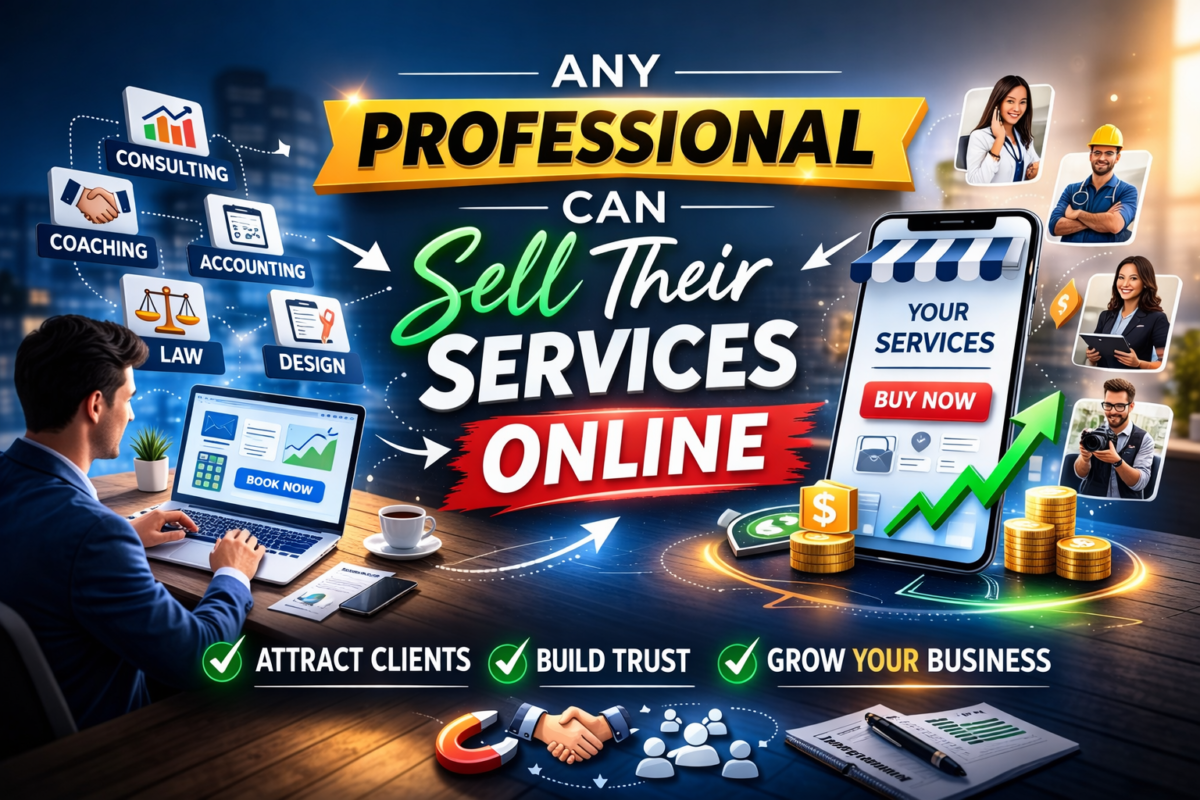
Any Professional Can Sell Their Services Online

There is a persistent belief among skilled professionals that selling services online is something other people do. Younger people, maybe. Tech-savvy people. People whose work happens to translate naturally to a screen. The attorney who has built a practice through decades of handshakes and referrals, the accountant whose clients have always walked through a physical door, the consultant whose best business came from a chance conversation at a conference — these professionals often look at the internet as a foreign territory with its own rules, its own culture, and its own gatekeepers, and conclude that it is simply not for them.This belief is costing them an enormous amount of money and opportunity, and it is wrong.

The Internet Is Not a Different World

The fundamental dynamics of professional services have not changed because of the internet. Clients still hire people they trust. They still want evidence of expertise before they commit. They still make decisions based on reputation, referrals, and the sense that a particular professional understands their specific situation. The internet did not replace any of these dynamics. It simply created new ways to establish them — ways that are faster, broader, and available to anyone willing to use them.

A potential client who finds a lawyer’s website and spends twenty minutes reading detailed, clearly written articles about estate planning is going through exactly the same trust-building process as someone who was referred by a friend and sat across from that lawyer at a lunch meeting. The medium is different. The psychology is identical. By the time they pick up the phone or fill out a contact form, they have already made a provisional decision that this person knows what they are doing. The internet just let that process happen at scale, without the lawyer having to be present for every moment of it.

Credentials Are Not the Barrier

One of the most common objections professionals raise when the topic of selling online comes up is that their work requires credentials, licensing, or jurisdictional constraints that make internet-based client acquisition complicated. A CPA can only practice in states where they are licensed. An attorney cannot represent clients in courts where they are not admitted to the bar. A therapist must comply with telehealth regulations that vary by state.These are real constraints, but they are not the barriers they appear to be. Plenty of professional services can be delivered remotely within existing regulatory frameworks. Plenty of advisory, consulting, and educational work sits outside the most restrictive licensing requirements entirely. And even for professionals whose hands-on work is genuinely location-specific, the internet can still function as the most powerful client acquisition tool they have — attracting local clients through search, content, and online reputation rather than cold calls and networking events.

A dentist cannot fill a cavity over Zoom. But a dentist who has a website full of genuinely useful content about oral health, who has accumulated dozens of five-star Google reviews, and who shows up at the top of local search results when someone types “dentist near me” is absolutely selling their services online — they are just delivering them in person. The distinction matters.

What Selling Online Actually Requires

It does not require a personal brand with hundreds of thousands of followers. It does not require a podcast, a YouTube channel, a viral social media presence, or any of the other high-visibility content strategies that tend to dominate the conversation about building a business online. Those things can accelerate results, but they are far from the only path.

At its most basic level, selling professional services online requires three things. A clear, professional web presence that communicates who you serve and what you do for them. A way for interested prospects to find that presence, whether through search, social media, referrals, or paid advertising. And a mechanism for converting that interest into a conversation — a contact form, a scheduling link, a phone number, something that makes it easy for the right person to take the next step.That is the whole architecture. Everything else is refinement and amplification of those three elements.

The Professionals Already Doing This Quietly

Across every licensed and credentialed profession, there are practitioners quietly building client bases online that their peers in the same field have no idea exist. Accountants who serve clients in multiple states entirely remotely and have never met most of them in person. Financial advisors who built their practice through a newsletter that grew over several years into a list of thousands of engaged, high-net-worth readers. Attorneys who publish detailed guides about specific legal issues and receive inbound inquiries from prospective clients who found them through a Google search and already trust them before the first call.

These professionals are not unusually technical. They are not especially young or digitally native. They simply decided that the internet was a legitimate place to build a professional practice and acted accordingly. The gap between them and their peers who are still relying entirely on traditional business development methods is growing every year, and it is not primarily a gap in skill — it is a gap in belief.

The Leverage That Did Not Exist Before

What the internet offers professionals that no previous era of business development could match is leverage. A referral from a satisfied client reaches one person, maybe two. An article that ranks well in search results reaches a hundred people a month, then a thousand, then more — and it keeps working without any additional effort. A well-maintained LinkedIn profile is visible to every potential client or referral partner who searches your name, indefinitely, at no cost. A single well-produced explanatory video can answer the same question for ten thousand prospective clients over the course of several years.This is qualitatively different from anything professionals could do before. The ability to build trust and demonstrate expertise at scale — without being physically present, without hiring a sales team, without a large marketing budget — is genuinely new, and most of the professions that could benefit most from it have been slowest to take advantage of it.

The Longer You Wait, the More Ground You Cede

Every profession is experiencing some version of the same shift. The professionals who establish a strong online presence in their niche today are building an asset that compounds. Their content accumulates. Their search rankings improve with age and consistency. Their reputation online grows more established and harder for a newcomer to displace. The professional who starts this process in five years will face a significantly harder competitive environment than the one who starts today.

This is not a reason to panic. It is a reason to begin. The barrier to entry for selling professional services online has never been lower, the tools have never been more accessible, and the upside for a skilled professional who commits to building a digital presence has never been clearer.The question is not whether the internet is a viable place to build a professional practice. Thousands of professionals in every field have already answered that question. The only question left is whether you intend to be one of them.

Posted on

Go Where the Money Is

There is a piece of advice so simple it sounds almost insulting when you first hear it, yet it is consistently ignored. If you want to make money, go where the money is.

That is it. That is the whole idea. And yet the vast majority of people building businesses, choosing careers, or trying to generate income online do the opposite. They go where they are comfortable. They go where their friends are. They go where the content they consume points them. They go where the dream looks prettiest. And then they wonder why the income never matches the effort.

The Invisible Filter Most People Never Apply

When most people decide what kind of work to pursue, they ask themselves a set of reasonable-sounding questions. What am I good at? What do I enjoy? What feels manageable given my current skills and situation? These are not bad questions. But they are missing the most important one, which is: who has money, needs help, and is willing to pay for it?

That question cuts through an enormous amount of noise. It eliminates the romanticized paths that feel compelling from the outside but are structurally incapable of generating meaningful income for most people who pursue them. It redirects attention away from crowded, underpaying markets and toward the places where a skilled, reliable person can command real compensation.The people and businesses with money to spend are not evenly distributed across every niche, industry, or platform. They are concentrated in specific places, and those places are not particularly hard to identify once you start looking for them with the right lens.

What “Going Where the Money Is” Actually Means

It does not mean chasing trends or doing work you hate. It means being deliberate about who your client or customer is before you invest years of your life building something for them.

A freelance writer who decides to serve lifestyle bloggers will spend their career negotiating over $30 articles and competing with hundreds of other writers willing to work for less. A freelance writer who decides to serve B2B software companies, law firms, or financial services businesses will find clients who have real budgets, understand the value of good communication, and are willing to pay accordingly. The work is not dramatically different. The economic reality of the two paths is worlds apart.

The same principle applies across virtually every service business. A web designer who builds sites for local restaurants occupies a fundamentally different market than one who builds sites for medical practices, SaaS companies, or professional services firms. A bookkeeper who serves solopreneurs lives in a different financial reality than one who serves construction companies, e-commerce businesses, or real estate investors. The skill set overlaps significantly. The income potential does not.

Industries and Clients That Actually Have Money

Certain industries are simply wealthier than others, and that wealth creates a more favorable environment for everyone serving them. Finance, law, medicine, technology, real estate, insurance, and engineering consistently rank among the highest-paying fields — not just for the professionals within them, but for the vendors, consultants, and service providers who support them.

A person who positions themselves to serve high-earning professionals or businesses in these industries starts from a fundamentally different place than one who positions themselves to serve industries with thin margins and perpetually tight budgets. This is not a moral judgment about which industries deserve support. It is a practical observation about where the money flows and how much of it is available for the people who show up ready to help.

Businesses that are growing also spend more than businesses that are struggling. A company that just raised a funding round, recently expanded to a new market, or is navigating a period of rapid hiring has problems to solve and money to solve them with. A business that is contracting, fighting for survival, or chronically undercapitalized tends to see every expense as a threat. Choosing which kind of business to serve is one of the most consequential decisions a service provider can make, and most people make it by accident rather than by design.

The Geography Dimension

Going where the money is also has a literal geographic dimension that has become easier to act on in the era of remote work. The median income in San Francisco is not the median income in rural Mississippi. The concentration of high-net-worth individuals, growth-stage companies, and well-funded organizations varies dramatically by location, and for service providers who can work remotely, the entire country — or the entire world — becomes their potential client base.

This does not mean everyone needs to move to a major city. It means that a consultant, writer, designer, accountant, or any other professional who can deliver their work digitally has no logical reason to limit their client search to the economic conditions of their immediate geography. The ability to serve clients in wealthier markets from anywhere is one of the most underutilized advantages available to independent professionals today.

The Discomfort of Upstream Markets

There is a reason more people do not instinctively go where the money is, and it is worth naming honestly. Wealthier clients and higher-stakes markets come with higher expectations. A Fortune 500 company will demand more polish, more reliability, more sophistication, and more accountability than a small local business with a $500 budget. A high-net-worth individual seeking financial advice will ask harder questions and hold their advisors to a higher standard than someone just starting to think about their first investment.

This raises the bar, and raising the bar is uncomfortable. It requires developing real expertise rather than surface-level competence. It requires investing in your own presentation, communication, and professionalism. It requires turning down lower-paying work that feels safe in favor of pursuing higher-paying work that feels like a stretch.

Most people avoid this discomfort by staying in markets where the expectations are lower and the money is scarcer. They tell themselves they are not ready for the bigger clients yet, that they need more experience first, that they will move upstream once they have built more confidence. And then years pass and they are still serving the same underpaying market, still waiting until they feel ready.

The truth is that readiness tends to follow commitment rather than precede it. The decision to go upstream comes first. The capability to deliver at that level develops in response to the decision, not before it.

The Simplest Reframe in Business

If you are working hard and not earning what you expected, the answer is rarely to work harder. It is more often to look honestly at who you are working for and ask whether those people have the resources to pay you what your work is worth — and whether there is a different market, a different client profile, or a different positioning that would put you in front of people who do.The money is out there. It is not hidden. It is not reserved for people with advantages you do not have. It is sitting with people and organizations that have real problems, real budgets, and a genuine willingness to pay someone who can solve those problems reliably and well.The only question is whether you are pointing yourself in their direction.

Posted on

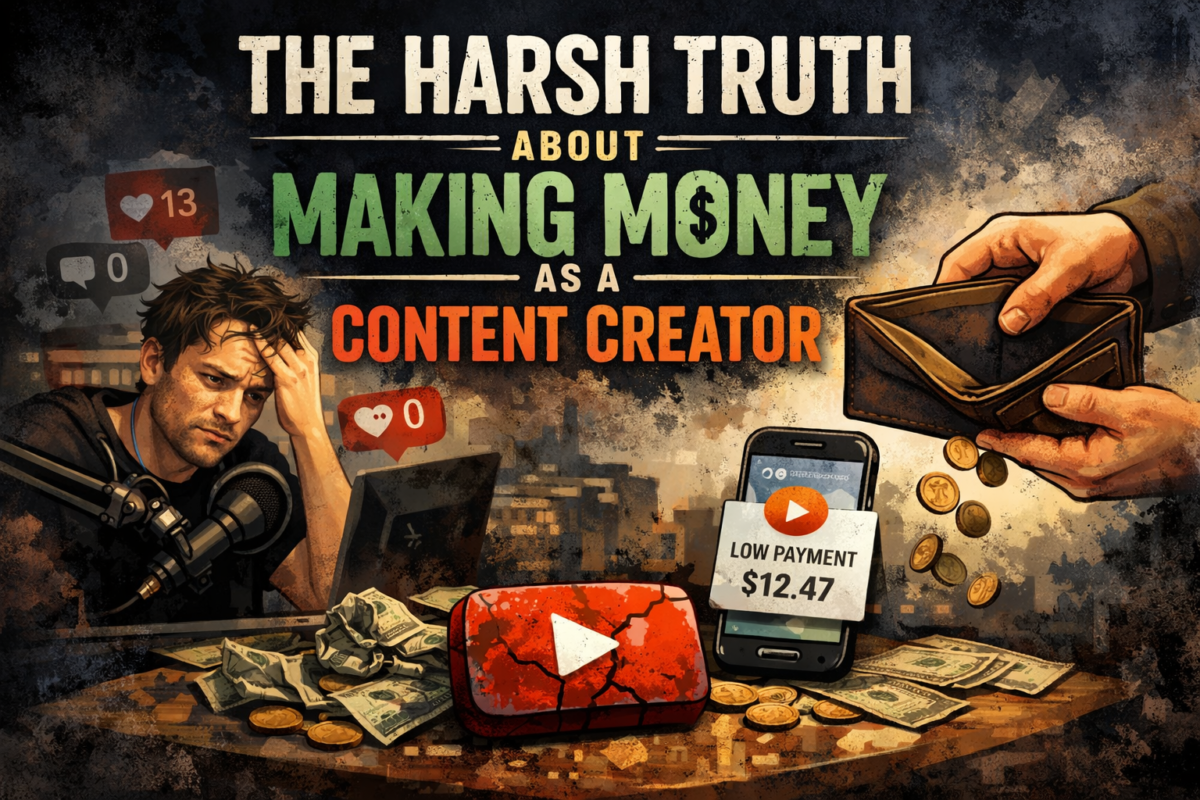
The Harsh Truth About Making Money as a Content Creator

The internet has done a remarkable job of selling a particular dream. You have seen it countless times — the laptop on a beach, the passive income screenshot, the creator who built an audience of millions and now earns more in a month than most people make in a year. It looks attainable. It looks like a meritocracy where talent and consistency are all you need. And for a small number of people, that version of events is more or less true.

For the overwhelming majority of people who try it, the reality is something else entirely.

The Math Nobody Talks About

The content creation economy runs on a winner-take-most model that the platforms marketing themselves to aspiring creators are not particularly eager to advertise. On YouTube, the top one percent of channels capture the vast majority of views, ad revenue, and sponsorship deals. The same pattern holds on Instagram, TikTok, Spotify, and every other major platform. There is an enormous pool of creators producing content, and the economic rewards are concentrated at the very top of that pool in a way that makes the odds of meaningful income look more like the lottery than a career.

The average YouTube channel with ten thousand subscribers — which is itself a milestone that takes most creators years to reach — earns somewhere between $200 and $500 per month from ad revenue. That figure, before taxes, represents the return on potentially thousands of hours of work across scripting, filming, editing, optimizing, promoting, and engaging with an audience. When you divide the income by the hours invested, the effective hourly rate for most content creators is not just modest — it is frequently below minimum wage.

The Hidden Costs

What the highlight reel of successful creators almost never shows is the infrastructure required to produce content at a competitive level. The camera equipment, lighting, microphones, and editing software that make a channel look professional are not cheap. Neither is the time spent learning to use them. A creator who wants to compete with established channels in almost any niche quickly discovers that the barrier to entry, while lower than it was a decade ago, is still substantial in terms of both money and time.Then there are the softer costs that are harder to quantify but just as real. The mental energy of constantly generating ideas. The emotional labor of putting your face, voice, and opinions in front of a public audience and managing the feedback — including the negative kind. The relentless pressure of the algorithm, which rewards consistency above almost everything else and punishes creators who slow down or take a break. Burnout among content creators is not just common — it has become something of a defining feature of the profession, with some of the platform’s biggest names regularly stepping away or quitting entirely after describing the grind as unsustainable.

The Monetization Timeline

One of the most misleading aspects of the content creator dream is the implied timeline. The success stories that circulate on social media tend to compress years of grinding work into a narrative that feels sudden and inevitable in retrospect. What rarely gets discussed is how long most successful creators worked before earning meaningful income — and how many people with equivalent talent and effort simply never got there.YouTube requires a channel to accumulate one thousand subscribers and four thousand watch hours before it can even apply to monetize through ads. For most creators starting from zero, that threshold alone takes between one and three years to reach. And crossing it does not mean the income becomes significant — it means the income becomes possible. The gap between possible and livable is vast, and most creators never close it.

Sponsorship deals and brand partnerships, which represent the real money for mid-tier creators, generally do not materialize until a channel has demonstrated consistent viewership in the tens of thousands. Building to that level while earning little to nothing along the way requires either a secondary income source, substantial savings, or a tolerance for financial stress that most financial planning advice would not endorse.

The Opportunity Cost Nobody Calculates

Perhaps the most underappreciated dimension of the content creation gamble is what economists call opportunity cost — what you give up by pursuing one path instead of another. The thousands of hours a person invests in building a YouTube channel or a blog or a podcast that never gains traction are hours that could have been spent developing a marketable skill, building a freelance client base, advancing in a career, or starting a service business with a far more predictable income trajectory.

A person who spends two years and two thousand hours trying to build a monetizable content channel, only to abandon it with a few hundred subscribers, has not just lost the income they hoped to earn. They have also foregone two years of progress toward something that might have actually worked. That is a cost that rarely appears in the conversation about content creation as a path to financial freedom.

When It Does Work, It Usually Looks Different

The content creators who do build sustainable income from their work tend to share a few characteristics that the surface-level success narrative leaves out. Most of them entered a niche early, before it became saturated. Many of them had pre-existing audiences, platforms, or professional credibility that gave them a head start. A significant number of them treat content creation as a marketing tool for a separate business — a consulting practice, a course, a software product, a service — rather than the business itself. In these cases, the content is not the product. It is the funnel.

This distinction matters enormously. A CPA who creates YouTube videos about small business tax strategy is not trying to earn ad revenue — they are attracting clients. A business coach who publishes a newsletter is not monetizing the newsletter directly — they are filling their coaching program. When content creation is in service of something else that generates reliable income, the math changes significantly. When content creation is the income strategy itself, the math is brutal for most people who try it.

A More Honest Conversation

None of this means content creation is without value or that nobody should try it. It means that anyone considering it as a path to financial independence deserves an honest accounting of the odds, the timeline, the costs, and the alternatives. The platforms that benefit from a large pool of aspiring creators have very little incentive to provide that honesty. The creators who made it have survivorship bias baked into every piece of advice they give — they are, by definition, not representative of the people who tried and failed.

The dream is real for some people. The work is real for almost everyone. And the income, for the vast majority who pursue it, never arrives in the form the dream promised.Before investing years of your life and thousands of hours into building an audience that may never come, it is worth asking whether there is a more direct path to what you actually want — and whether the content creator identity is the goal, or simply one possible route to a destination that has other roads leading to it.

Posted on

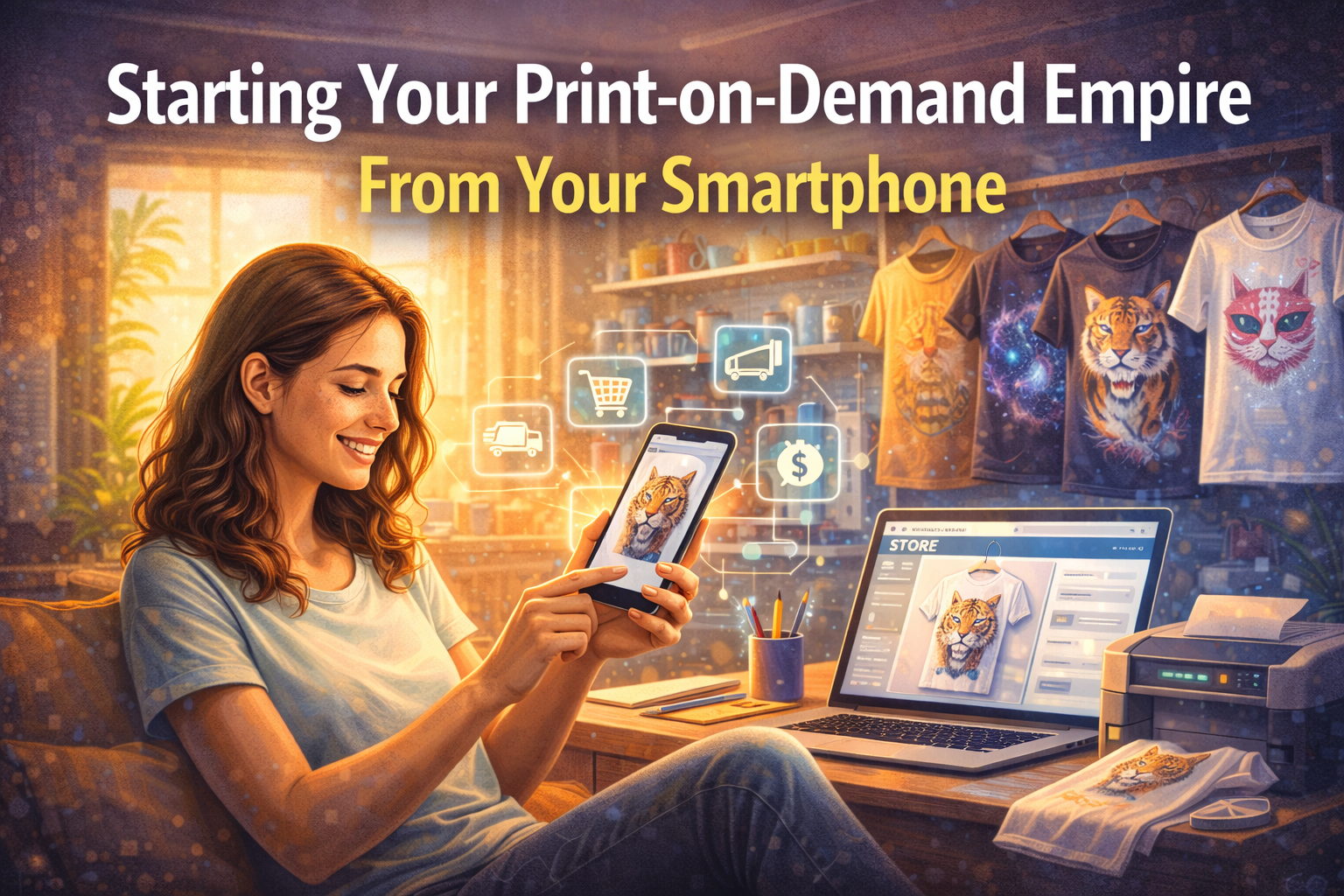
Starting Your Print-on-Demand Empire From Your Smartphone

The barrier to entry for online businesses has never been lower, and nowhere is this more apparent than in the print-on-demand industry. You don’t need expensive equipment, a warehouse full of inventory, or even a laptop. Everything you need to launch and run a successful print-on-demand business fits right in your pocket.

Print-on-demand is a business model where you create custom designs for products like t-shirts, mugs, phone cases, and posters, but you never actually touch the inventory. When a customer orders from your store, a third-party supplier prints your design on the product and ships it directly to the customer. You simply collect the profit margin between what the customer pays and what the supplier charges.

The beauty of managing this entirely from your phone starts with the platforms themselves. Services like Printful, Printify, and Redbubble have robust mobile apps that let you upload designs, create product mockups, and manage your entire catalog. You can literally be sitting on a bus, open the app, upload a design you created on your phone, and have it live on multiple products within minutes.

Design creation is often the biggest concern people have when considering a mobile-only approach. However, modern smartphones are surprisingly capable creative tools. Apps like Canva, Adobe Express, and Over provide professional-grade design capabilities optimized for touchscreens. You can create text-based designs, combine graphics from extensive libraries, manipulate images, and export print-ready files without ever needing a computer. For more complex illustration work, apps like Procreate on iPad or even free alternatives like IbisPaint X give you digital drawing capabilities that rival desktop software.

Connecting your print-on-demand supplier to your sales channel is seamless on mobile as well. If you’re selling through Etsy, Shopify, or even your own website, these platforms all have mobile apps with full functionality. Shopify’s mobile app, for instance, lets you manage your entire store, add products, adjust prices, process orders, and respond to customer inquiries. The integration between print-on-demand apps and these sales platforms means products sync automatically, and orders flow through without any manual intervention required from you.

Marketing your products is entirely manageable from your phone too. Social media platforms like Instagram, TikTok, Pinterest, and Facebook are actually designed to be used primarily on mobile devices. You can create content showcasing your products, engage with potential customers, run paid advertising campaigns, and build your brand entirely through your smartphone. The camera in your phone is the same tool professional content creators use, and video editing apps give you everything you need to create compelling promotional content.

Customer service is another aspect that works seamlessly on mobile. You can respond to messages, handle questions, process refunds if necessary, and maintain your business relationships through the same apps you use to run everything else. Most print-on-demand suppliers handle the technical customer service about shipping and product quality, so your role is primarily building relationships and ensuring customer satisfaction with their orders.

Financial management is straightforward as well. Payment processing through platforms like PayPal, Stripe, or the built-in payment systems on Etsy and Shopify all have excellent mobile apps. You can track your revenue, monitor expenses, transfer money to your bank account, and keep tabs on your profit margins right from your phone. Apps like QuickBooks Self-Employed or Wave can help you track business finances and prepare for taxes without needing a computer.The practical workflow might look something like this: you wake up, check your phone for overnight orders, spend thirty minutes creating a new design in Canva while drinking your coffee, upload it to Printify through their app, sync it to your Shopify store, create an Instagram post showcasing the new product, respond to a few customer messages, check your sales analytics, and then go about your day. When new orders come in, you get notifications, but the fulfillment happens automatically.

There are some considerations to keep in mind. While you can do everything on your phone, having a tablet can make design work more comfortable, especially if you’re creating detailed graphics. The larger screen of an iPad or Android tablet gives you more precision while still maintaining portability. However, this is a luxury rather than a necessity, as countless successful print-on-demand entrepreneurs operate exclusively from their smartphones.

The key to success in this business model isn’t the equipment you use but rather your ability to identify niches, create appealing designs, and market effectively. Your phone is simply the tool that makes all of this accessible. You can research trending topics on social media, identify underserved niches by browsing Reddit or niche forums, validate design ideas by posting them to communities for feedback, and then bring products to market within the same day.Starting a business from your phone also means you can work from anywhere at any time. Whether you’re traveling, waiting in line, commuting, or just prefer working from the couch, your business is always accessible. This flexibility is particularly valuable if you’re building your print-on-demand business as a side hustle while maintaining other commitments.

The investment required is minimal. Most print-on-demand platforms are free to use, taking their cut only when you make a sale. Selling platforms like Etsy charge small listing fees and transaction fees, while Shopify has monthly plans that start quite affordably. Marketing can be done organically through social media, or you can invest in paid advertising with budgets as small as a few dollars per day. Your smartphone itself is likely something you already own, so the actual startup cost can be nearly zero.

The print-on-demand industry continues to grow, with consumers increasingly comfortable purchasing custom products online. The technology supporting this business model becomes more sophisticated every year, and mobile apps are often the first to receive new features and capabilities. What would have required a full office setup a decade ago now fits comfortably in the palm of your hand.

Your phone is no longer just a communication device but a complete business platform. With the right apps, some creativity, and consistent effort, you can build a legitimate print-on-demand business that generates real income, all without ever sitting down at a desktop computer. The question isn’t whether it’s possible to run this business from your phone—it’s why you wouldn’t take advantage of the incredible convenience and accessibility this approach offers.

Posted on

Think of The Internet Like Digital Real Estate

When you stop thinking of the internet as a glowing rectangle full of noise and start treating it as land, the whole game changes. Land can be squatted on, rented out, flipped, subdivided, or left to appreciate while the city grows around it. The same is true of every URL, handle, hashtag, and search-results page. Once you see this, the awkward question “How do people actually make money online?” dissolves into the older, simpler question “How do people make money with real estate?” and the answers arrive wearing familiar clothes.

Imagine a nameless suburb in 1973. The roads are still dirt, the Walmart has not landed, and a forty-acre tract on the edge of town is trading for the price of a used pickup. Two neighbors buy adjacent lots. One plants soybeans and earns a thin, honest margin each season. The other does nothing except pay the taxes and keep the fences standing. Fifteen years later the interchange goes in, the outlet mall arrives, and the idle parcel is suddenly worth two hundred times what the farmer paid. The neighbor who worked the soil is still working the soil, now under a landlord who never broke a sweat. The difference was never effort; it was placement, timing, and patience. Online, the same parable plays out hourly. A dormant Tumblr registered in 2010, a five-letter Twitter handle, an exact-match domain that looks silly today—these are the dirt-road lots. Their value is not in what they produce right now but in what they might carry once the traffic arrives.

Traffic, of course, is the internet’s version of population density. A decade ago the densest neighborhoods were Google search pages and the Facebook news feed. Rents were reasonable, the sheriff was rarely seen, and a shopkeeper could hang a shingle and prosper. Then the algorithmic zoning laws changed. Google kept the best corners for itself, Facebook began charging for foot traffic that once arrived free, and the independent tenants discovered they were sharecroppers on someone else’s plantation. The reaction was natural: pioneers pushed outward, looking for the next intersection of cheap land and incoming traffic. Pinterest in 2012. Instagram in 2014. TikTok in 2019. Each migration felt risky until it looked inevitable, and the same storefront that had been evicted arrived in the new district early enough to buy the whole block.

The tools for surveying digital land are already in every pocket. Type a phrase into Google and look at the bottom of the page: “Related searches.” That is a plat map showing where the crowd wants to go next. Scroll through Reddit until you find a subreddit that makes you mutter “I didn’t know people were this into that.” That is the sound of dirt-road conversations that will one day be a paved main street. Buy the domain, reserve the handle, publish the first hundred posts, and you have staked a claim. It may feel like play-acting, but so did fencing an empty prairie. The filing cabinet at the county clerk’s office does not care whether you ever plant wheat; it only cares that you paid the fee and drew the boundaries. The internet’s filing cabinets work the same way.

Monetization is simply the moment when the land is put to its highest use. Sometimes that means building: a newsletter, a storefront, a paid community, a software tool. Sometimes it means leasing: sponsorships, affiliate links, licensing the brand you now own. Sometimes it means holding: letting the parcel appreciate while you pay the negligible taxes of registration fees and hosting costs. The mistake is to assume that only the first option counts as business. A landlord who collects rent is no less an entrepreneur than the developer who builds the condo, and both are richer than the tenant who insists on farming someone else’s field forever.

There is a darker, more recent layer to the metaphor: digital eminent domain. The platform that once gave you free acreage can decide a new highway needs to run straight through your kitchen. You wake up to find the algorithm rerouted, the audience gone, the investment wiped out. The only defense is the same one settlers used two centuries ago: diversify your holdings. Own more than one tract. Keep a homestead that no platform can repossess—an email list, a domain you control, a reputation that travels with you. These are the iron stakes that survive fires, rezoning, and even the collapse of entire territories.

The beauty of the real-estate lens is that it replaces moral questions with mechanical ones. Instead of asking whether you deserve an audience, you ask whether the lot you bought sits on the future parade route. Instead of lamenting that the web feels crowded, you study the coming railroad. Instead of begging platforms for mercy, you buy the adjacent lot before the news breaks. The drama drains away; the geometry remains. Land is land, online or off. Those who learn to read the map early arrive in time to name the streets.

Posted on Leave a comment

Building Your Own Home: A Smart Investment for Budget-Conscious Living

When it comes to major life decisions, few carry as much weight—both financially and personally—as where you’ll live. While buying an existing home is the traditional route, building a new house deserves serious consideration, especially if you’re looking to maximize your investment and live well without breaking the bank.

Understanding the ROI of New Construction

The return on investment for building a new home varies significantly based on location, materials, timing, and market conditions, but understanding the general landscape can help you make an informed decision.

Historically, newly built homes appreciate at rates comparable to existing homes in the same area—typically around 3-5% annually in stable markets, though this can vary widely. However, the real financial advantage of building new often comes from what you’re getting for your money rather than rapid appreciation alone.

When you build, you’re starting with zero maintenance costs and modern systems that won’t need replacement for years or even decades. Your HVAC, roof, plumbing, and electrical systems are all under warranty and built to current efficiency standards. This translates to lower utility bills and minimal repair costs during your first 10-15 years of ownership—savings that can amount to thousands of dollars annually compared to maintaining an older home.

Additionally, new construction typically includes modern insulation, energy-efficient windows, and updated building techniques that can reduce heating and cooling costs by 20-30% compared to homes built just 20 years ago. These ongoing savings compound significantly over time, improving your effective ROI beyond simple appreciation.

Why Building Is Better for Tight Budgets

This might seem counterintuitive at first. After all, building a custom home sounds expensive, right? But here’s where the math gets interesting for budget-conscious buyers.

You Control the Costs

When you build your own home, you’re the decision-maker at every stage. Want to splurge on a great kitchen but save money with simpler flooring you can upgrade later? You can do that. Willing to invest sweat equity by handling some of the finishing work yourself? That option exists. With an existing home, you’re paying for everything—including features you don’t want and upgrades you wouldn’t have chosen.

Building allows you to prioritize what matters most to your lifestyle and allocate your budget accordingly. You might choose a smaller footprint with high-quality finishes rather than a larger home with builder-grade everything. These choices can help you avoid overpaying for square footage you don’t need.

Avoid the Renovation Money Pit

That charming older home with the attractive price tag? It often comes with hidden costs. Outdated electrical systems, aging roofs, inefficient HVAC, old plumbing—these aren’t just inconveniences, they’re expensive repairs waiting to happen. Many buyers find themselves spending $30,000-$50,000 or more within the first few years on necessary updates and repairs.

When you build new, you’re starting with a blank slate. Everything is up to code, under warranty, and built with modern materials designed to last. Your money goes into creating your home, not fixing someone else’s deferred maintenance.

Energy Efficiency Means Real Savings

Modern building codes require energy efficiency standards that older homes simply can’t match without extensive retrofitting. A well-built new home can save you $100-$300 monthly on utilities compared to a similar-sized older home. Over a 30-year mortgage, that’s $36,000-$108,000 in savings—real money that stays in your pocket rather than going to the utility company.

Build Exactly What You Need

One of the biggest budget traps in home buying is paying for space or features you don’t actually use. A 2,500 square foot home sounds impressive, but if you’re really only living in 1,800 square feet of it, you’re heating, cooling, furnishing, and maintaining 700 square feet for no reason.Building allows you to design for your actual lifestyle. Need a home office but don’t need a formal dining room? Build that way. Want an open concept but can skip the fourth bedroom? You decide. This customization means every dollar you spend is working for you.

Making Building Work on Your Budget

If you’re intrigued but concerned about affordability, here are strategies to make building work on a tighter budget:

Start with a smaller, well-designed footprint. A thoughtfully designed 1,400 square foot home can live larger than a poorly laid out 1,800 square foot home, and you’ll save on both construction costs and ongoing expenses.

Consider a simple floor plan. Complex rooflines, multiple wings, and elaborate designs increase costs. A straightforward rectangular design with a simple roof structure is significantly more affordable to build and can still be beautiful and functional.

Choose your lot carefully. Land costs vary dramatically by location, and sometimes moving just a few miles outside your ideal area can make building feasible. Rural or developing areas often offer affordable lots with room to grow.Be strategic about DIY. While you’ll likely need professionals for the major systems, finishing work like painting, landscaping, or installing fixtures can be tackled by motivated homeowners, shaving thousands off your final costs.

Building your own home isn’t just about creating a space that’s perfectly suited to you—though that’s certainly valuable. It’s about making a smart financial decision that allows you to live well while staying within your means. By avoiding the hidden costs of older homes, maximizing energy efficiency, and building only what you truly need, you can create a living situation that’s both comfortable and financially sustainable.

The ROI of building extends beyond simple property appreciation. It’s found in the money you don’t spend on repairs, the utility bills that stay manageable, and the satisfaction of living in a space designed around your life rather than someone else’s vision. For those willing to be thoughtful and intentional about the process, building your own home can be one of the smartest financial moves you make—proving that sometimes the best way to afford the life you want is to build it yourself.