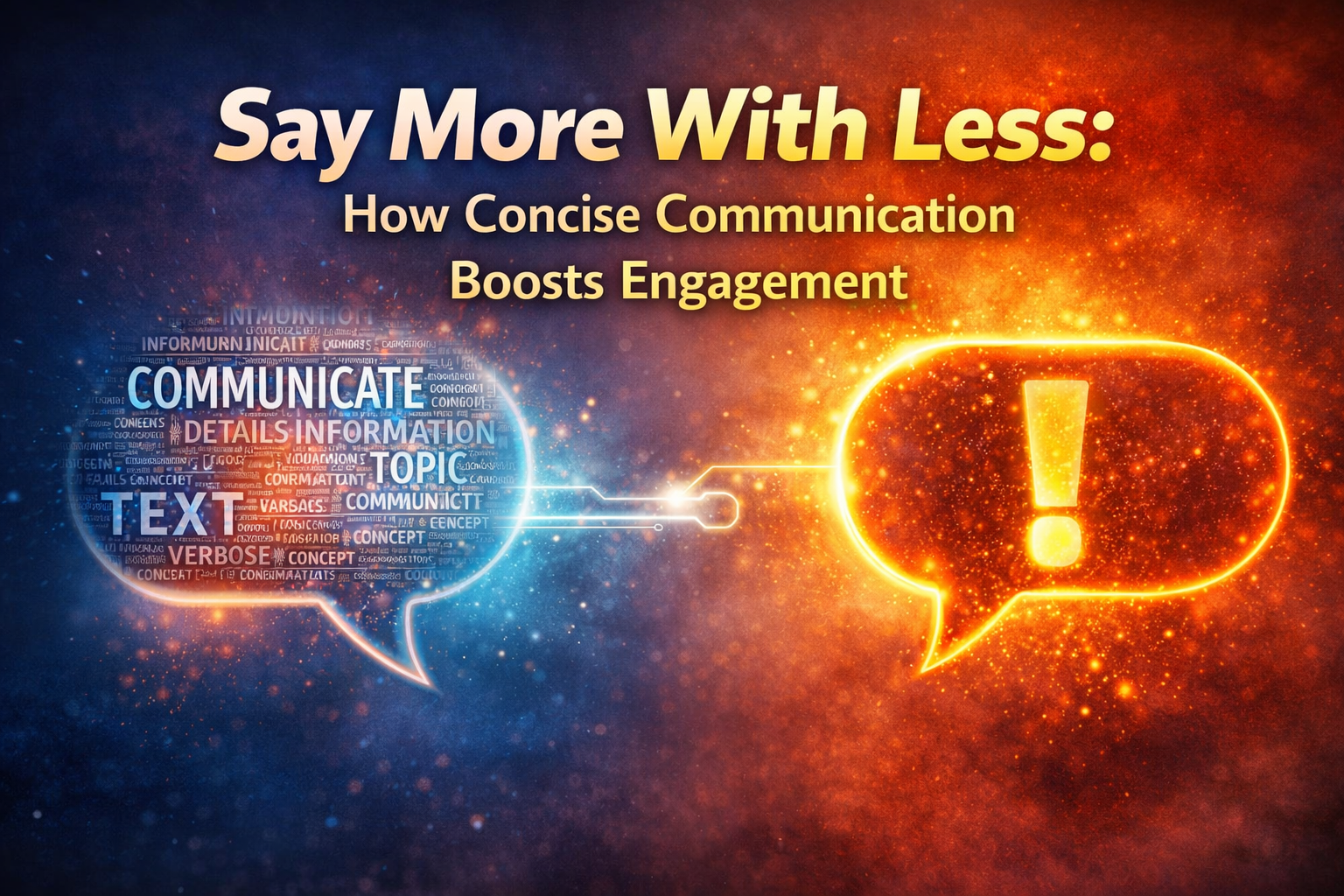
In an age where attention spans are shrinking and information overload is the norm, the ability to communicate concisely has become more than a skill—it has become a strategic advantage. Whether in writing, social media, marketing, or even everyday conversation, brevity captures attention in a way that lengthy explanations often cannot. Concise communication is not about dumbing down ideas or oversimplifying complex topics; it is about distilling information to its most essential, impactful form, making it easier for audiences to understand, remember, and act upon.
People are inundated with content from all directions. Social media feeds scroll endlessly, emails pile up, and messaging apps ping constantly. In this environment, long-winded messages are easily ignored, while concise, well-crafted communication stands out. When ideas are expressed clearly and succinctly, the audience experiences less cognitive load, which increases the likelihood that they will fully absorb and engage with the message. Engagement is not merely about capturing attention for a fleeting moment—it is about fostering comprehension, encouraging interaction, and prompting meaningful responses.
Concise communication also signals respect for the audience’s time. A message that gets to the point quickly demonstrates that the communicator values the reader or listener, creating a stronger connection and increasing trust. In professional contexts, leaders who can articulate strategies, objectives, or feedback in a clear, concise manner are more likely to inspire confidence and action among team members. On social platforms, posts that communicate a powerful idea in a few sentences or a single image with minimal text tend to receive higher interaction rates because they are digestible and shareable.
Another key benefit of concise communication is its ability to clarify complex ideas. The process of condensing thoughts forces the communicator to identify the core message and eliminate distractions or unnecessary details. This clarity ensures that the audience grasps the intended point without ambiguity or confusion. A well-chosen word or phrase can carry far more weight than pages of explanation. In marketing, concise messaging often translates directly to higher conversion rates because the audience immediately understands the value proposition without wading through fluff.
Importantly, conciseness does not mean sacrificing style or personality. In fact, carefully chosen words often enhance the voice and tone of a message. Humor, emotion, and persuasive elements can all be conveyed succinctly, making the content both memorable and engaging. Stories can be told in a sentence or two, arguments can be made in paragraphs instead of pages, and ideas can be shared visually alongside minimal text for maximum impact.
Ultimately, the power of concise communication lies in its ability to respect attention, clarify meaning, and create connection. In a world flooded with information, the messages that succeed are those that are distilled to their essence, compelling enough to be read, understood, and shared. By embracing brevity, communicators not only increase engagement but also demonstrate mastery over their ideas, making every word count. Those who can say more with less are not only heard—they are remembered.