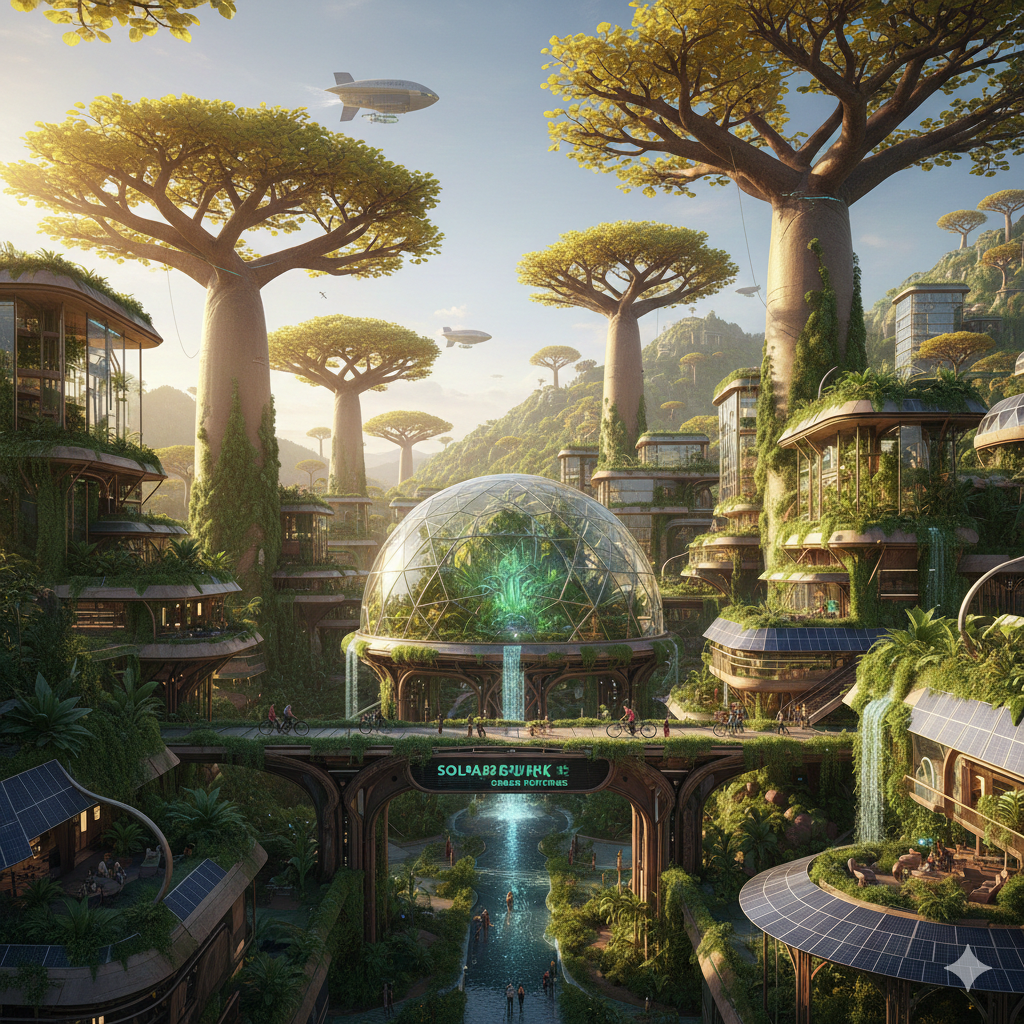
Solarpunk imagines a future where humanity has learned to work with nature rather than against it. Born from a collision of environmentalism, appropriate technology, and retrofuturism, this aesthetic movement presents an optimistic alternative to the dystopian futures that dominate much of contemporary science fiction.The visual language of solarpunk centers on abundance rather than scarcity. Cities bloom with vertical gardens cascading down the sides of buildings. Solar panels and wind turbines integrate seamlessly into architecture, their forms celebrated rather than hidden. Public spaces prioritize pedestrians and cyclists over cars, with tree-lined boulevards and community gardens replacing parking lots. The color palette leans toward greens and golds, earth tones mixed with the gleam of clean technology.This isn’t a primitivist fantasy of returning to pre-industrial life. Solarpunk embraces technology enthusiastically, but with a crucial difference: the technology serves both human needs and ecological health. High-speed rail networks connect communities. 3D printers and maker spaces democratize manufacturing. Renewable energy powers everything from homes to factories. The internet connects people while local production reduces the need for global shipping networks.
The social vision embedded in solarpunk aesthetics matters as much as the environmental one. The movement imagines communities built on cooperation rather than competition, where knowledge and resources are shared openly. Decision-making happens locally and democratically. People have time for art, learning, and rest because automation handles drudgework and societies have moved beyond the demand for endless growth.
Fashion in solarpunk spaces reflects these values: practical, durable clothing made from sustainable materials, often incorporating solar panels or other functional technology. Aesthetics draw from diverse global traditions rather than imposing a single monocultural vision. Repair and customization are celebrated skills.What makes solarpunk particularly compelling right now is its rejection of despair. Climate fiction often presents only two options: apocalyptic collapse or techno-utopian salvation that ignores systemic problems. Solarpunk offers a third path, acknowledging the reality of climate change while insisting that livable, even beautiful futures remain possible through collective action and thoughtful innovation.
The aesthetic has spread beyond visual art into literature, music, and activism. Novels like “A Psalm for the Wild-Built” by Becky Chambers and “The Ministry for the Future” by Kim Stanley Robinson explore solarpunk themes. Real-world projects from community solar initiatives to urban rewilding efforts embody its principles. The movement asks: what if we designed our world around human flourishing and ecological regeneration instead of extraction and profit?
Solarpunk doesn’t pretend solutions will be simple or that the transition will be painless. But it insists that the future doesn’t have to be a wasteland or a sterile corporate nightmare. By making sustainable, equitable futures visible and desirable, the aesthetic does vital cultural work. It helps people imagine what they might actually want to build, rather than only what they fear losing.