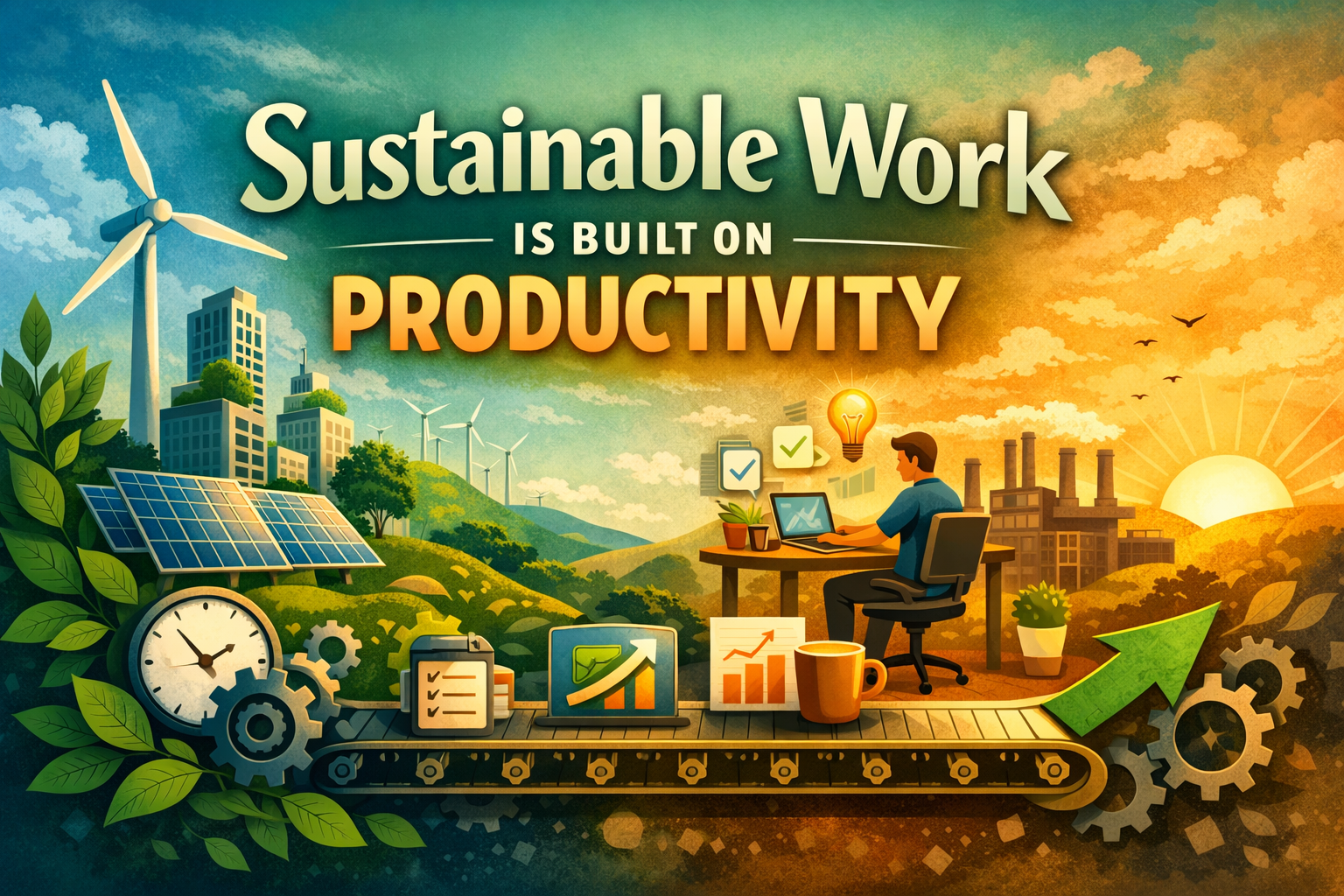
Many people believe that creating a sustainable workload is about working fewer hours. The idea sounds appealing. Reduce the amount of time spent working and life becomes easier, healthier, and more balanced. While there is truth in the desire for balance, the real solution to sustainable work is not simply reducing effort. It is increasing productivity.
A sustainable workload comes from the ability to produce meaningful results without constantly pushing yourself to exhaustion. If the same results can be achieved with less effort, less stress, and less time, then work becomes manageable over the long term. Productivity is the mechanism that makes this possible.
Without productivity, sustainability becomes impossible.Imagine someone who must work twelve hours every day just to keep up with their responsibilities. Even if they are disciplined and motivated, this schedule eventually leads to fatigue. Their energy declines, their focus weakens, and their output becomes inconsistent. Over time the workload begins to feel overwhelming because the system depends entirely on raw effort.Productivity changes the equation. When someone becomes more productive, the same output requires fewer resources. Tasks are completed faster. Decisions become clearer. Processes become streamlined. Instead of fighting through endless hours of work, the individual begins to operate with efficiency.
This shift is what transforms work from exhausting to sustainable.
Productivity does not mean rushing or cutting corners. It means improving how work is performed. It means removing unnecessary steps, focusing attention on high-impact tasks, and using better tools to accomplish goals. When productivity increases, each hour of work becomes more valuable.The difference between working hard and working productively is often subtle but powerful. Two people can spend the same number of hours on a project and produce dramatically different results. One person may spend large portions of time switching between tasks, struggling with unclear direction, or repeating inefficient processes. The other person approaches the work with clarity, structure, and focus.
Both individuals are working, but only one is operating productively.
Entrepreneurs often learn this lesson quickly because they cannot rely on organizational support or large teams. Their time is limited, their resources are limited, and their progress depends heavily on how effectively they use what they have. If productivity remains low, the workload becomes overwhelming almost immediately.But when productivity improves, something interesting happens. Work begins to feel lighter even if the overall goals remain ambitious.
A person who writes efficiently can publish consistently without feeling drained. A marketer who understands messaging can generate leads without constant experimentation. A developer who masters their tools can build faster without sacrificing quality. In each case, productivity reduces friction.This reduction in friction is the foundation of sustainable work.
Another important aspect of productivity is mental clarity. When someone knows exactly what they are trying to accomplish, their energy is directed toward execution rather than confusion. Unclear goals and scattered priorities often create the illusion of heavy workloads because time is spent deciding what to do rather than actually doing it.Clarity increases productivity, and increased productivity makes the workload manageable.
Technology has also amplified the importance of productivity. Modern tools allow individuals to accomplish tasks that previously required entire teams. A single person can build a website, manage marketing campaigns, publish articles, communicate with customers, and automate processes. These capabilities are incredibly powerful, but they only remain sustainable if the person using them becomes increasingly productive.
Otherwise the number of responsibilities quickly becomes overwhelming.The goal is not to eliminate work entirely. Meaningful work often requires effort, persistence, and patience. The goal is to ensure that effort produces results efficiently enough that the workload can be maintained for years rather than weeks.
Sustainability means you can keep going.
If someone constantly feels burned out, the problem is often not the ambition of the goal but the efficiency of the process. By improving productivity, the same ambition becomes realistic. Tasks that once felt heavy begin to feel routine. Projects that once seemed impossible begin to move forward steadily.Over time this creates momentum.
As productivity grows, confidence grows alongside it. People begin to trust their ability to handle responsibilities without becoming overwhelmed. They understand how to structure their work, how to prioritize effectively, and how to avoid wasting energy on unnecessary complexity.
This is when work becomes truly sustainable.Instead of constantly reacting to pressure, the individual operates with control. Instead of fearing large workloads, they rely on their productivity to manage them. Progress becomes steady rather than chaotic.In the long run, sustainable work is not about doing less. It is about becoming capable of doing more with less effort. Productivity transforms the experience of work from a constant struggle into a structured and manageable process.When productivity increases, sustainability follows naturally.