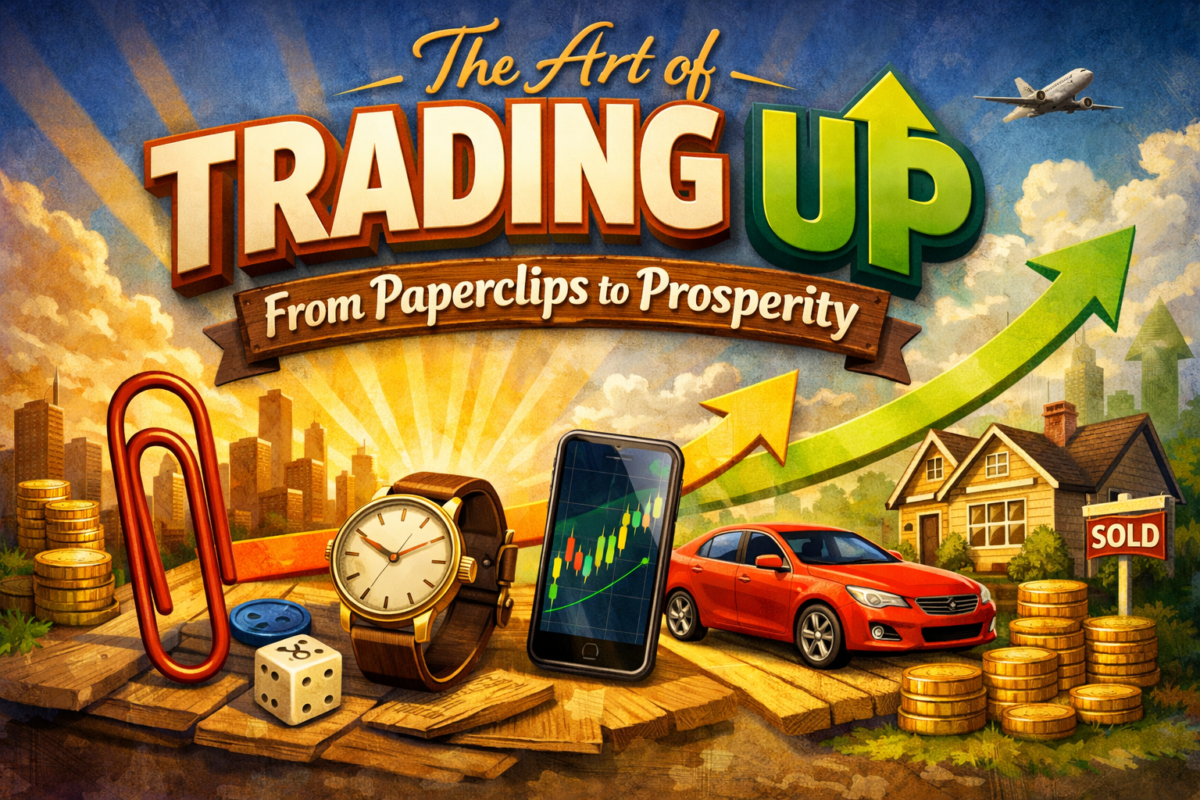
There’s something almost magical about the concept of trading up. The idea that you can start with something ordinary—perhaps even trivial—and through a series of strategic exchanges, end up with something exponentially more valuable seems to defy basic economic logic. Yet time and again, people have proven that with creativity, persistence, and a keen understanding of perceived value, trading up is not only possible but can lead to remarkable transformations.
The most famous example of this phenomenon is probably Kyle MacDonald’s red paperclip journey. In 2005, MacDonald started with a single red paperclip and posted it online, offering to trade it for something better. Through fourteen successive trades over the course of a year, that paperclip became a doorknob, which became a camping stove, which eventually became a house. Yes, an actual house in Saskatchewan, Canada. What makes this story so compelling isn’t just the outcome, but the psychological insight it reveals about how we assign value to things.
At the heart of trading up lies a simple truth: value is subjective and contextual. An item that holds little worth to one person might be exactly what another person needs or wants at that particular moment. The camping stove that meant little to someone with a full kitchen became valuable to an outdoor enthusiast. A novelty snow globe might bore its current owner but delight a collector searching for that exact piece to complete their collection.
This subjective nature of value creates opportunities everywhere. Someone clearing out their garage might happily trade away vintage items they consider junk for something more immediately useful. A musician with multiple guitars might exchange one for recording equipment they actually need. The key is understanding not just what you have, but who might want it and why. It’s less about the inherent monetary value of objects and more about matching what you have with someone else’s desires, needs, or circumstances.The internet has supercharged the trading-up process by making it easier than ever to find these perfect matches. Online marketplaces, social media groups, and specialized forums connect people with complementary interests across vast distances. What was once limited to local swap meets and personal networks now spans the globe. Someone in Toronto might trade collectible items with someone in Tokyo, each getting exactly what they want while both feeling they’ve come out ahead.But successful trading up requires more than just access to markets. It demands patience, social skills, and strategic thinking. You need to build trust with trading partners, communicate effectively about what you have and what you’re seeking, and resist the temptation to make lateral trades that don’t advance your goals. The most successful traders understand timing, know when to wait for the right offer, and recognize opportunities that others might miss.
Some people have turned trading up into an ongoing practice, almost a lifestyle. They start with small items from thrift stores or yard sales, trade them for something slightly better, and continue the cycle. With each exchange, they’re not just gaining material value but also honing their skills in negotiation, market research, and human psychology. They learn to spot undervalued items, understand niche markets, and build networks of fellow traders who alert them to opportunities.
The psychological satisfaction of trading up extends beyond simple material gain. There’s a sense of accomplishment in orchestrating a series of exchanges that results in something far better than what you started with. It’s a tangible demonstration of creativity and resourcefulness. Unlike simply buying something, trading up tells a story—your story of ingenuity and persistence.
Of course, trading up isn’t always easy or straightforward. You might make dozens of small trades before landing one significant upgrade. You’ll encounter people who overvalue what they have or underappreciate what you’re offering. Dead ends and failed negotiations are part of the process. But that’s precisely what makes successful trades feel so rewarding.The principle of trading up also offers a broader lesson about approaching life with an abundance mindset rather than a scarcity mindset. Instead of seeing exchange as zero-sum, where one person’s gain is another’s loss, trading up demonstrates that value creation can be mutual. When both parties feel they’ve gotten the better end of a deal, everyone wins. This happens because we’re not trading identical currencies but rather matching different needs and preferences.
Whether you’re hoping to parlay a collection of old books into a laptop, trade craft supplies for furniture, or embark on an ambitious journey from something small to something spectacular, the path is open. All it takes is something to start with, a willingness to engage with others, and the patience to let one good trade lead to another. Who knows? Your own red paperclip moment might be waiting in that junk drawer.