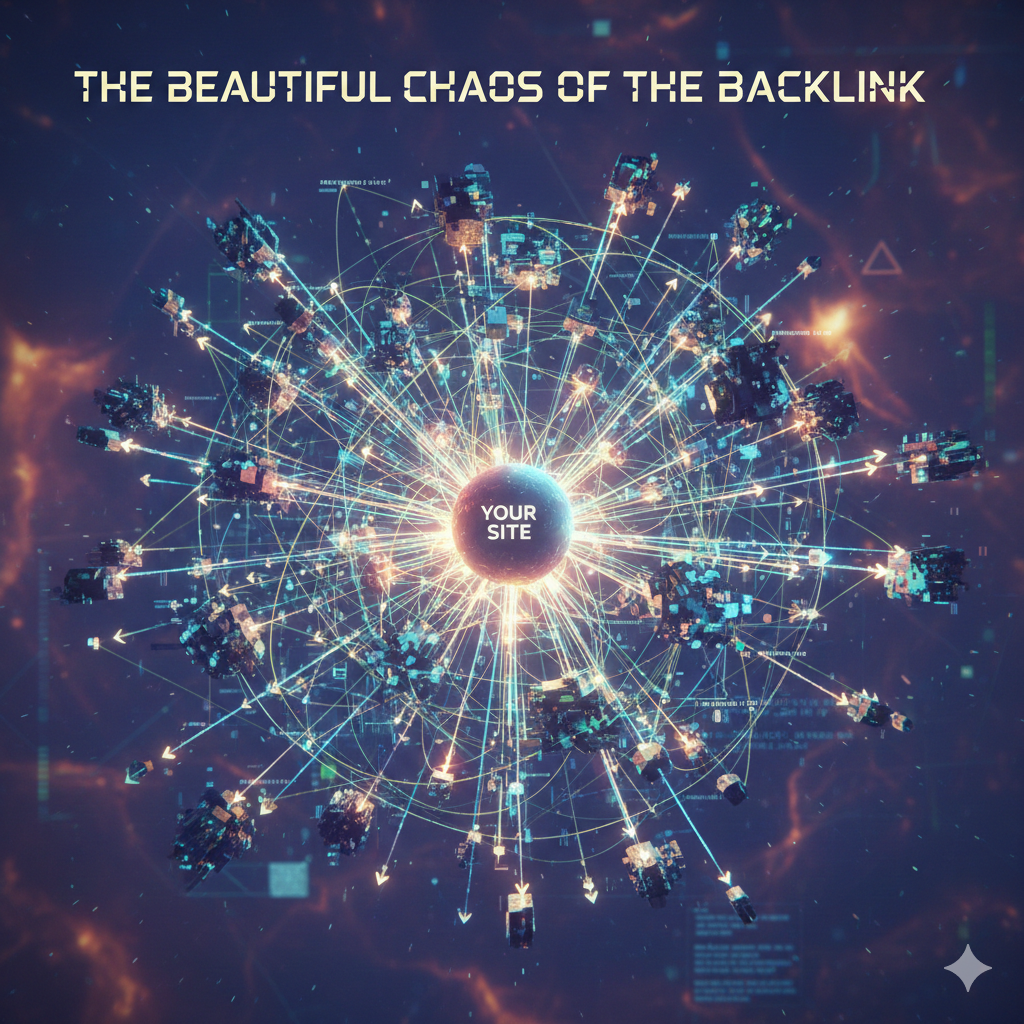
We often talk about SEO as a science, a meticulous practice of keywords, meta tags, and site structure. We plot our content strategies and outreach campaigns with the precision of a general mapping a battle. We aim for the authoritative nod from industry giants and the respectful shout-out from our peers. And then, one day, you check your backlink profile and find something utterly unexpected. A link from a hobbyist forum discussing vintage radios. A mention in a forgotten personal blog about baking and existential philosophy. A citation in a local community newsletter halfway across the world. This isn’t part of the plan. This is chaos. And it’s the most authentic sign that your content is truly alive in the wild web.
The truth is, the most valuable backlinks are not summoned; they are given. They are digital gestures, offered freely from corners of the internet you could never have anticipated. When you create something genuinely useful, insightful, or moving, you surrender control over who finds it valuable. A programmer might write a deeply technical guide, only to find it linked by a writer who uses it as a metaphor for creative process. A local bakery’s story about sourcing ingredients might resonate with an environmental studies student in another country, who cites it in their thesis. The web does not organize itself into neat, vertical silos that match our business plans. It is a tangled, organic network of human curiosity, where interests collide and intersect in unpredictable ways.
This randomness is not a flaw in the system; it is the system’s greatest strength. A link from a predictable industry directory carries a certain weight, yes. But a link from a completely unrelated, passionate niche community carries a different kind of power—the power of genuine, unsolicited endorsement. It tells search engines something pure: that your content holds value beyond its immediate commercial context. It signals that your work has relevance you yourself may not have foreseen, tapping into the universal threads that connect disparate interests. This organic, cross-disciplinary validation is incredibly difficult to fake or manufacture.
So, what does this mean for your strategy? It means shifting the focus from “building links” to “earning mentions.” Stop imagining your audience as a neat target demographic. Start picturing them as endlessly curious humans, roaming the digital landscape. Create content that answers deep questions, tells a compelling story, or solves a universal problem. Don’t just write for your competitors or your immediate clients; write for the student, the hobbyist, the accidental visitor. Make your corner of the web so fundamentally helpful or interesting that it becomes a natural reference point for conversations you aren’t even a part of.
Embrace the beautiful, bewildering randomness of it all. That odd, unexpected backlink is a small digital trophy. It’s proof that your work has slipped the leash of its intended purpose and is now roaming free, finding its own way, making its own friends in the dark. And in the eyes of both humans and algorithms, that spontaneous, chaotic connection is worth more than a thousand calculated ones. The goal is not to control the web, but to become a natural and enduring part of its wonderful, unpredictable ecosystem.