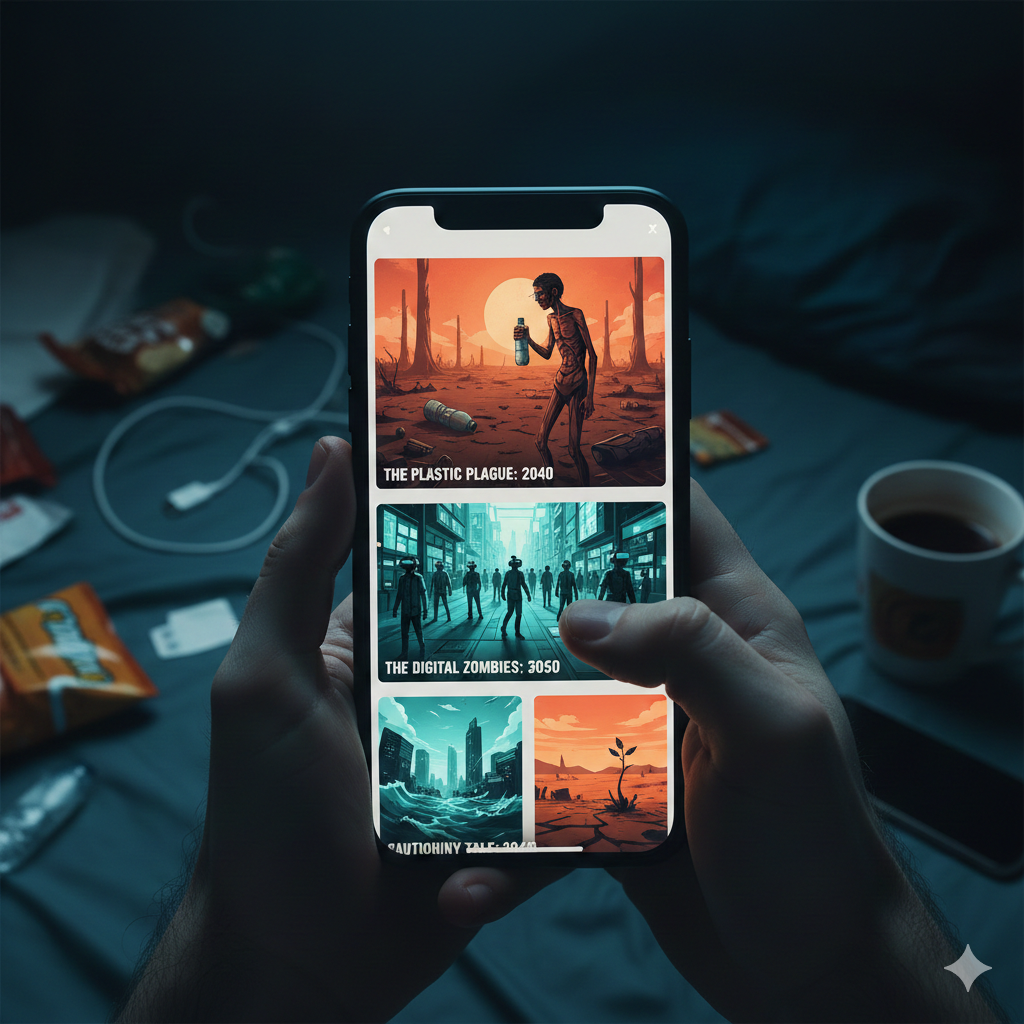
There’s a peculiar genre of content that has exploded across YouTube and TikTok in recent years: confessional videos where people, often in their thirties, forties, or fifties, stare into their phone cameras and admit they’ve wasted their lives. They talk about spending decades in jobs they hated, relationships that drained them, or simply letting years slip by in a haze of distraction and procrastivity. The comment sections overflow with empathy, with viewers sharing their own regrets and fears. These videos rack up millions of views.
But here’s what troubles me: we watch these stories like we’re reading someone else’s diary, completely divorced from our own lives. We feel a momentary pang of recognition, maybe even shed a tear, and then we scroll to the next video. We treat these confessions as entertainment rather than what they actually are, which is warnings written in real human pain.
These aren’t abstract morality tales or fictional cautionary fables. They’re urgent dispatches from people who are living the consequences of choices that felt insignificant at the time. The person who stayed in a soul-crushing corporate job for fifteen years because it felt safer than taking a risk didn’t wake up one day and suddenly realize they’d wasted fifteen years. It happened gradually, one compromised morning at a time, one “maybe next year” at a time, one “I’m too tired to think about this now” at a time.
The tragic irony is that many of us watching these videos are currently making the same choices that led to those regrets. We’re in the early or middle chapters of the exact same story, but we’ve somehow convinced ourselves that our situation is different, that we’ll figure it out eventually, that there’s still plenty of time. We watch someone describe how they numbed themselves with social media and streaming services for a decade, and then we close the app and immediately open another one to continue numbing ourselves.
What makes these stories particularly powerful as cautionary tales is their ordinariness. These aren’t people who suffered extraordinary tragedies or faced impossible circumstances. Most of them describe lives that looked perfectly fine from the outside: stable jobs, reasonable relationships, comfortable routines. The waste they’re describing isn’t dramatic. It’s the quiet kind, the type that accumulates in the spaces between what you’re doing and what you know you should be doing, between who you are and who you wanted to become.
The most common thread in these confessions is a sense of having been asleep. People describe feeling like they were on autopilot, going through motions without ever stopping to ask if those motions were leading anywhere meaningful. They talk about being so busy with the daily grind that they never looked up to see if they were grinding toward anything worthwhile. And the heartbreaking part is how preventable it all seems in retrospect, how many small moments of choice, if chosen differently, could have altered everything.
These stories should terrify us in the most productive way possible. They should make us uncomfortable enough to examine our own lives with genuine honesty. Are you working toward something you actually care about, or are you just working? Are your relationships nourishing you, or are you just going through comfortable motions? Are you making choices based on what you truly want, or based on what feels safe, what others expect, what requires the least immediate discomfort?
The warning these stories carry isn’t that you need to quit your job tomorrow or blow up your life in some dramatic fashion. It’s subtler and more urgent than that. It’s that life doesn’t wait for you to figure things out. It’s happening right now, in this moment, and in the next one. The patterns you establish today, the compromises you make this week, the dreams you postpone this year, they compound. They become the architecture of your entire life.
What makes someone stand in front of a camera at forty-five and say they wasted their life isn’t usually one catastrophic decision. It’s a thousand small surrenders to inertia, fear, and the path of least resistance. It’s choosing comfort over growth repeatedly until comfort becomes a cage. It’s telling yourself you’ll make changes later until later becomes never.
The people sharing these stories are offering us something valuable: a glimpse of a possible future we can still avoid. They’re showing us what it looks like when the bill comes due for years of deferred living, postponed dreams, and choices made out of fear rather than intention. We should receive these stories not as entertainment or even just as sympathy-worthy tragedies, but as mirrors showing us potential versions of ourselves we still have time to prevent becoming.
The question isn’t whether you’ll regret things later. Everyone has regrets. The question is whether you’re currently creating the specific regrets that these videos are warning you about. Are you building a life you’ll be proud to look back on, or are you building a future confessional video of your own?These stories are gifts, really, painful but valuable ones. They’re people sacrificing their dignity and privacy to shake the rest of us awake. The least we can do is actually listen, to treat their warnings as the emergency sirens they are rather than as background noise for our scrolling. Because the most wasteful thing we could do is watch these cautionary tales and learn nothing from them.