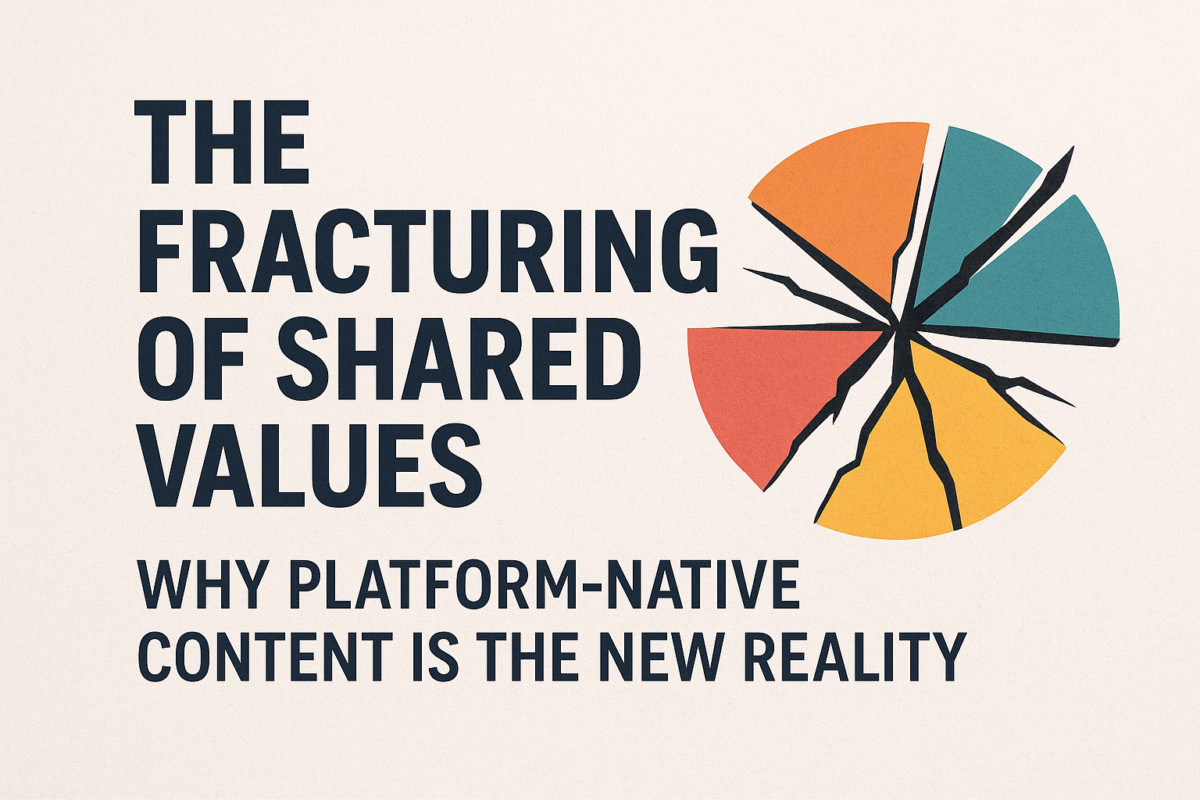
The internet promised to connect us all. Instead, it’s revealed something uncomfortable: we don’t actually share the same values anymore—if we ever did.Walk from one platform to another and you’re not just changing apps. You’re crossing borders into territories with completely different moral codes, entirely different assumptions about what’s acceptable, offensive, praiseworthy, or damning. What gets you celebrated on one platform can get you excommunicated on another. The same sentence can be a rallying cry in one space and a cancellable offense in the next.This isn’t a bug. It’s a feature of our current reality.## The Great SortingSocial media has accelerated something sociologists have observed for decades: people self-segregate by values. But the internet took this tendency and put it on steroids. We’re no longer constrained by geography or limited social circles. We can find our tribe anywhere, and we do.The result? Different platforms have evolved distinct cultural ecosystems with their own norms, taboos, and sacred cows. Reddit isn’t Twitter. Twitter isn’t LinkedIn. LinkedIn isn’t TikTok. And trying to speak the same way across all of them is like wearing a tuxedo to a skate park—you’ll stand out, and not in a good way.
The Case for Platform-Tailored Content
Here’s the pragmatic reality: if you want to build an audience, you need to speak their language. Not metaphorically—literally. You need to understand what resonates, what offends, what gets engagement, and what gets you silenced.This means:
Understanding platform norms: Each space has unwritten rules about tone, topics, and acceptable positions. Violate them at your peril.
Adapting your message: The core of what you’re saying might stay the same, but how you say it needs to flex. Provocation works differently on different platforms.
Accepting inconsistency: You might emphasize different aspects of your views in different spaces. That’s not dishonesty it’s communication.The alternative is speaking to everyone and resonating with no one. Or worse, becoming a target for communities whose values clash with yours.
The “Core Audience” Philosophy
There’s a certain liberation in accepting that you can’t please everyone. In fact, you shouldn’t try. If your content resonates deeply with your core audience—the people who actually matter to your goals—then the noise from everyone else becomes just that: noise.This approach has merit. Building a devoted following of people who genuinely connect with your message can be more valuable than lukewarm reception from the masses. And in a fragmented landscape, “the masses” don’t really exist anymore anyway. There are just different tribes, each convinced they’re the mainstream.
But Let’s Pump the Brakes
Here’s where I need to push back on the “nothing else matters” framing.There’s a difference between strategically tailoring content and abandoning all principles for engagement. There’s a difference between understanding your audience and pandering to their worst instincts. And there’s a difference between accepting that you can’t please everyone and deciding that truth, accuracy, or basic human decency are negotiable if they get in the way of resonance.The fact that values have fractured doesn’t mean all values are equal. The fact that you can build an audience by telling them exactly what they want to hear doesn’t mean you should. And the fact that different platforms have different norms doesn’t absolve you of thinking critically about what you’re putting into the world.
Consider: Are you adapting your message to communicate effectively, or are you compromising it to avoid accountability? Are you speaking your truth in different dialects, or are you saying whatever generates engagement? Are you building a community around shared values, or an echo chamber that grows more extreme with each post?
The Uncomfortable Middle Ground
The truth is messier than either “say whatever works” or “maintain absolute consistency everywhere.” Most of us are trying to navigate somewhere in between:- We want to build audiences, but not at any cost- We want to avoid being silenced, but we don’t want to self-censor into meaninglessness- We want to connect with our tribe, but we don’t want to become so tribal that we lose touch with reality
Platform-native content is smart. Understanding your audience is essential. But “nothing matters except resonance with your core audience” is a recipe for radicalization—of yourself and them.
A Better Framework
Instead of “tailor everything, nothing else matters,” try this:
Know your non-negotiables.
What principles actually matter to you? What would you defend even if it cost you followers?
Understand the platforms.
Learn the culture, but don’t be enslaved by it. Sometimes the most impactful content breaks the mold. Prioritize truth over comfort. Your audience doesn’t always need to hear what they want. Sometimes they need to hear what’s true, even if it’s challenging. Build bridges where possible. Yes, values have fractured. But not everything has to be tribal warfare. Sometimes finding common ground is more valuable than preaching to the choir.The internet age has revealed that our values differ more than we thought. But the response to that revelation matters. We can retreat into our respective corners and perform for our chosen audiences, or we can do the harder work of communicating across divides while maintaining our integrity.
The choice isn’t between cancellation and capitulation. It’s between easy resonance and meaningful impact.