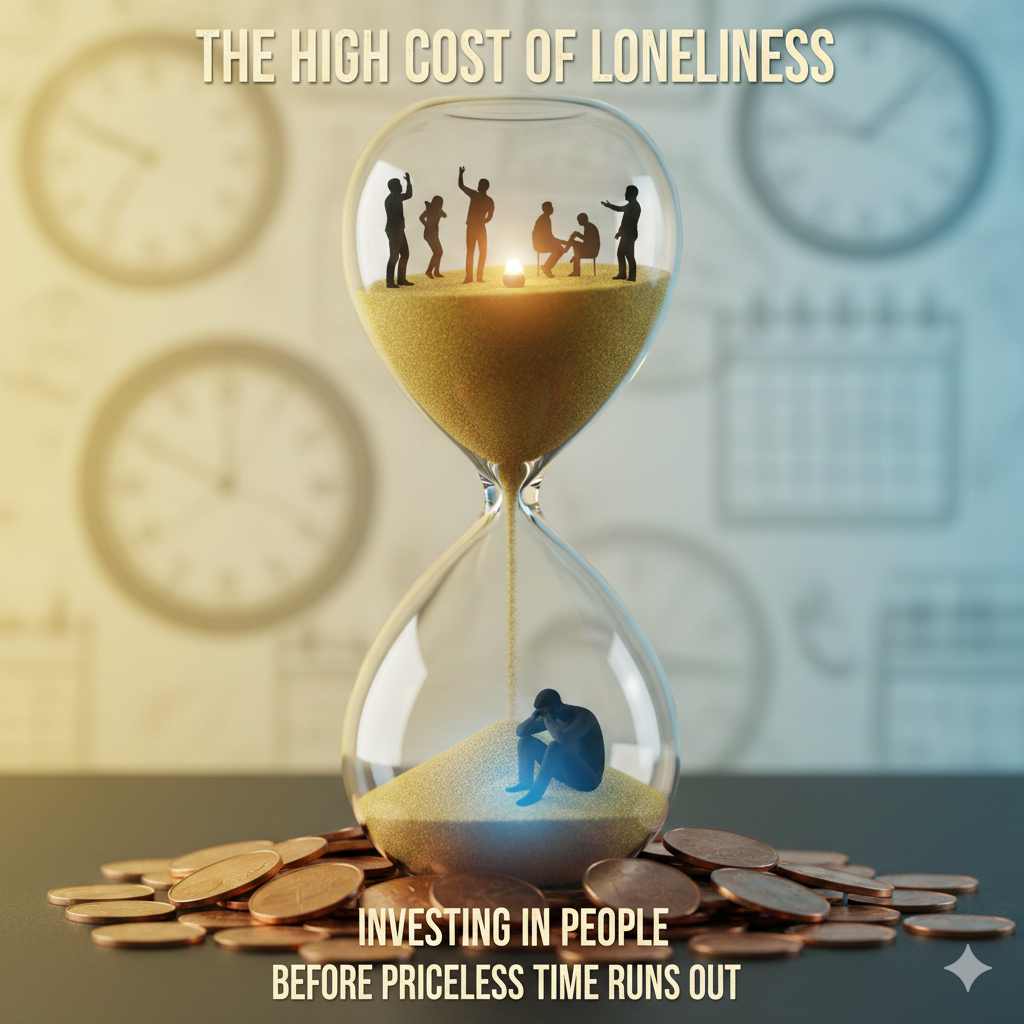
There’s a quiet transaction that happens later in life, one we rarely discuss until we see it unfold. It’s not about money for goods, but money for presence. It’s the reality that without a web of authentic relationships—forged over decades of shared history, mutual aid, and unglamorous commitment—you may find yourself in a position where companionship becomes a service line on a bill. The stark truth is this: if you don’t learn how to build and nurture community and family when you’re young, you will likely have to pay people to be around you when you’re old.
This isn’t a judgment; it’s an observation of a modern condition. We are coached from youth to invest in things: education, careers, retirement accounts, real estate. We are seldom given equal curriculum on investing in the intangible infrastructure of human connection. We delay it, assuming it will simply “happen” later, or we substitute it with the efficient, low-friction interactions of digital networks. But community is not a passive acquisition. It is a skill, a practice, a deliberate and sometimes messy art that requires time to master and consistency to maintain. It is built on showing up, on forgiving flaws, on sharing burdens, and on celebrating ordinary Tuesday victories.
When that art is neglected, a vacuum forms. In youth, the vacuum is often filled with the dynamism of work, the casual acquaintances of bars and gyms, and the endless scroll of entertainment. It can feel full enough. But these connections are frequently context-dependent and lack the deep roots required to withstand life’s storms. Retirement comes, or hardship strikes, or simply the pace of life slows, and the context changes. The crowd thins. The silence in the house grows heavier. The people who were around for the fun evaporate when you need a ride to a doctor’s appointment, or when you just need someone to sit with you in silence that isn’t lonely.
This is when the market intervenes. It offers solutions, for a fee. You can pay for companions, for caregivers who offer conversation along with medicine. You can pay for membership in living facilities that promise community, which, while often wonderful, are fundamentally built on a commercial transaction. You can hire people to share a meal with you, to listen to your stories, to ensure you are not forgotten. These are essential and compassionate services, and they fill a critical need. But they are not the same. The employee at the end of their shift goes home to their own web of relationships—the ones they built. You remain a client.
The contrast is between chosen family and hired help. Between the friend who brings you soup because they love you and the aide who does it because it’s their job. Between the neighbor who has your spare key from twenty years of trust and the security check done by a dispatched professional. The former is built on reciprocity and history. The latter, however kind and necessary, is built on an exchange of currency. One is priceless; the other has a very clear price.
The building years—your twenties, thirties, forties—are the construction phase for this relational safety net. It requires volunteering for things that have no resume value. It means being the one to organize the mundane barbecue, remembering birthdays, checking in on a friend going through a divorce, learning to listen more than you talk. It involves letting people see you fail and learning to depend on them, which is a vulnerability our self-sufficient culture often discourages. It means investing in relationships that don’t have an immediate “return,” simply because the person matters. This is the slow, unsexy capital of a connected life.
Start now. Nurture the friendships that feel like home. Mend fences with family where you can. Be the person who reaches out. Create rituals and traditions with others. Let people in. This is the real anti-wealth, the fortune that cannot be quantified on a statement but which buys you the only thing that truly matters at the end: a sense of belonging, of being known and loved not for what you can pay, but for who you are. Because the ultimate poverty of age isn’t a lack of money—it’s a lack of people who come when no money is offered. Don’t let your future be a series of paid appointments for human warmth. Build the hearth now, so its embers can keep you warm for a lifetime.