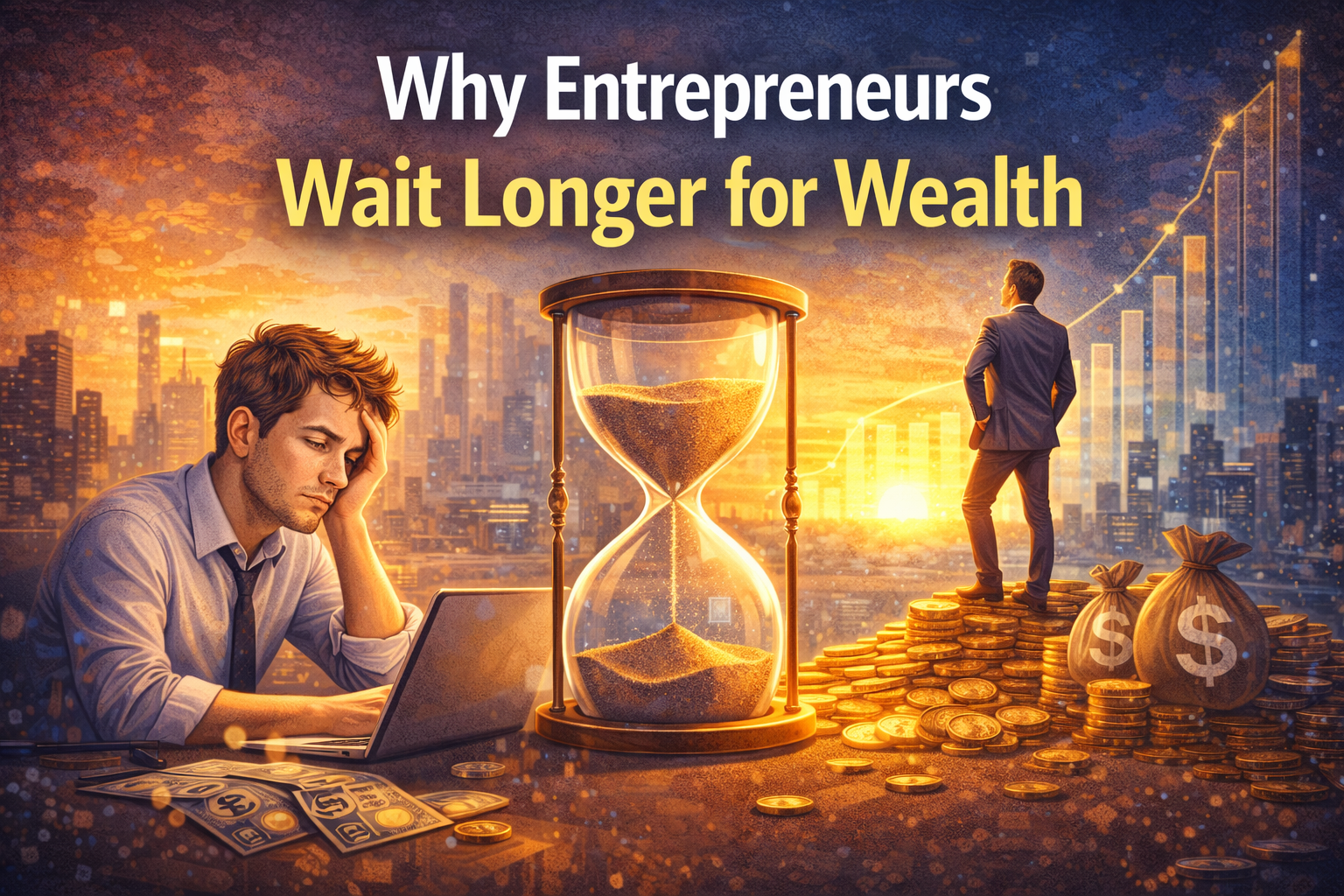
There is a persistent myth that entrepreneurship is the fast track to riches. The stories we hear tend to focus on the exceptions—the twenty-something founders who sell their startups for billions, the overnight successes that seem to materialize out of thin air. But beneath these headlines lies a quieter, more universal truth: building a business typically means waiting much longer to become cash rich than almost any other path you could choose.
When you take a traditional job, the wealth accumulation begins immediately. Your first paycheck arrives within weeks. You contribute to retirement accounts, watch your savings grow steadily, and benefit from employer matches and stock options that compound over time. The machinery of wealth is already built for you; you simply step inside and start the engine. Entrepreneurship offers no such infrastructure. In the beginning, every dollar that comes in gets reinvested. Equipment needs upgrading, talent needs hiring, marketing needs funding. The founder’s personal financial needs compete directly against the company’s survival, and the company almost always wins.
This dynamic creates a peculiar form of delayed gratification that extends far beyond the initial startup phase. Even successful entrepreneurs often find themselves asset rich but cash poor for years. Their wealth exists on paper—equity in a growing company, accounts receivable, inventory value—but remains frustratingly inaccessible. Banks view them as risky borrowers despite their apparent success. Personal credit scores suffer as founders max out cards to bridge payroll gaps. The very growth that builds enterprise value simultaneously starves the founder of liquidity.
The timeline extends further because entrepreneurs cannot simply exit when they please. A salaried employee can change jobs at will, capturing raises and promotions along the way. An entrepreneur is bound to their creation, often through personal guarantees, investor expectations, and the simple reality that businesses require sustained leadership to mature. The typical successful exit takes seven to ten years, sometimes longer. During that decade, peers who chose conventional careers have been steadily accumulating home equity, investment portfolios, and pension benefits. The entrepreneur has been accumulating risk.
Tax complications add another layer of delay. When wealth finally does arrive, it often comes in concentrated bursts through acquisitions or public offerings rather than the steady drip of salary. This concentration triggers higher tax brackets, complex planning requirements, and the need for sophisticated wealth management structures that take years to optimize. The founder who sells their company for ten million dollars may walk away with significantly less than expected after taxes, transaction costs, and earnout provisions, with much of the remainder locked in escrow or subject to future performance milestones.
The psychological weight of this delayed timeline cannot be understated. Watching friends purchase homes, fund children’s educations, and build vacation memories while you pour everything back into growth creates a unique form of isolation. Entrepreneurs become fluent in the language of sacrifice, learning to defer every personal desire for the possibility of future abundance. This fluency becomes so natural that many founders struggle to spend even after they have succeeded, their relationship with money permanently altered by years of scarcity.
Yet this extended timeline serves a purpose that the mythmakers rarely discuss. The delay forces a depth of commitment that shortcuts cannot replicate. The founder who survives a decade of financial constraint develops operational discipline, customer intimacy, and strategic patience that quick wins never test. The wealth that eventually arrives—if it arrives—carries the weight of earned expertise. More importantly, the journey reshapes one’s relationship with money itself. Entrepreneurs who succeed often report that the eventual liquidity matters less than anticipated, having discovered that the value was in the building, not the bank account.
None of this suggests that entrepreneurship is unwise. The potential for outsized returns, autonomy, and impact remains real. But entering this path with eyes open about the timeline matters enormously. The entrepreneur’s journey to cash wealth is not a sprint or even a marathon; it is an ultramarathon run through uncertain terrain with no guaranteed finish line. Those who thrive are not necessarily the most talented or the luckiest, but those who made peace with waiting longer than they ever imagined.