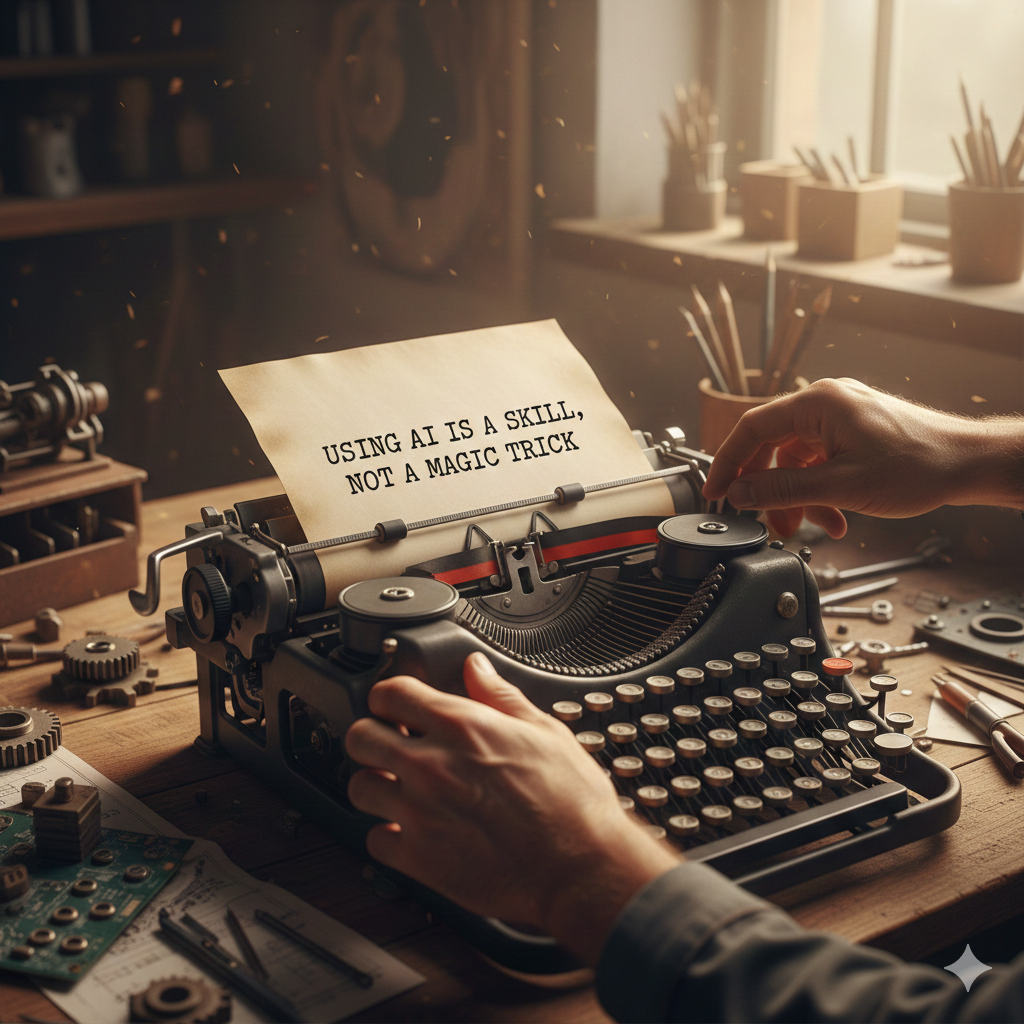
We’ve all seen the headlines, a mix of wonder and dread, proclaiming that artificial intelligence will reshape everything. In this whirlwind, a common misconception has taken root: that using AI is as simple as issuing a command, like asking a genie for a wish. The reality is far more interesting and far more human. Learning to use AI effectively is not about finding a shortcut; it is the deliberate cultivation of a new and essential skill.
Think of it this way. Having a powerful camera on your phone doesn’t make you a photographer. The tool is there, capable of capturing light and detail, but the art lies in the photographer’s eye—their understanding of composition, lighting, and moment. They possess the skill to translate their vision into instructions for the tool. AI is no different. It is an immensely powerful engine, but it lacks innate understanding, context, or intent. It waits for our direction, and the quality of its output is profoundly dependent on the quality of our input.
This begins with learning the language of prompting. This is not about memorizing rigid commands, but about developing a feel for conversation and precision. It’s the skill of painting a scene with words, of providing just enough context and constraint to guide the AI without stifling its potential. Asking an AI to “write something about marketing” will yield a generic puff piece. Guiding it to “draft a concise, empathetic email for a SaaS company, aimed at small business owners who are hesitant about automation, focusing on time savings over technical features” is an act of skilled direction. You are defining the audience, the tone, the scope, and the key message. You are, in essence, collaborating.
Beyond the initial prompt lies the even subtler skill of iterative refinement. A skilled AI user understands that the first result is rarely the final one. They engage in a dialogue, critically evaluating the output, identifying what’s missing or off-key, and providing nuanced adjustments. “Make the tone more urgent,” “cite a recent statistic here,” “rephrase this section for clarity.” This process requires critical thinking, editorial judgment, and a clear vision of the desired outcome—all deeply human skills that the tool cannot replicate on its own.
Perhaps the most overlooked part of this skill set is discernment. The AI generates; the human must validate. It can create compelling text that is factually wrong, or suggest a strategy that is ethically dubious. Learning to use AI skillfully means developing a keen eye for bias, a commitment to fact-checking, and an ethical compass. It means knowing when the AI’s output is a solid foundation and when it’s a house of cards. This discernment turns the user from a passive consumer of content into an active steward of quality and truth.
Ultimately, viewing AI as a skill demystifies it and empowers us. It moves us away from the fear of replacement and toward the promise of augmentation. The accountant who masters AI isn’t replaced by a spreadsheet; they become a strategic analyst. The writer who masters AI isn’t replaced by a text generator; they become a prolific editor and idea architect. The skill lies in the seamless integration of the tool into our own cognitive and creative processes, amplifying our unique human capacities for judgment, creativity, and empathy.
So, this isn’t about keeping up with a trend. It’s about engaging with a new form of literacy. Learning to use AI is the quiet craft of thoughtful instruction, critical collaboration, and intelligent oversight. It is the skill of teaching a powerful tool how to help you think, create, and solve problems better. And that is a skill worth building, not for the future, but for the world taking shape right now.