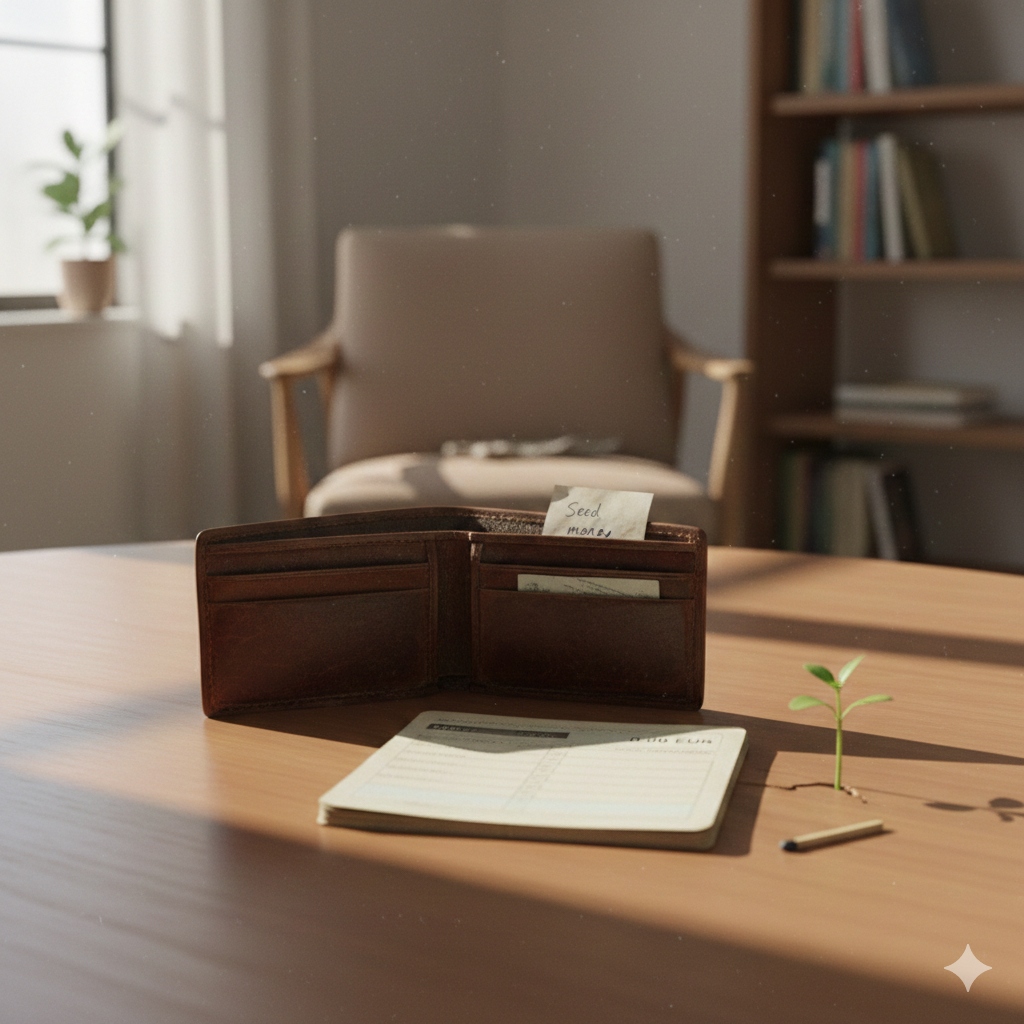
There’s a particular kind of poverty that visits you in your mid-twenties when you have a business. It’s not the desperate kind you fear, but a strange, deliberate emptiness. Your bank account hovers near zero, your diet becomes creatively bland, and your social outings are exercises in frugality. Yet, paradoxically, you might sleep better than your friend with the steady job and the comfortable savings. That friend, you see, stares at a healthy balance but feels a deeper, more troubling void—a future on hold, a path not taken. They have cash, but no business. And in the quiet calculus of youth, a dream with no money often weighs heavier with hope than money with no dream.
When your entire existence is wrapped up in something you are building, every dollar spent is a deliberate vote for a future you designed. The ramen noodles aren’t a sign of failure; they are fuel. The skipped vacation isn’t a sacrifice; it’s an investment in a different kind of freedom. The anxiety is acute, tied to tangible problems—a client payment delay, a supplier issue, the need for a new laptop. These are puzzles with solutions. You are engaged in a daily battle where your agency is absolute. Your scarcity has a name, and more importantly, it has a potential cure that rests entirely in your own hands. The lack of cash is a temporary condition, a symptom of the effort. The business itself is the living, breathing proof of your faith in tomorrow.
Conversely, a padded bank account without a venture can feel like a beautifully decorated waiting room. It’s safe, it’s pleasant, but you’re just… waiting. The money is a cushion against want, but it can also mute the urgency of becoming. That financial security, so coveted, can become a gentle cage. It funds a life, but not necessarily a purpose. The anxiety there is diffuse, a low-grade dread about wasted potential and a creeping comfort that makes risk seem irresponsible. The question shifts from “How will I make this work?” to “Is this all there is?”—and the latter is a far more terrifying inquiry in your twenties.
The hope born from a struggling business is granular and immediate. It’s the hope in a coffee meeting that goes well, in a finished prototype, in a single positive customer review. It’s a renewable resource mined from your own effort. Each small victory is a lifeline, a direct deposit of confidence that feels more valuable than currency. You are building a map as you travel, and even the missteps prove you are moving. You own your time, your decisions, and your failures, which means you also own your successes completely. That ownership forges an identity. You are not an employee number; you are a creator, however small-scale.
This isn’t a romanticization of struggle. The stress is real, the doubt is a frequent visitor, and failure is a possibility. But it is a specific, focused struggle with a heartbeat. The person with cash and no business faces a different, more existential battle: the struggle to find a thing worth risking that cash for, a passion worth disrupting that peace for. One is the pain of growth; the other can be the ache of stagnation.
So, if you’re in your mid-twenties, pouring every cent into an idea that keeps you up at night, look at your thin wallet not with shame, but with recognition. You are trading the security of digits on a screen for the profound asset of direction. You have a story you are living, not a manual you are following. That empty account is often just the temporary shell for a different kind of wealth—one built on proof, resilience, and the quiet, relentless hope that comes from knowing you are already on your way, even if you can’t yet see the destination. You have a business. And that means you already have something to build upon, which, in the long game of a life, is the only currency that truly appreciates.