When people think about home safety, they often picture a house with a fence, an alarm system, and maybe a dog in the yard. But there’s a compelling case to be made that apartments actually offer several safety advantages over standalone houses that many prospective homeowners overlook.The most obvious safety benefit of apartment living is the constant presence of neighbors. In a typical apartment building, you’re surrounded by other residents above, below, and on either side of your unit. This means there are always eyes and ears nearby. If something goes wrong, whether it’s a medical emergency, a fire, or a break-in attempt, someone is likely to notice quickly. Compare this to a standalone house where your nearest neighbor might be fifty feet away or more, potentially separated by fences and landscaping that obscure sight lines. In an emergency, those extra seconds or minutes it takes for someone to notice a problem can make all the difference.
This proximity factor also serves as a powerful deterrent to crime. Burglars typically prefer targets where they can work unobserved, and breaking into an apartment means risking detection by numerous residents who might be home at any hour. A house, especially one that’s set back from the street or surrounded by privacy features, offers a criminal more time and space to operate without being seen. Statistics consistently show that apartments have lower burglary rates than single-family homes, and this environmental surveillance effect is a major reason why.
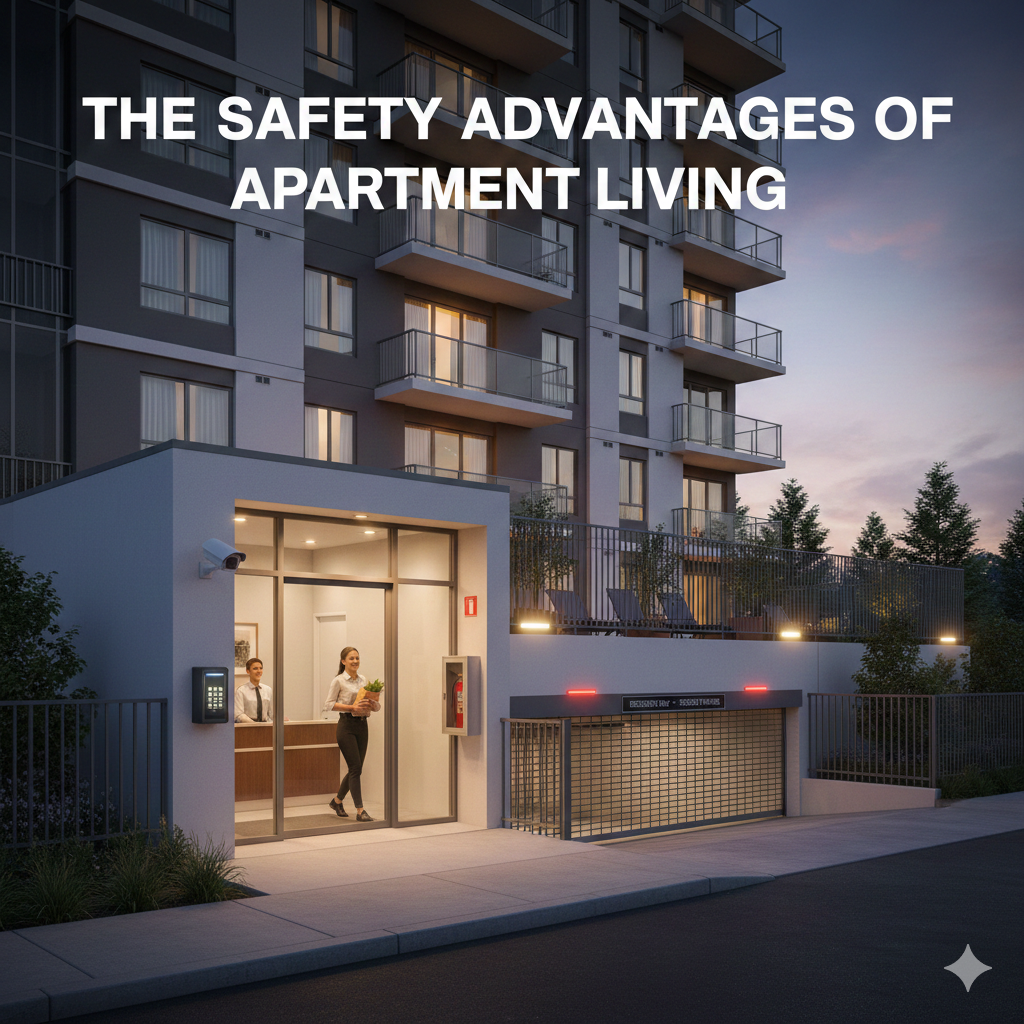
Many apartment buildings also come with security features that would be prohibitively expensive for individual homeowners. A doorman or security guard, controlled access entry systems, security cameras in common areas, and secure parking garages are amenities that provide professional-grade security. Even buildings without these premium features typically have locked entry doors that require keys or codes, creating a barrier that doesn’t exist when approaching a standalone house. While a homeowner could theoretically install similar systems, the cost of doing so privately would be substantial, whereas apartment residents share these expenses across all units.
Fire safety represents another area where apartments often have advantages. Modern apartment buildings are required to meet stringent fire codes, including fire-resistant construction materials, sprinkler systems, fire doors, and multiple exit routes. They’re regularly inspected to ensure compliance with safety regulations. While houses certainly have fire safety requirements too, they’re typically less comprehensive. Perhaps more importantly, in an apartment fire, the proximity of neighbors means someone is likely to notice smoke or flames quickly and alert other residents and emergency services. In a house fire, especially one that starts at night, precious minutes can pass before anyone realizes there’s a problem.
The maintenance aspect of apartment living also contributes to safety in ways that aren’t immediately obvious. When you live in an apartment, there’s typically a building management team responsible for maintaining common areas, fixing structural issues, and ensuring systems like heating, electrical, and plumbing are functioning properly. This means problems that could create safety hazards are more likely to be identified and addressed promptly by professionals. Homeowners, on the other hand, bear sole responsibility for identifying and fixing these issues, and it’s all too easy to overlook a fraying wire, a small roof leak, or a deteriorating foundation until it becomes a serious problem.
Apartments also tend to be located in denser, more urban areas with better street lighting, more foot traffic, and quicker emergency response times. When you call for police, fire, or medical assistance from an apartment in a city or dense suburb, responders can typically reach you faster than they could reach a house in a more spread-out suburban or rural area. Those response time differences can be critical in life-threatening situations.
There’s also a psychological safety component worth considering. Many people, especially those living alone, feel more secure knowing that help is close by if they need it. The sounds of neighbors going about their daily lives, while sometimes annoying, can also be reassuring. You’re part of a community, not isolated. This sense of security can be particularly important for elderly residents, people with health conditions, or anyone who might need assistance unexpectedly.
Of course, apartment living isn’t without its own safety considerations. The same proximity that provides security can also mean you’re affected if a neighbor has a fire or other emergency. Shared walls mean you have less control over certain aspects of your environment. And apartments do come with risks like elevator malfunctions or issues with building systems that affect multiple residents simultaneously.
But when weighing the overall safety profile, apartments offer a combination of natural surveillance, professional security features, robust fire safety systems, maintenance oversight, and quick emergency response that’s difficult for standalone houses to match. The communal nature of apartment living, which some people view as a drawback, is actually one of its greatest safety assets. In our increasingly connected yet sometimes isolated world, there’s something to be said for living in a structure where you’re never truly alone and help is always just a wall away.