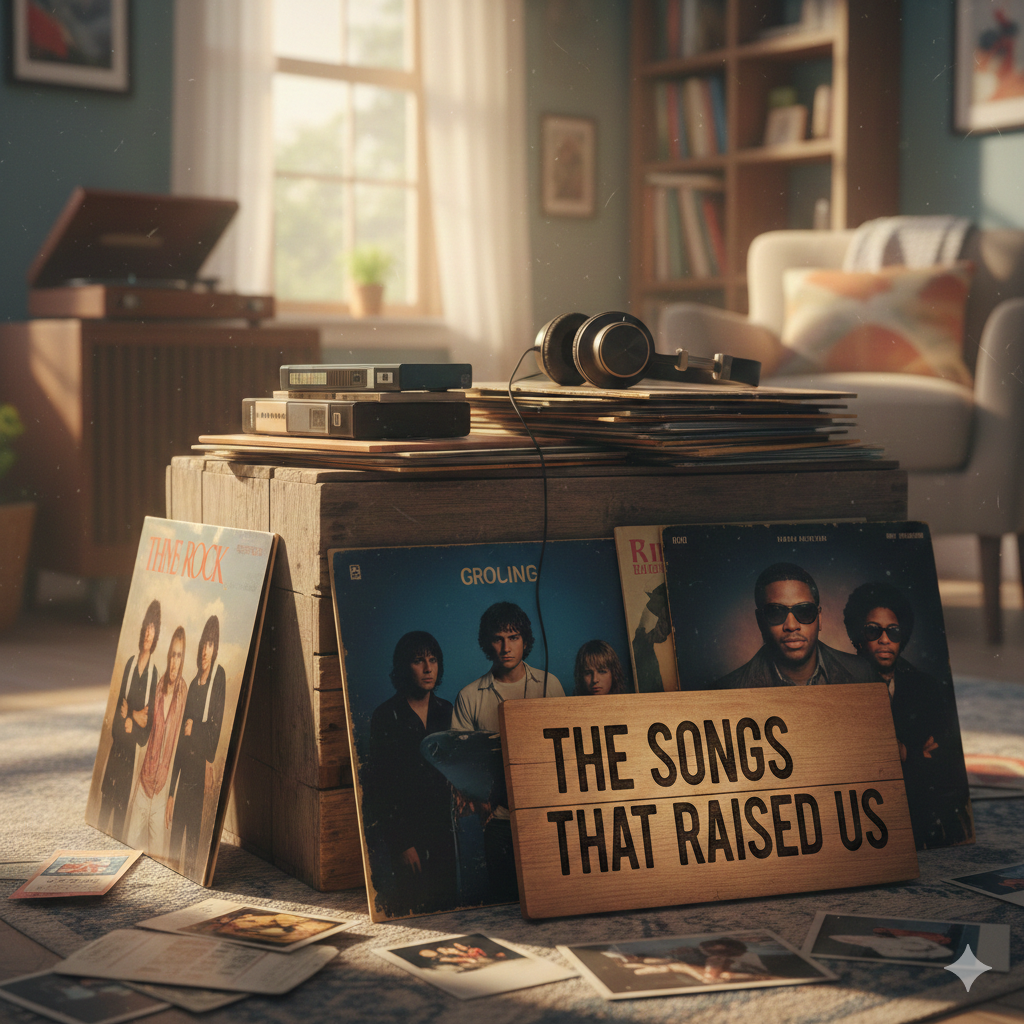
Most people think their taste in music is a personal discovery. We imagine ourselves choosing the sounds we love, gravitating toward certain artists because of who we are. But the truth is quieter and more powerful. Long before we ever chose a favorite song, music was choosing us.
As children, our brains are unusually open. They are not just learning language and movement; they are absorbing rhythm, tone, and emotional patterns. When a particular genre plays in the background of our childhood—whether it’s dancehall drifting through a Jamaican taxi, gospel echoing in church on Sundays, or soft rock humming from a parent’s car stereo—it becomes woven into our emotional wiring. We don’t just remember the sound. We remember how it felt.
Music in childhood is rarely consumed analytically. A five-year-old is not judging production quality or lyrical depth. A child experiences music physically and emotionally. The bass feels like movement. The melody feels like safety. A chorus repeated enough times begins to feel like home. Because the brain forms strong neural connections during early years, the songs we hear repeatedly become deeply familiar. Familiarity, over time, becomes preference.
There is also the powerful link between music and memory. Neuroscience shows that music activates areas of the brain associated with emotion and autobiographical memory. That is why a song you have not heard in fifteen years can instantly bring back the smell of a kitchen, the color of a living room wall, or the exact mood of a childhood evening. The music becomes a time machine. When we grow older, we often mistake that warm rush of nostalgia for proof that the music itself is objectively better. In reality, we are reacting to memory.
Cultural environment plays an enormous role as well. Music is a social signal. The songs playing in your household tell you something about who your people are. They communicate identity before you have words for identity. If your parents blasted reggae legends or classic hip-hop, those sounds may feel authentic to you in a way that newer trends never quite do. If your childhood home was quiet and reserved, you might later gravitate toward softer, introspective music because that emotional tone feels familiar.
Even rebellion is shaped by childhood exposure. Teenagers often believe they are rejecting their parents’ music entirely. But rebellion still happens within a framework. A child raised on strict classical training might swing toward heavy metal. Someone surrounded by conservative church hymns might dive into experimental rap. Yet even in opposition, the early foundation influences what feels meaningful. The structure of rhythm, the sense of melody, or even the emotional intensity we seek is often rooted in what we first heard.
As we age, our brains become slightly less flexible in forming new musical attachments. That is why many people claim that the best music came out when they were between twelve and eighteen years old. During adolescence, identity solidifies, friendships deepen, and emotions intensify. Music during this period attaches itself to first love, early ambition, heartbreak, and independence. It becomes part of the story we tell about ourselves. After that window, it can feel harder for new genres to break through in the same way.
This does not mean we are trapped by our childhood playlists. Exposure still matters. Curiosity still matters. Travel, friendships, and even algorithms can expand our tastes. But the emotional baseline often remains. The rhythms that rocked us to sleep, the choruses that played while we did homework, the songs echoing through family gatherings—those sounds form an internal soundtrack that follows us for life.
In the end, our taste in music is not just about preference. It is about memory, identity, and belonging. The songs that filled the rooms of our childhood did more than entertain us. They shaped the emotional language we use to interpret sound. And even when we believe we have moved far beyond them, they are still playing softly in the background, reminding us where we started.